Made with
ConceptDraw
DIAGRAM 18

GUI Prototyping with ConceptDraw DIAGRAM

Developing some software, project managers, software engineers and GUI developers often have to create a software model. Very often, they need to develop its graphic design to demonstrate the layout of the developed software to clients or coordinate the process of development with your QA department, and discuss its usability and convenience. Thus, the final look of the diagram in work can be defined even at the development phase. Moreover, you can also define to what extent it will be convenient to the final user.

But how to create such program elements as dialogs, menus, buttons at the development phase, when there is no runnable application?

You can use some development system with the resource-editor or start creating an application prototype, or just create a text project with a set of necessary dialogs. In case you require a data type to get a clearer idea of interface, you will have to advance far enough in creation of an application prototype in order to get a sound look of interface. All this takes plenty of time . Another crucial point here is that such an approach does not allow attracting unskilled designers and managers to interface development.

A quite unlike situation occurs if try drawing interface in some graphic package.

Whichever you choose a package of vector or raster graphics, development of interface becomes a designer's task, let alone acceptable speed. Moreover , interface elements will be static a priori . And it will take you a lot of extra time to draw the same dialog, with an opened combo box, for instance. Although, of course, you can draw a program in any state and with any data.

Diagramming tool ConceptDraw from CS Odessa Corporation offers the third approach. This program is for 2-D vector drawing, but for more acceleration of prototyping of graphic interface, it offers a set of libraries with ready-to-use GUI elements.

GUI (pronounced goo-ey) stands for graphical user interface. GUIs consist of widgets that allow a user to interact with a computer operating system or software application. Widgets include icons, menus, buttons, selection boxes, scroll bars, and other design elements. A dialog box is a typical GUI element

ConceptDraw is perfect for project managers and software engineers who need to quickly draw dialog boxes and application interfaces without complicated programming.

Peculiarities in creation of GUI objects in ConceptDraw are:

  • Quick and easy creation of interface elements
  • Support of various platform and operation systems
  • Automated elements, such as drop-list, allow to demonstrate interface in various views without spending extra time on drawing of a new dialog or document window from scratch

.

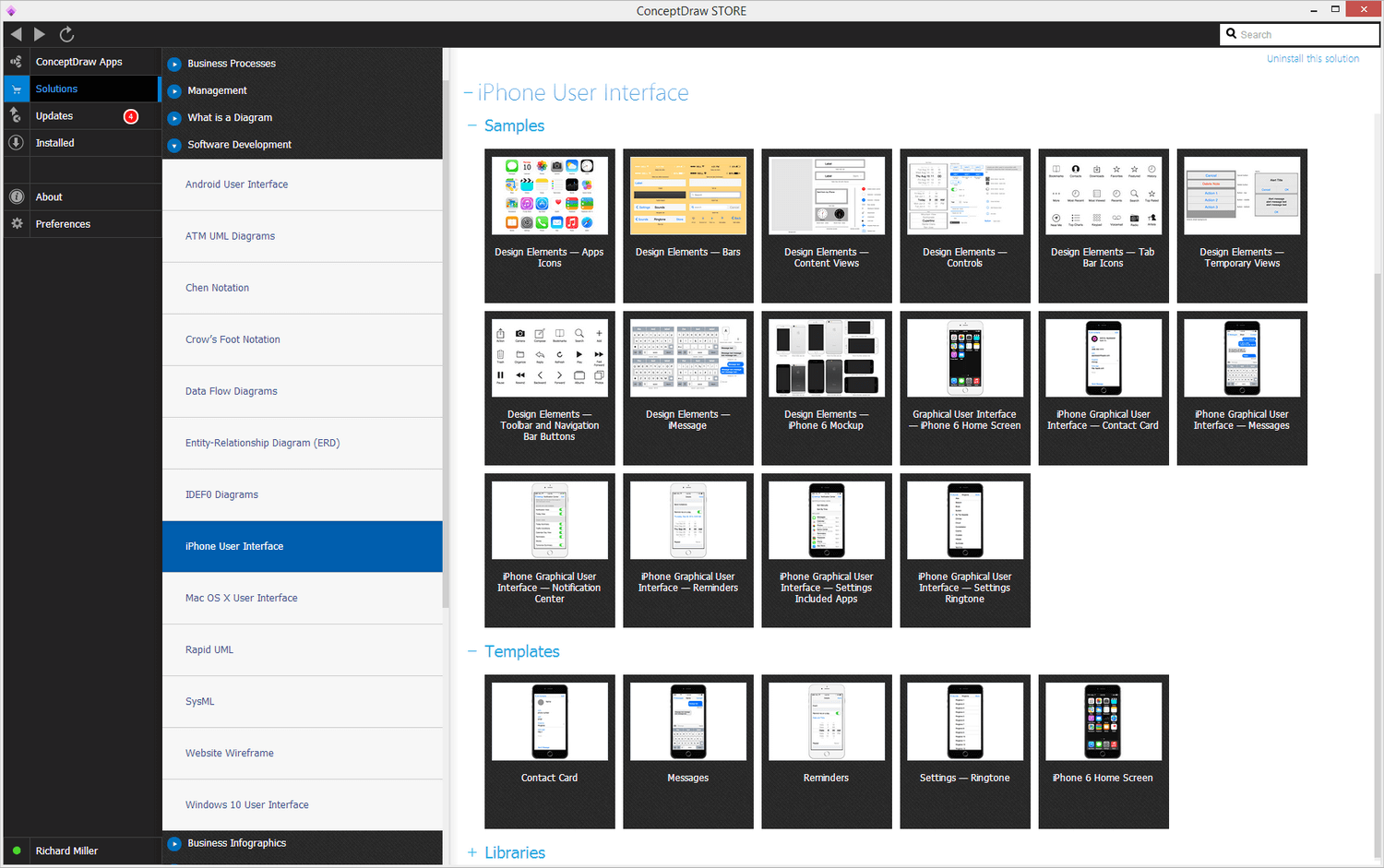
To create some interface object in ConceptDraw, you need to open ConceptDraw STORE and, considering the needed OS, choose the necessary template in which element libraries will appear.

Graphic User Interface Solution in ConceptDraw STORE

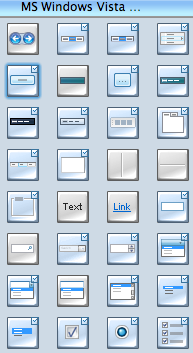
For instance, Windows User Interface (together with it MS Office elements will appear) or Mac OS X User Interface. Then in the Libraries panel the libraries with GUI elements, which can be added to your document, will appear.

GUI elements

Using Drag&Drop or double-clicking on the needed element you will add it to your document and will be further able to edit it.

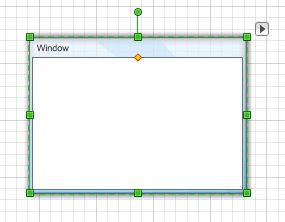
First, add an empty dialog to the document.

Empty dialog

Similarly, you can add any necessary components for creation of interface. After you have added them, the only thing left is to properly arrange them and edit corresponding to your needs.

For instance, if you add the button for closing the dialog, take it by the green square on the right Button for closing the dialog and then move it to the right upper corner of the dialog marked with a cross (the handle becomes red in right place), it will be connected to the dialog window and will further move together with it. Similarly, you can add other buttons and as well as any other objects.
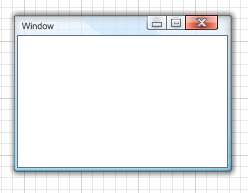
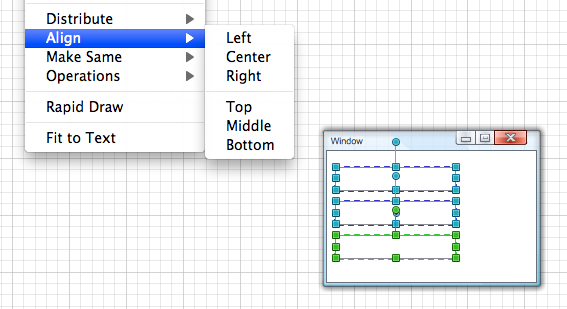
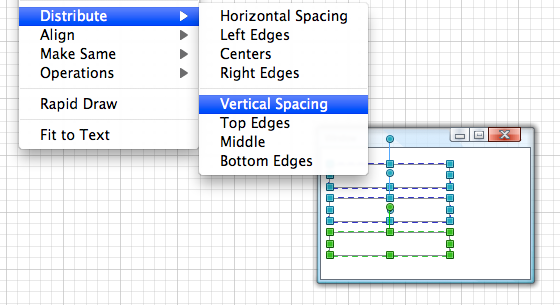
Dialog window

You can also arrange objects by selecting them with pressing Shift, and having chosen on of the variants of arrangement on the toolbar Align.

Toolbar Arrange&Make

Or you can distribute objects by using buttons on the same toolbar.

Toolbar


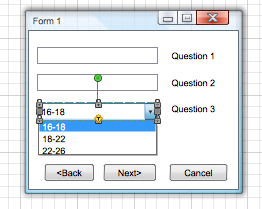
If in your dialog there is an object of drop-list type, you can, for instance, hide or show it using the context menu. Similarly, you can make a button active or disabled, or get many other views using the objects smart behaviour. Useful tip.
In order to spread or contract objects with no reference to the grid, use the button Button on Snap&Glue toolbar.

Snap&Glue toolbar Snap&Glue toolbar

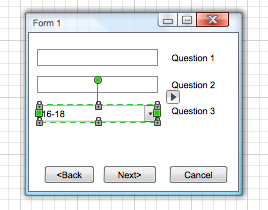
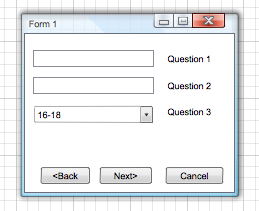
Thus, without too much effort, you will get a dialog of the similar type in a couple of minutes. And you do not have to use programming for this.

Finished dialog

Besides, ConceptDraw is the only cross-platform program that allows to create interface for you upcoming software not only for Windows, but also for Mac OS (X). That is why it is the best choice for companies and developers who work on markets of Win and Mac applications.

GUI Prototyping with ConceptDraw DIAGRAM

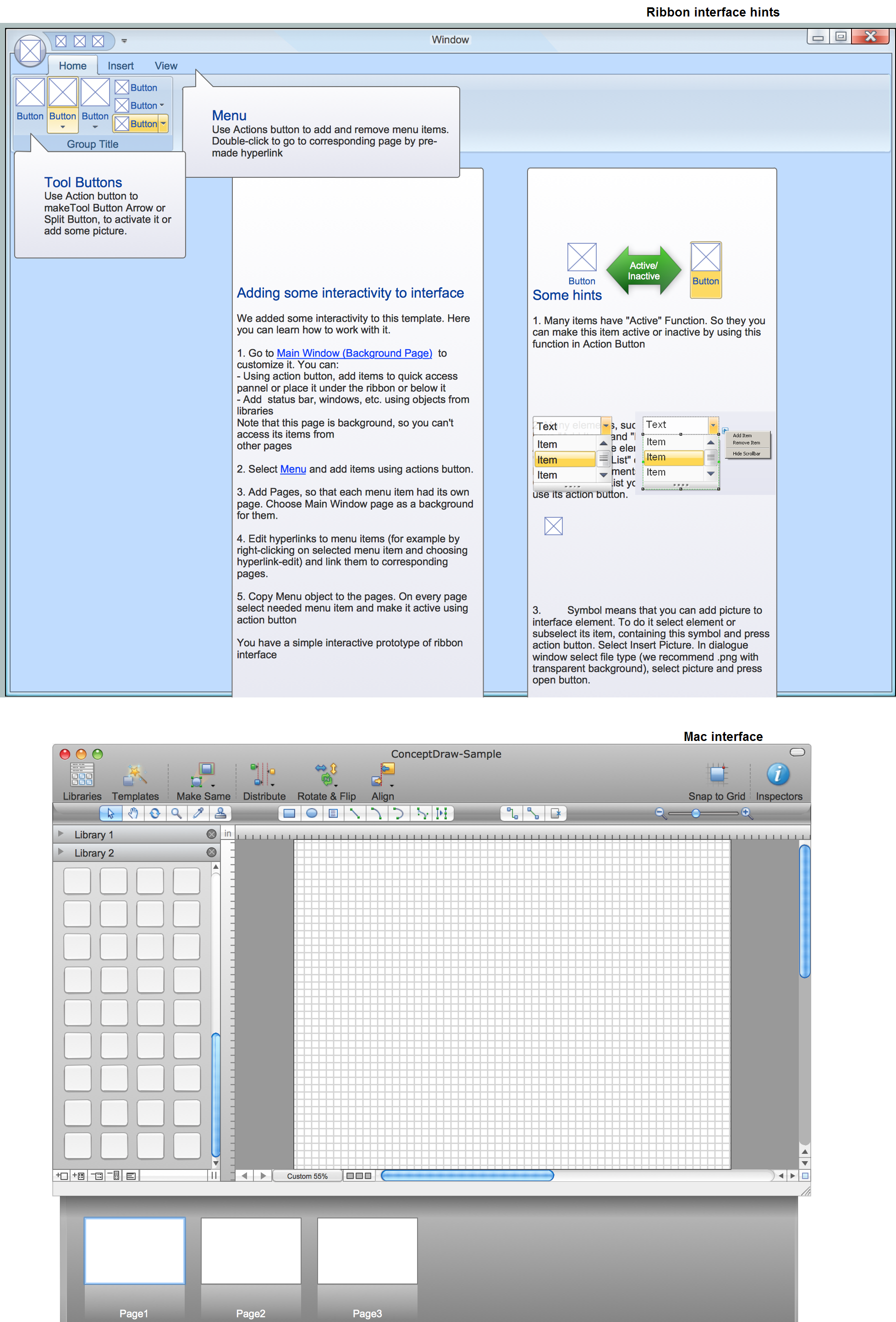
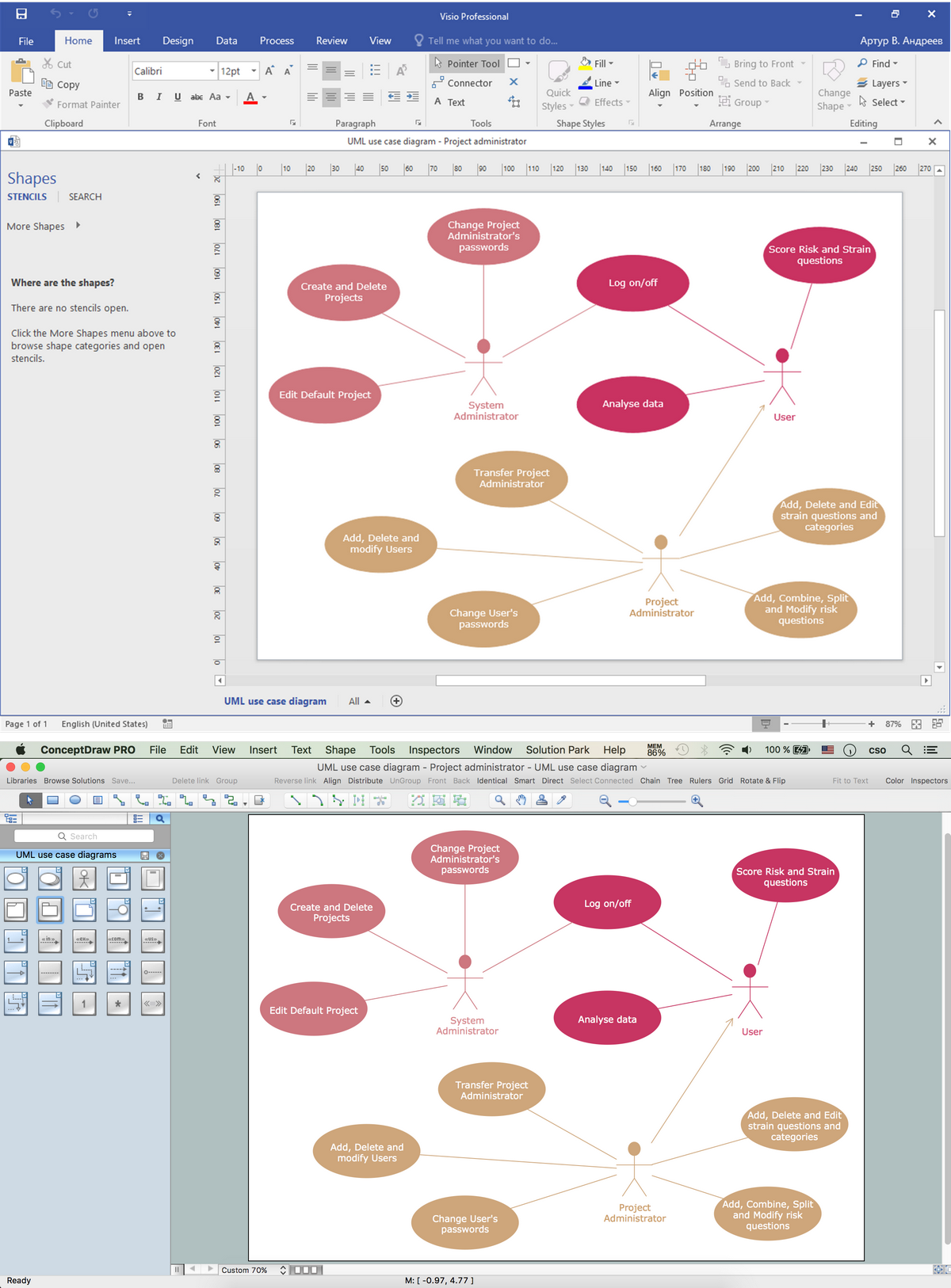
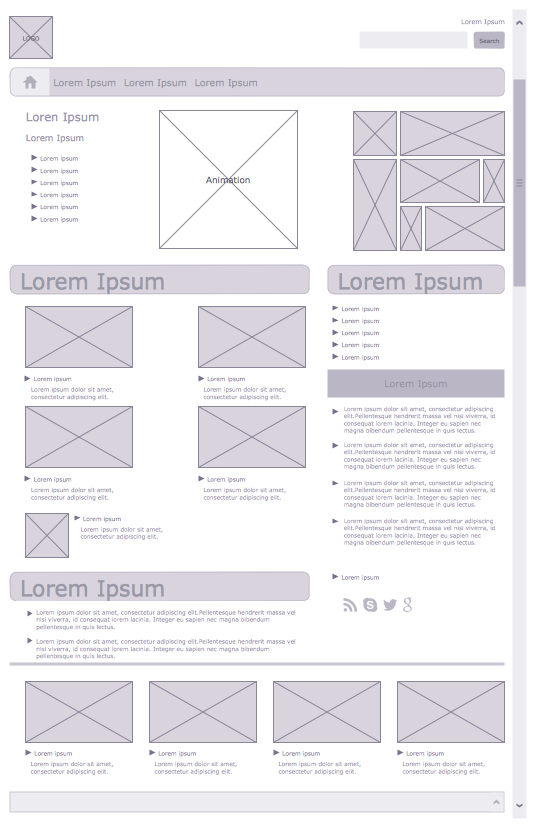
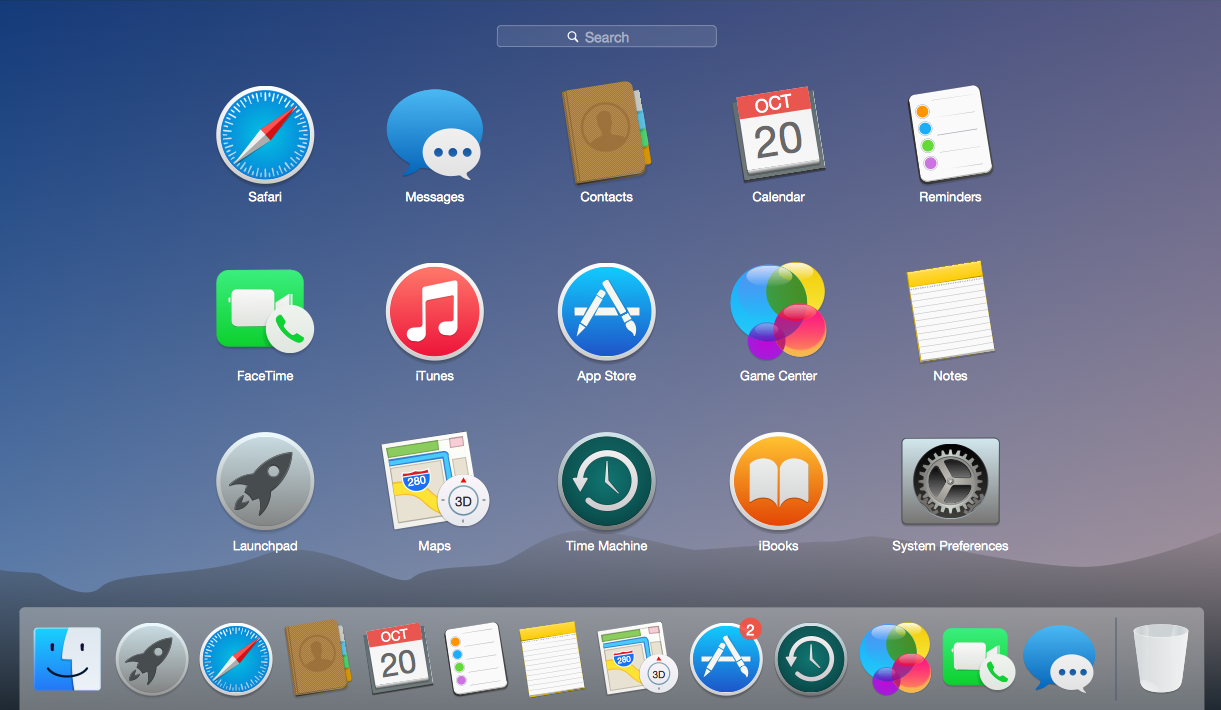
Example 1. GUI Interface — Mac and Ribbon

ConceptDraw DIAGRAM is a Perfect Tool for:


TEN RELATED HOW TO's:
This sample was created in ConceptDraw DIAGRAM diagramming and vector drawing software using the UML Class Diagram library of the Rapid UML Solution from the Software Development area of ConceptDraw Solution Park. This sample shows the structure of the building and can be used by building companies, real estate agencies, at the buying / selling of the realty.UML Class Diagram Example -  Buildings and Rooms *
Picture: UML Class Diagram Example - Buildings and Rooms
Related Solution:
You can use many tools to create a representation of a system behavior or a scheme of objects relationships. Some of them are quite abstract and useless, and some, like UML tools help clarifying both the structure and the behavior of a system. There are various types of uml diagrams and tons of examples explaining the difference between them. UML 2.2 specification has many kinds of diagrams. They are divided into two groups( structure and behavior diagrams). This class diagram shows the hierarchical structure of UML 2.2 specification. Class diagram - the most suitable tool for this task because it is designed to describe basic structure of a system. This diagram can be use as a visual aid for learning UML.UML Tool & UML Diagram Examples *
Picture: UML Tool & UML Diagram Examples
Related Solution:
The Total Quality Management Diagram solution helps you and your organization visualize business and industrial processes. Create Total Quality Management diagrams for business process with ConceptDraw software.TQM Diagram Tool *
Picture: TQM Diagram Tool
Related Solution:
ConceptDraw DIAGRAM software enhanced with Metro Map Solution from the Maps Area of ConceptDraw Solution Park provides extensive drawing tools for fast and easy creating various metro maps, route maps, transport schemes, metro path maps, subway train maps, and many other types of maps.Metro Maps *
Picture: Metro Maps
Related Solution:
Event-Driven Process chain Diagrams for improvement throughout an organisation. Best software for Process Flow Diagram. The Event-driven Process Chain (EPC) Diagrams allows managers to plan processes and resources.Business process Flow Chart — <br>Event-Driven Process chain (EPC) diagrams *
Picture: Business process Flow Chart — Event-Driven Process chain (EPC) diagrams
Related Solution:
Accounting flowchart is a system of processes to represent accounting system of an organization. If you need to know how accounting processes work and how each operation is done, the Accounting Flowcharts Solution for ConceptDraw DIAGRAM has a predesigned library, tips, methods and symbols for easy drawing an Accounting Flowchart.Accounting Flowchart *
Picture: Accounting Flowchart
Related Solution:
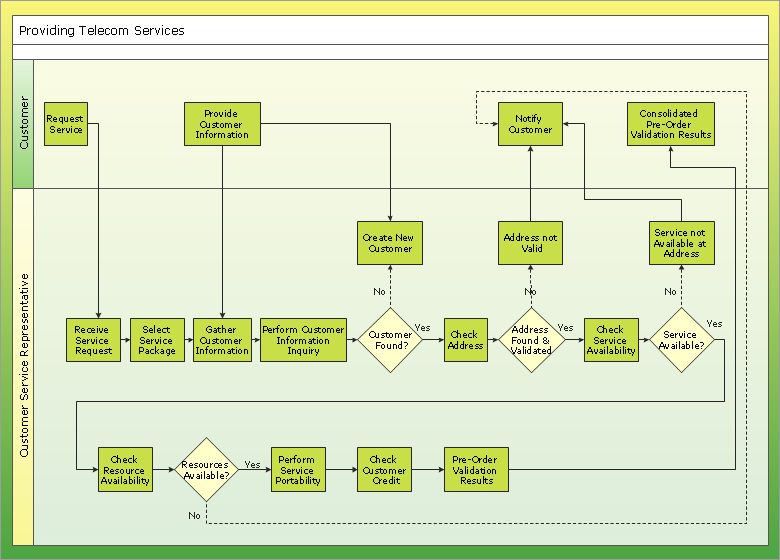
Don't let your first glance fool you. ConceptDraw is a lot easier to use than it looks. Use its cross-functional templates and library as basics to get started. All you need to know are a few basic steps and terms. ConceptDraw Arrows10 Technology is a new age in drawing software. Use it for process flows and its new rapid draw feature enables to draw an impressive charts in a seconds.Cross-Functional Flowchart Basics *
Picture: Cross-Functional Flowchart Basics
A process flow diagram (PFD) is a diagram commonly used in chemical and process engineering to indicate the general flow of plant processes and equipment. ConceptDraw DIAGRAM diagramming and vector drawing software extended with Flowcharts Solution from the Diagrams Area of ConceptDraw Solution Park offers the extensive drawing tools for quick and easy design professional looking Process Flow Diagrams.Process Flow Diagrams *
Picture: Process Flow Diagrams
Related Solution:
This sample was created in ConceptDraw DIAGRAM diagramming and vector drawing software using the UML State Mashine Diagram library of the Rapid UML Solution from the Software Development area of ConceptDraw Solution Park. This sample shows the work of the online store and can be used for the understanding of the online shopping processes, for projection and creating of the online store.State Diagram Example - Online Store
Picture: State Diagram Example — Online Store
Related Solution:
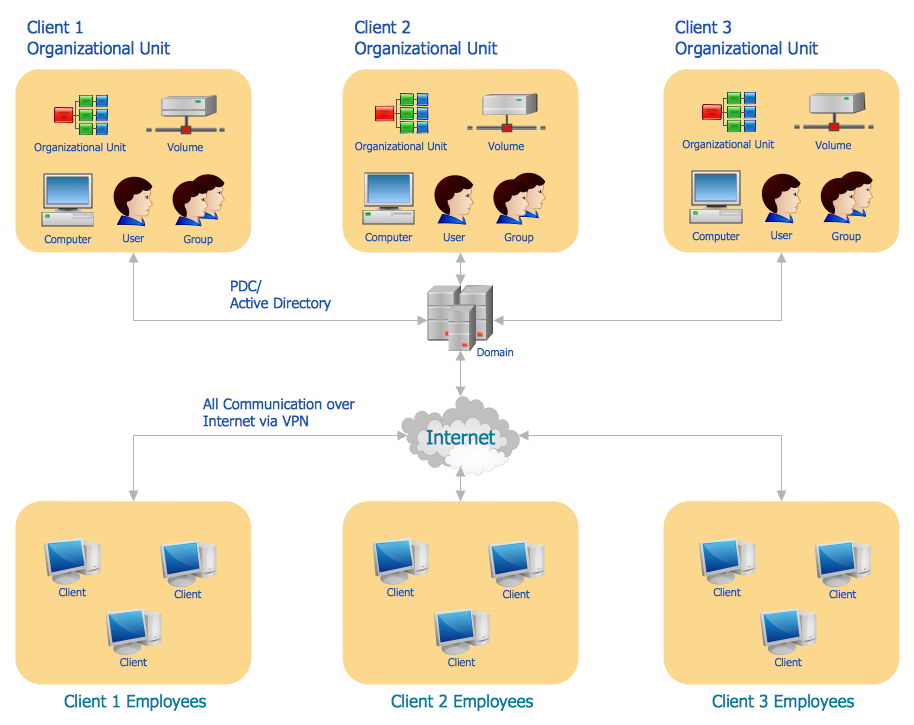
It's no secret that there is a list of skills that every average system administrator should have. And it's important to be able to manage domains via active directory technologies. The best way to keep all the details in mind is to draw a diagram representing users, groups and domains. This diagram represents an Active Directory Services (Active Directory Domain Services). It can be helpful for system and network administrators to organize a network physical and logical elements (domains, data bases, servers, network equipment, end-user computers etc.) into a secure and logical structure. The logical structure of Active Directory is a hierarchical organization of all network components. The data that is stored in Active Directory comes from some diverse sources. The Active Directory diagram created using ConceptDraw Active Directory Diagram solution. It shows allocating group policies and functions assigned to end users. It helps to plan, manage and maintain the certain user access scenario.Active Directory Diagram
Picture: Active Directory Diagram
Related Solution:
ConceptDraw
DIAGRAM 18