Pyramid Diagram
Project Management Triangle
The ANSI Standard for project management known as Project Management Body of Knowledge(PMBoK) defines project management as an area of activity which determines and achieves a clear project objectives, balancing among the volume of work, resources (such as money, materials, energy), time, quality and risks.
A key factor in the project management success is to have a clear specific plan in advance, to minimize risks and deviations from the plan, to have an effective change management (as opposed to the process approach, functional management and service level management).
Project Management Triangle model represents the balance between the project scope, project cost, time and quality. The quality was included later, so initially this model is known as "Triple Constraint".
As required by any undertaking the project should proceed and reach the final, encountering certain restrictions. Classically, these constraints are defined as project scope, time and cost and are related to the Project Management Triangle, each side of which represents one of the constraints. Changing one of the triangle sides invariable affects the others. Further refinement of the constraints contributed scope quality and effect, turning quality into the fourth constraint.
The constraint of time is determined by the time available to complete the project. The constraint of cost is determined by the budget allocated for the project. The constraint of scope is determined by a set of actions required to achieve the final result of the project. These three constraints are often competing with each other.
Changing the scope of the project usually leads to a change in time and cost. Tight schedule may cause an increase in cost and a decrease in the scope. A small budget may cause an extension in time and a decrease the scope.
Another approach to project management is to consider the following three constraints: finances, time and human resources. If it is necessary to reduce the time, a project manager can increase the number of employed people to solve problems, although that will inevitably lead to an increase in the budget. Due to the fact that this problem will be resolved quickly, it is possible to avoid the growth of the budget, reducing costs by an equal amount in any other segment of the project.
This project management triangle chart example is included in the Pyramid Diagrams solution from Marketing area of ConceptDraw Solution Park.
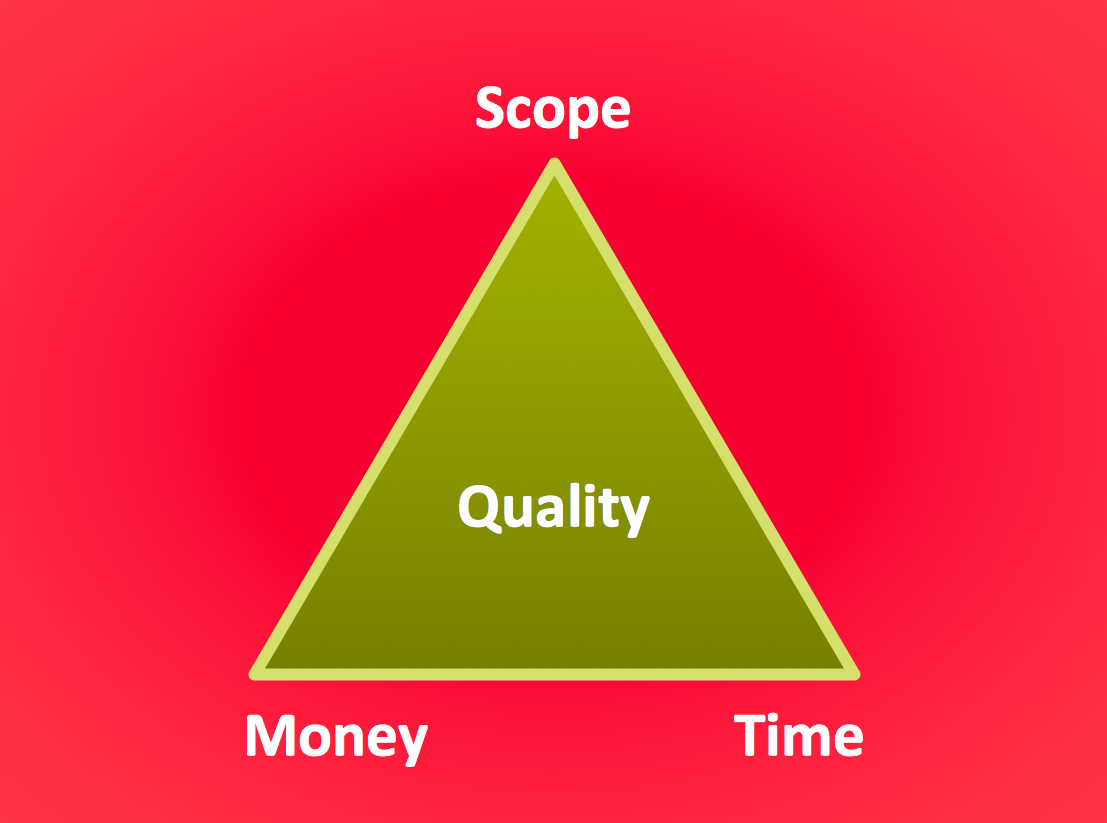
Example 1. Pyramid Diagram. Project management triangle diagram
This diagram was redesigned using ConceptDraw DIAGRAM diagramming and vector drawing software from Wikimedia Commons file Project-triangle-en.svg.
[commons.wikimedia.org/wiki/File:Project-triangle-en.svg]
See more Pyramid Diagram:
TEN RELATED HOW TO's:
Project progress on web: delivering project status to remote teams and stakeholders via Skype.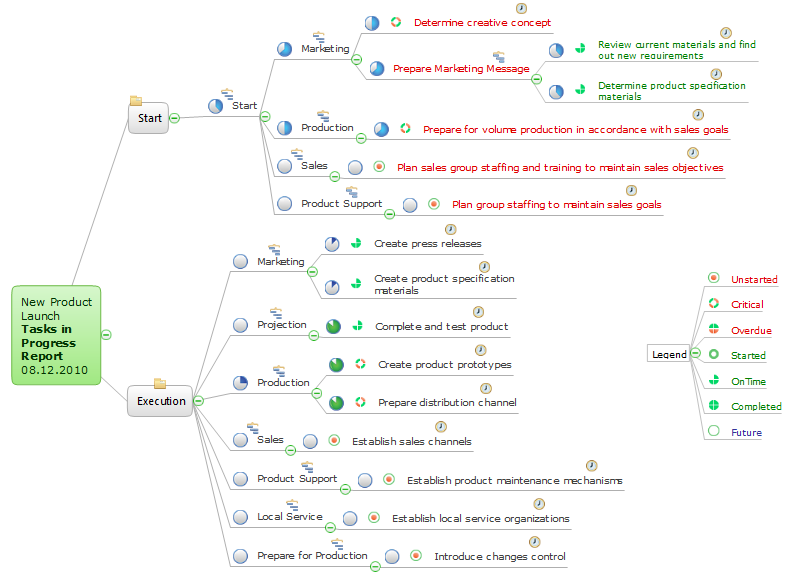
Picture: How To Show Project Progress Peport on Web
Related Solution:
The most easier way of creating the visually engaging and informative Sales Process Flowchart is to create the new ConceptDraw document and to use the predesigned vector symbols offered in 6 libraries of the Sales Flowchart Solution. There are more than six types of sales process flow diagrams, ConceptDraw DIAGRAM software is flowchart maker which include six collections of extended flowchart symbols for effective diagramming. There are main collections of color coded flowchart symbols: Sales Department, Sales Steps, Sales Workflow, Sales Symbols and special set of Sales Arrows and Sales Flowchart.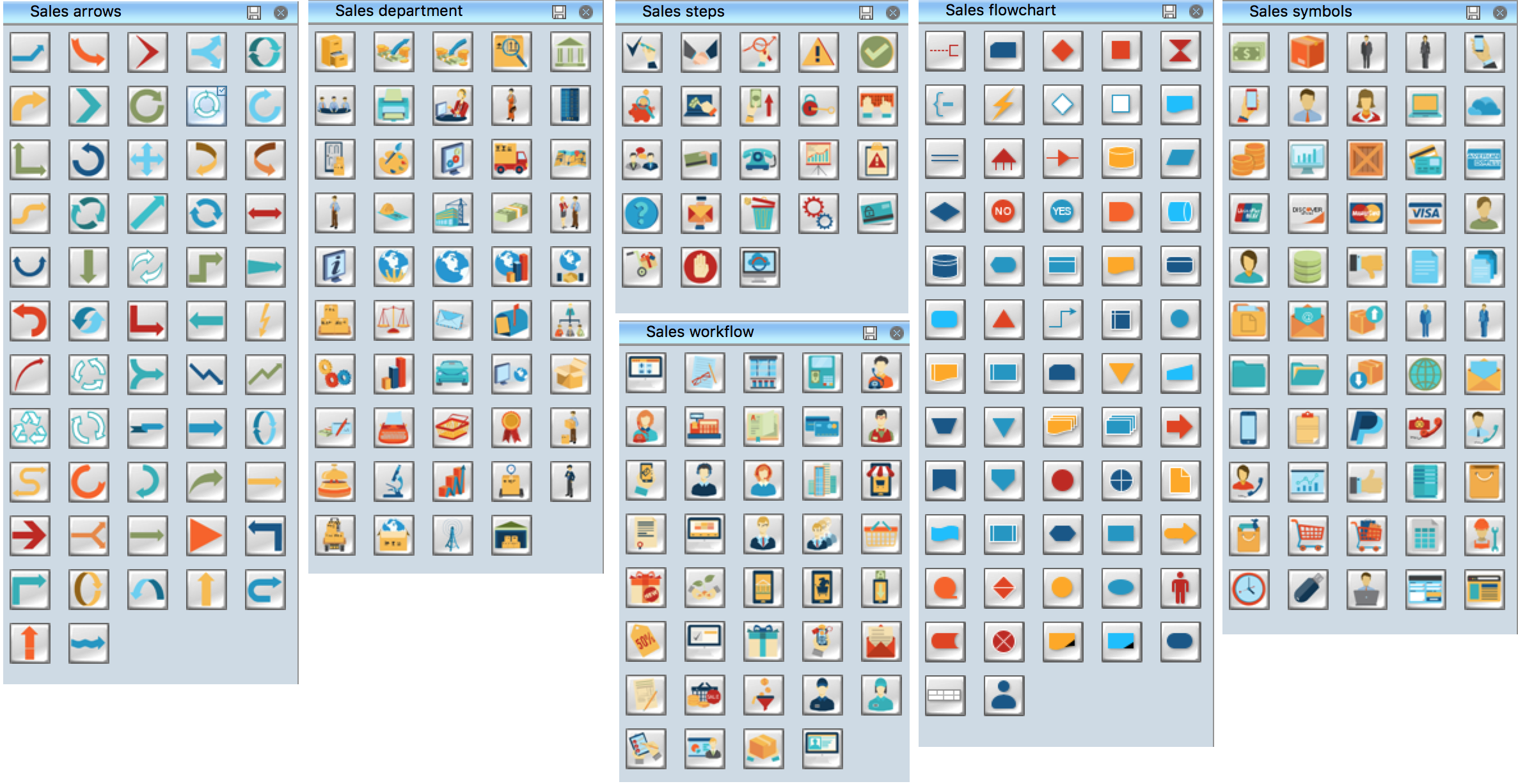
Picture: Sales Process Flowchart Symbols
Related Solution:
Garrett IA diagrams are used at development of Internet-resources, in particulars at projecting of interactions of web-resource elements. The diagram of information architecture of the web resource which is constructed correctly with necessary details presents to developers the resource in comprehensible and visual way.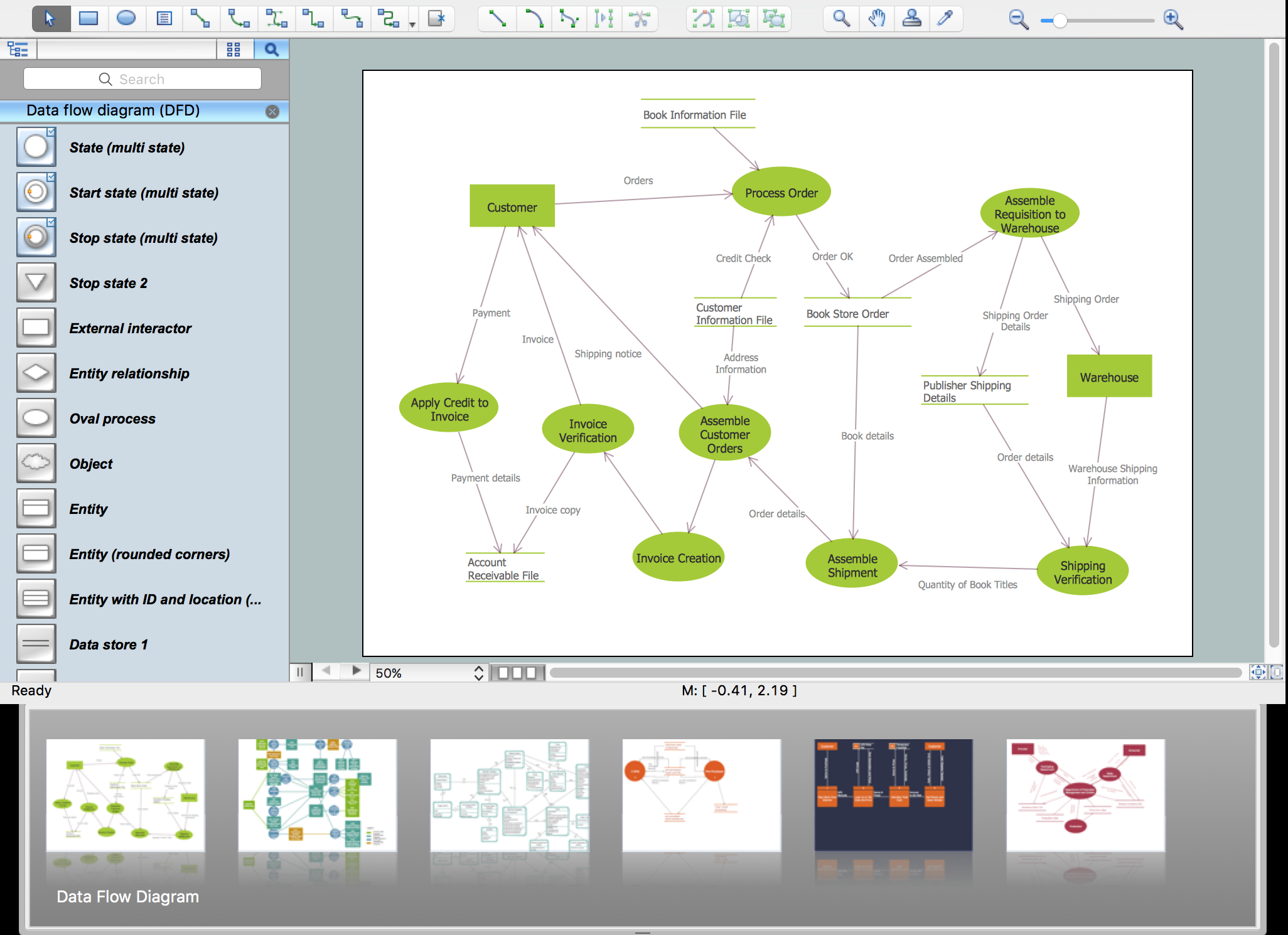
Picture: Garrett IA Diagrams with ConceptDraw DIAGRAM
Data structure diagram (DSD) is intended for description of conceptual models of data (concepts and connections between them) in the graphic format for more obviousness. Data structure diagram includes entities description, connections between them and obligatory conditions and requirements which connect them. Create Data structure diagram with ConceptDraw DIAGRAM.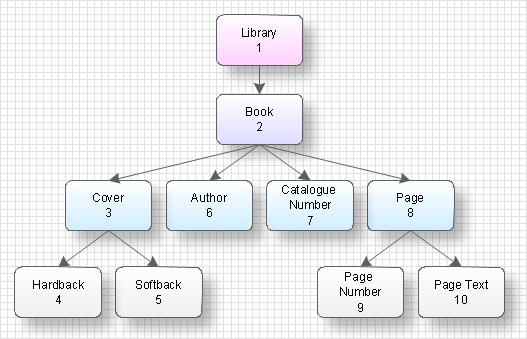
Picture: Data structure diagram with ConceptDraw DIAGRAM
ConceptDraw DIAGRAM is a powerful business and technical diagramming software tool that enables you to design professional-looking graphics, diagrams, flowcharts, floor plans and much more in just minutes. Maintain business processes performance with clear visual documentation. Effectively present and communicate information in a clear and concise manner with ConceptDraw DIAGRAM.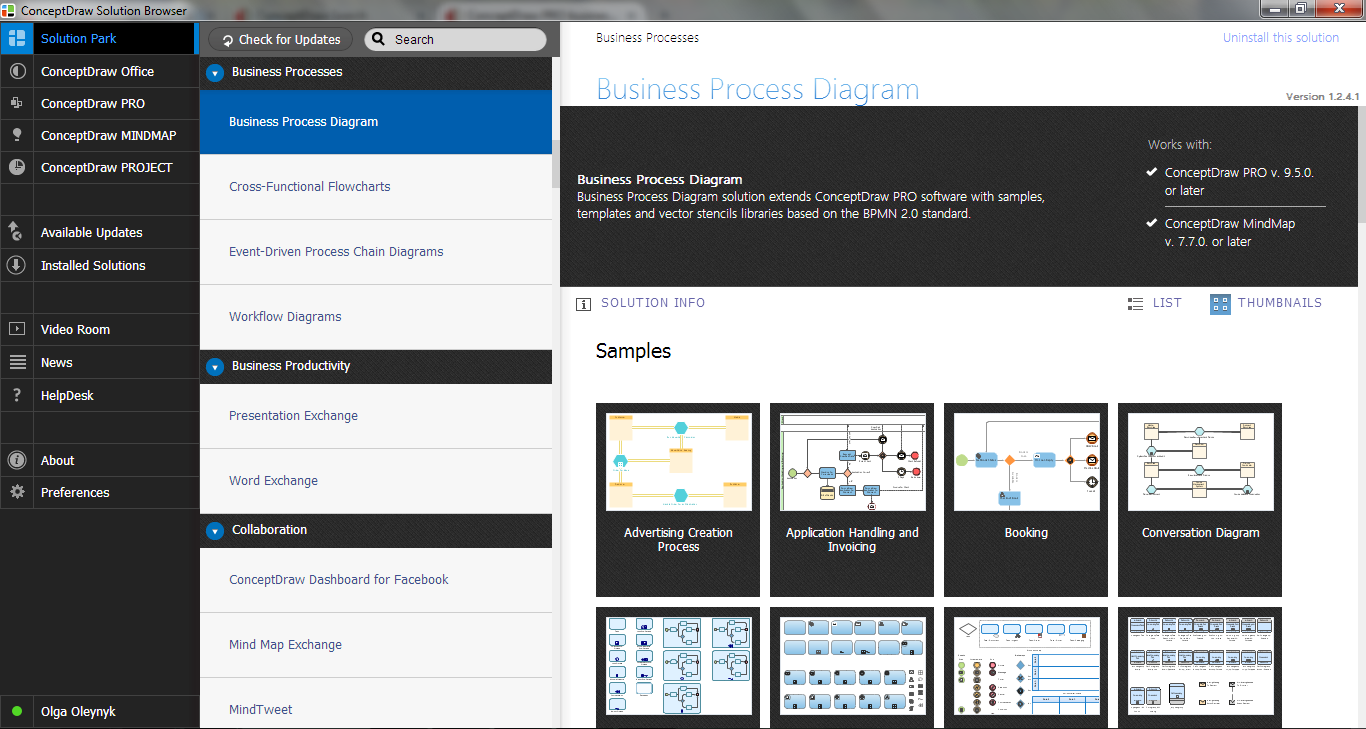
Picture: ConceptDraw DIAGRAM
Network infrastructure planning is a very important process in the network construction, and the share of time allocated to this within the scope of the entire project may reach 60-80%. A competent and thorough approach to planning contributes to the quick investment return, and also increases the reliability and flexibility of the final system, reducing the probability of additional costs related to the incorrect implementation.
Any planning begins with an analysis of the business requirements to the final system. Basic network parameters, which should be assessed are the scalability, accessibility, cost, speed and safety.
Speed and cost are often mistaken for the most important parameters, and the rest of the parameters aren't even remembered. This is not entirely correct. Initially, it is necessary to assess the business plans for the future, because sometimes it is more profitable to invest more money in the beginning. If the business is to develop, then, consequently, demands on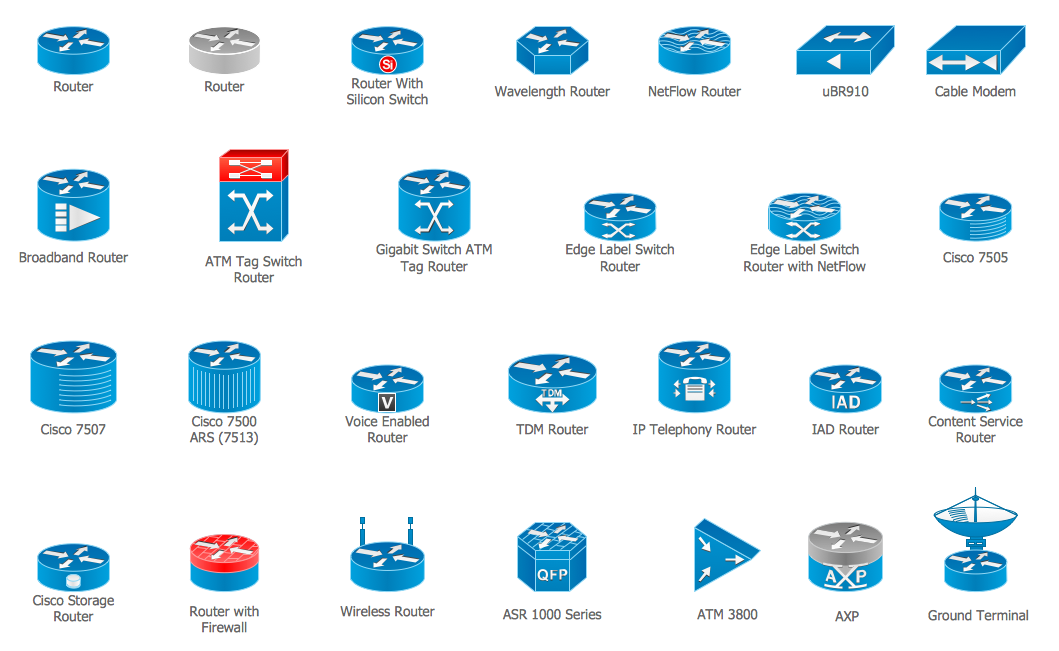
Picture: Cisco Routers. Cisco icons, shapes, stencils and symbols
Related Solution:
A full-featured project management solution with all the necessary functions right at your fingertips. Generates an extensive variety of reports on project and task statuses.
These videos provide a series of lessons that will enhance the understanding of all our users, from people just starting out with the software, through to expert users.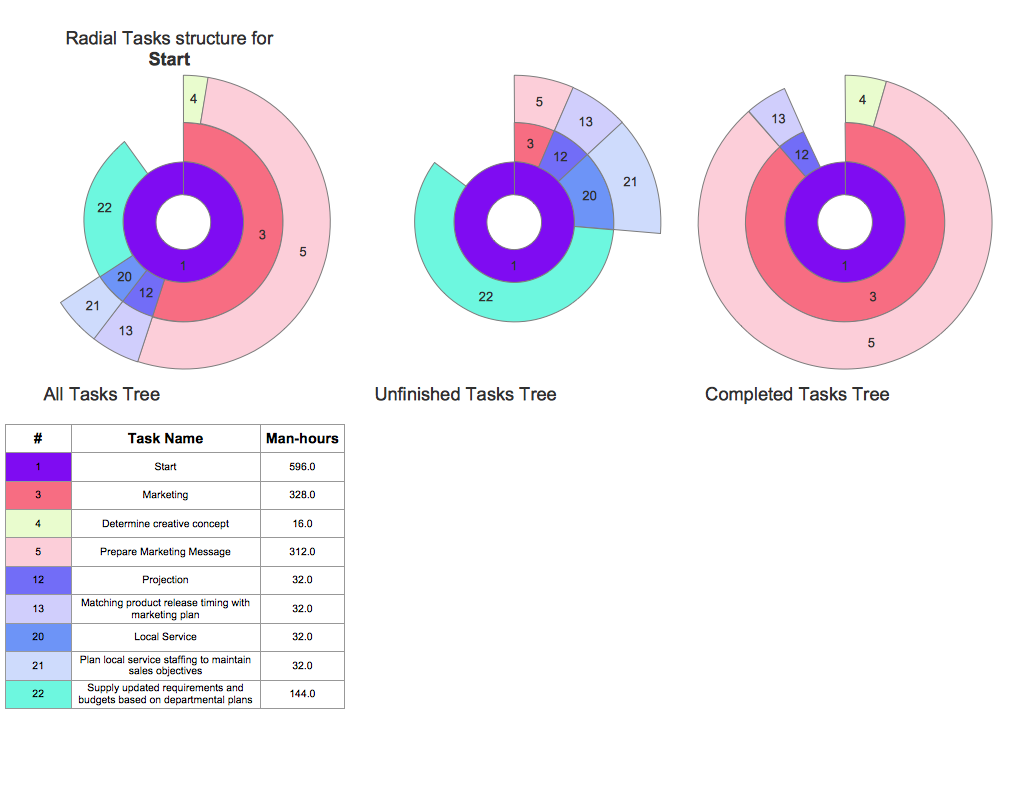
Picture: Project — Working With Tasks
Sample Pictorial Chart - Pictorial Infographics solution provides easy-to-use design infographics drawing tools, large collection of different sample infographics and infograms, sample pictorial chart and templates to be filled in, and 10 libraries with great quantity of predesigned vector pictograms.
Use Pictorial Infographics solution to draw your own design pictorial infographics documents quick and easy.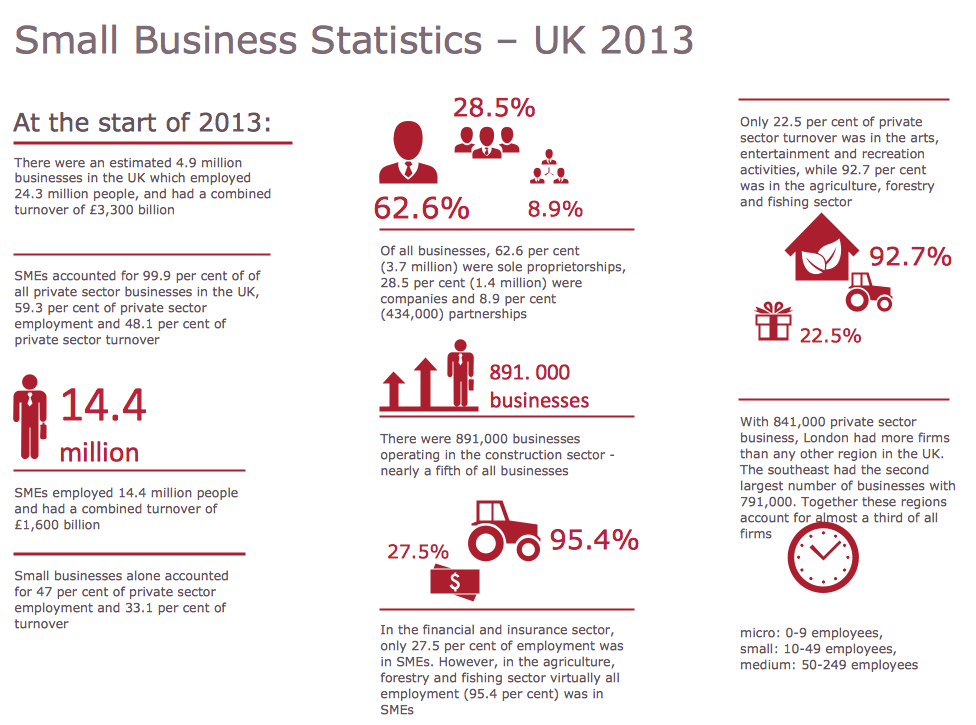
Picture: Sample Pictorial Chart. Sample Infographics
Related Solution:
The Line Graphs solution from Graphs and Charts area of ConceptDraw Solution Park contains a set of examples, templates and design elements library of line and scatter charts. Use it to draw line and scatter graphs using ConceptDraw DIAGRAM diagramming and vector drawing software for illustrating your documents, presentations and websites.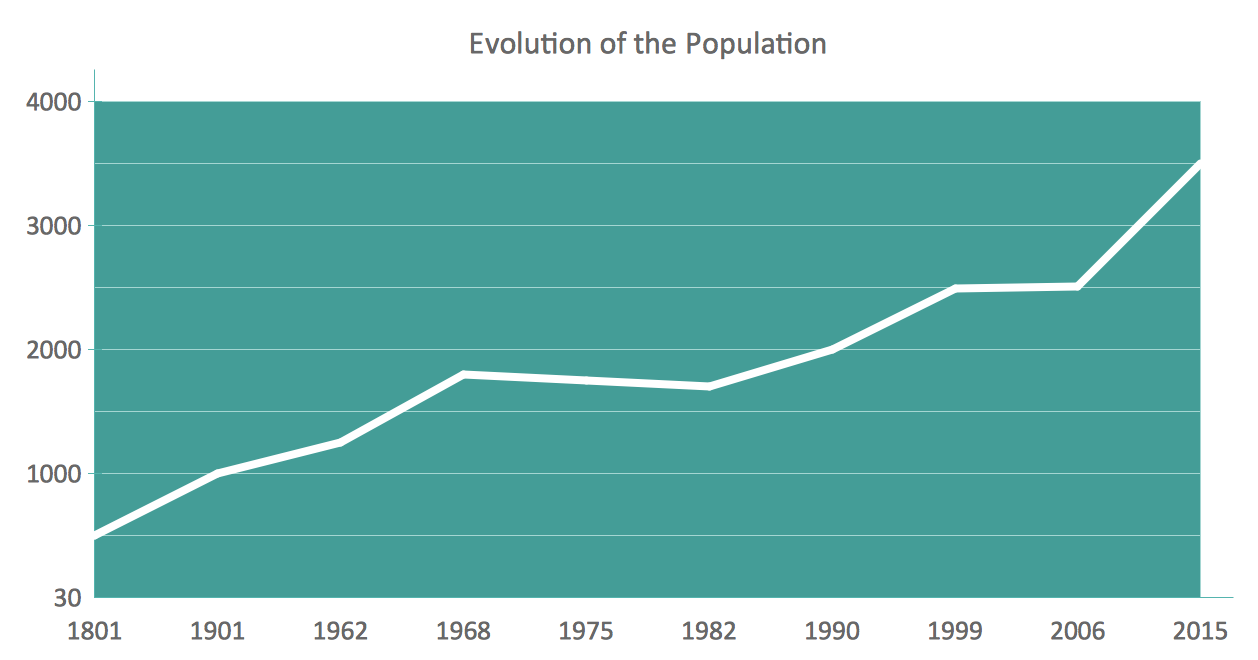
Picture: Line Chart Examples
Related Solution:
Everyone who starts the construction, repair or remodeling of the home, flat or office, is facing with a need of visualization its ideas for visual explanation how all should to be for the foreman and construction team. It is incredibly convenient to use for this professional home architect software. ConceptDraw DIAGRAM software enhanced with Floor Plans solution provides a lot of built-in drawing tools which allow you quick and easy create design plans for the home of your dreams.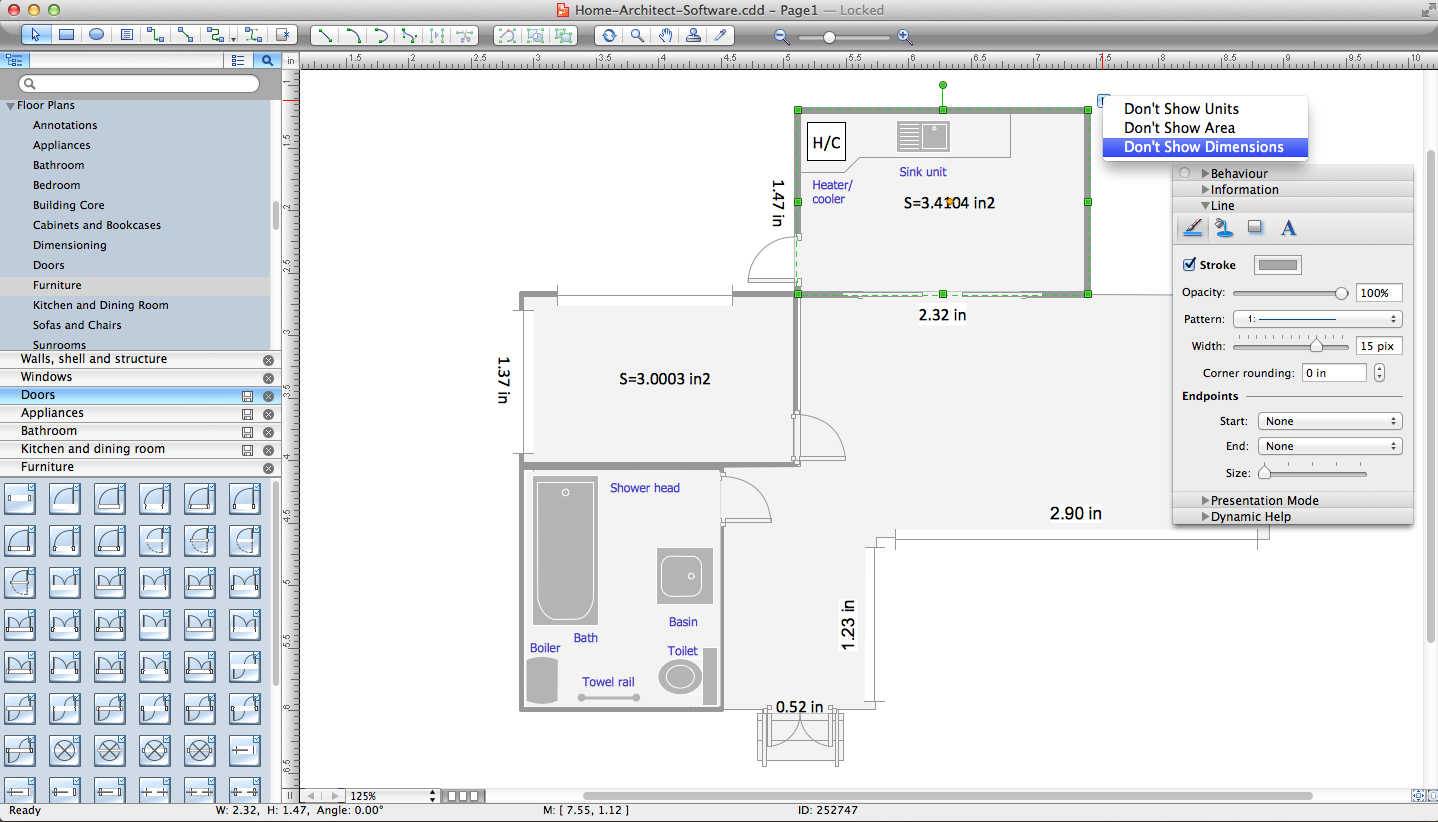
Picture: Home Architect Software. Home Plan Examples
Related Solution: