Made with
ConceptDraw
DIAGRAM 18

Network diagrams with ConceptDraw DIAGRAM

While documenting computer network it is often necessary to describe the existing network structure with the help of schemes or diagrams. It is required to document network configuration, used protocols, logical structure of the network, addresses and names of network objects. Network diagram is the tool for description, study and analysis of network knots and connections between these knots. Created network diagram can present you the existing information in comprehensible graphic view.

Network diagrams are divided into Physical Network Diagrams and Logical Network Diagrams.

As a rule at the development of diagrams ready sets of symbols and pictures for indication of network knots, connections between knots and information about diagram objects are used.

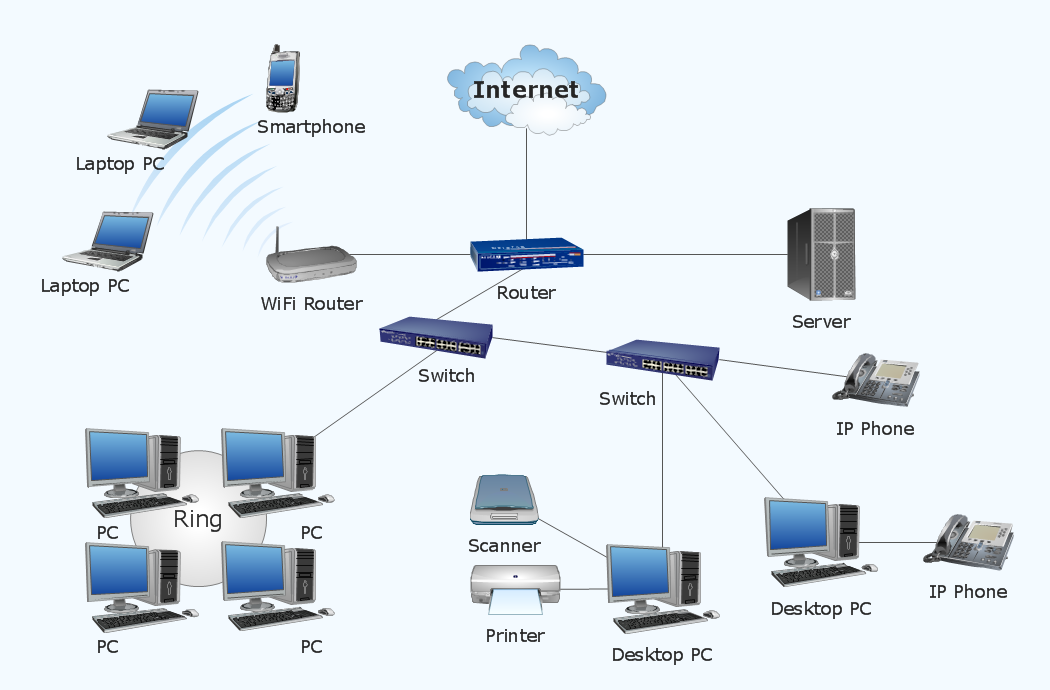
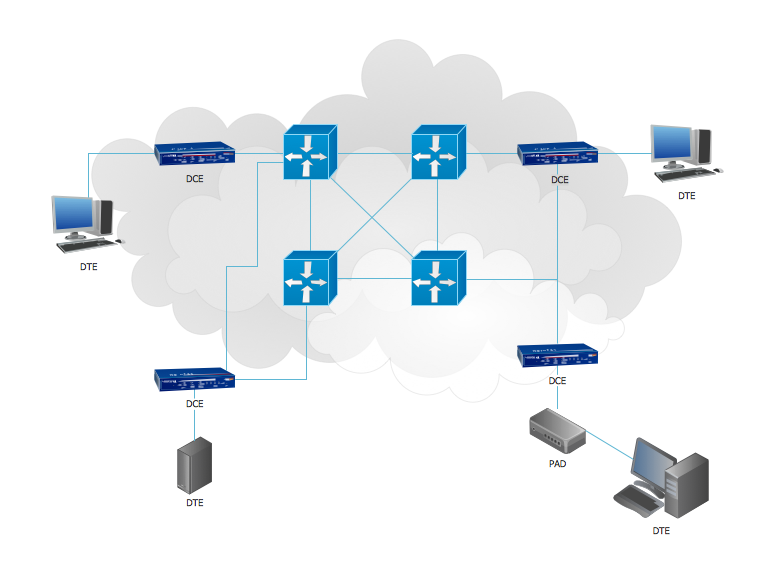
Outer objects, for instance Internet, out of network are described in the form of clouds. Depending on the diagram destination necessary level of the detailed elaboration of the diagram is selected. For instance, on the diagram there can be presented only network objects, such as computers and servers without indication of their parameters and connections type. Similar diagram presents the information about the general structure of the network and is not overloaded with excessive details. Besides, diagrams of different levels of the network contain different types of objects. On the diagram of LAN level (local area network) computers, printers, servers, etc. are displayed whereas on the diagram of WAN level (wide area network) whole buildings and even cities are displayed.

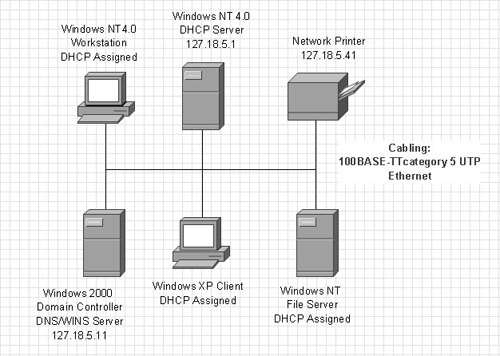
Physical Network Diagram presents to user following information:

  • Telecommunications data, such as cable length, carrying capacity or telecommunication type.
  • Servers with names, IP address (if it is static), server role and domain name.
  • Location of network equipment such as hubs, switches, modems, routers, bridges and printers.
  • Number of network users.

Pic. 1 Physical Network Diagram

Denote on the diagram all firmware versions of devices, telecommunications parameters, IP addresses assigned to devices and so on.

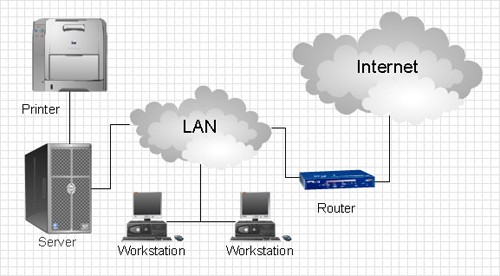
In contrast to Physical Network Diagram Logical Network Diagram presents the information about logical network structure, including:

  • Domain architecture
  • Used protocols
  • Servers roles
  • Trust relationship

Network diagram is an indispensable tool for network administrators and engineers at development of new networks and management of existing networks.

Pic. 2 Logical Network Diagram

This sample was created in ConceptDraw DIAGRAM from the Computer Network Diagrams solution.

Network diagrams with ConceptDraw DIAGRAM  *

Pic. 3 Network diagram

All source documents are vector graphic documents. They are available for reviewing, modifying or converting to a variety of formats (PDF file, Power point Presentation, image or MS Visio) from the ConceptDraw Solution Park. The Computer Network Diagrams Solution is available for all ConceptDraw DIAGRAM users.



TEN RELATED HOW TO's:
ConceptDraw DIAGRAM is a powerful tool for business and technical diagramming. Software Development area of ConceptDraw Solution Park provides 5 solutions: Data Flow Diagrams, Entity-Relationship Diagram (ERD), Graphic User Interface, IDEFO Diagrams, Rapid UML.Software Diagram Examples and Templates *
Picture: Software Diagram Examples and Templates
Related Solution:
ConceptDraw DIAGRAM is effective software for a variety of activity fields. Now, extended with Sales Flowcharts solution from the Marketing area of ConceptDraw Solution Park it become also useful in the field of sales. It helps to design professional looking Sales Flowcharts, Sales Process Flowcharts, Sales Process Maps, Plans and Diagrams to effectively realize the process of selling a product or service, and to display the sales results.Sales Process *
Picture: Sales Process
Related Solution:
The Total Quality Management Diagram solution helps you and your organization visualize business and industrial processes. Create Total Quality Management diagrams for business process with ConceptDraw software.Organizational Structure Total Quality Management *
Picture: Organizational Structure Total Quality Management
Related Solution:
A flowchart is a simple but very functional tool when it comes to understanding a workflow or to removing unnecessary stages from a process. When drawing flowcharts, keep in mind that there are four common types of flowcharts, like document flowcharts and data flowcharts that show control over a data or document flow over a system. To show controls on a physical level, use system flowcharts. In addition, to show controls in a program, you can draw a program flowchart. This flowchart diagram represents the piece of an article editing process, that involves the author and editor. It was created using the Basic Flowchart notation that consists from the basic flowchart symbols. The start and the end of the process are indicated with "Terminator" symbols. The "Process" symbols show the action steps consisting from making edits and searching for a compromise, when the author does not agree with the suggestions of the editor. The "Process" symbol is the general symbol in process flowcharts. The "Decision" symbol indicates a branching in the process flow. There are two branches indicated by a Decision shape in the current flowchart (Yes/No, Disagree/Agree). This basic flowchart can be used as a repeating unit in the workflow diagram describing the working process of some editorial office.Types of Flowcharts *
Picture: Types of Flowcharts
Related Solution:
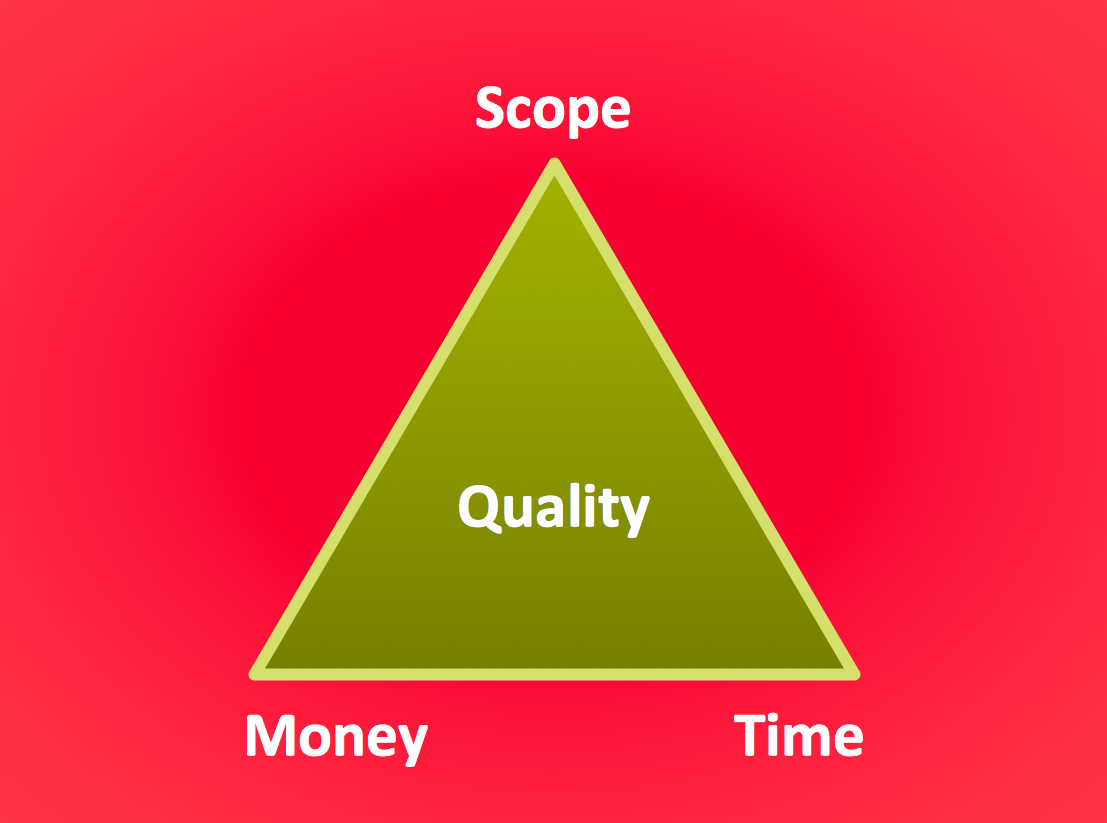
The Project Management Triangle Diagram depicts three main constraints of any project: scope, time and cost. Projects have to comply with the specified scope, projects should be finished in time and projects need to consume the budget. Each of the constraints represents one side of the triangle, and any change in budget or timing or scope affects the entire diagram.Pyramid Diagram *
Picture: Pyramid Diagram
Related Solution:
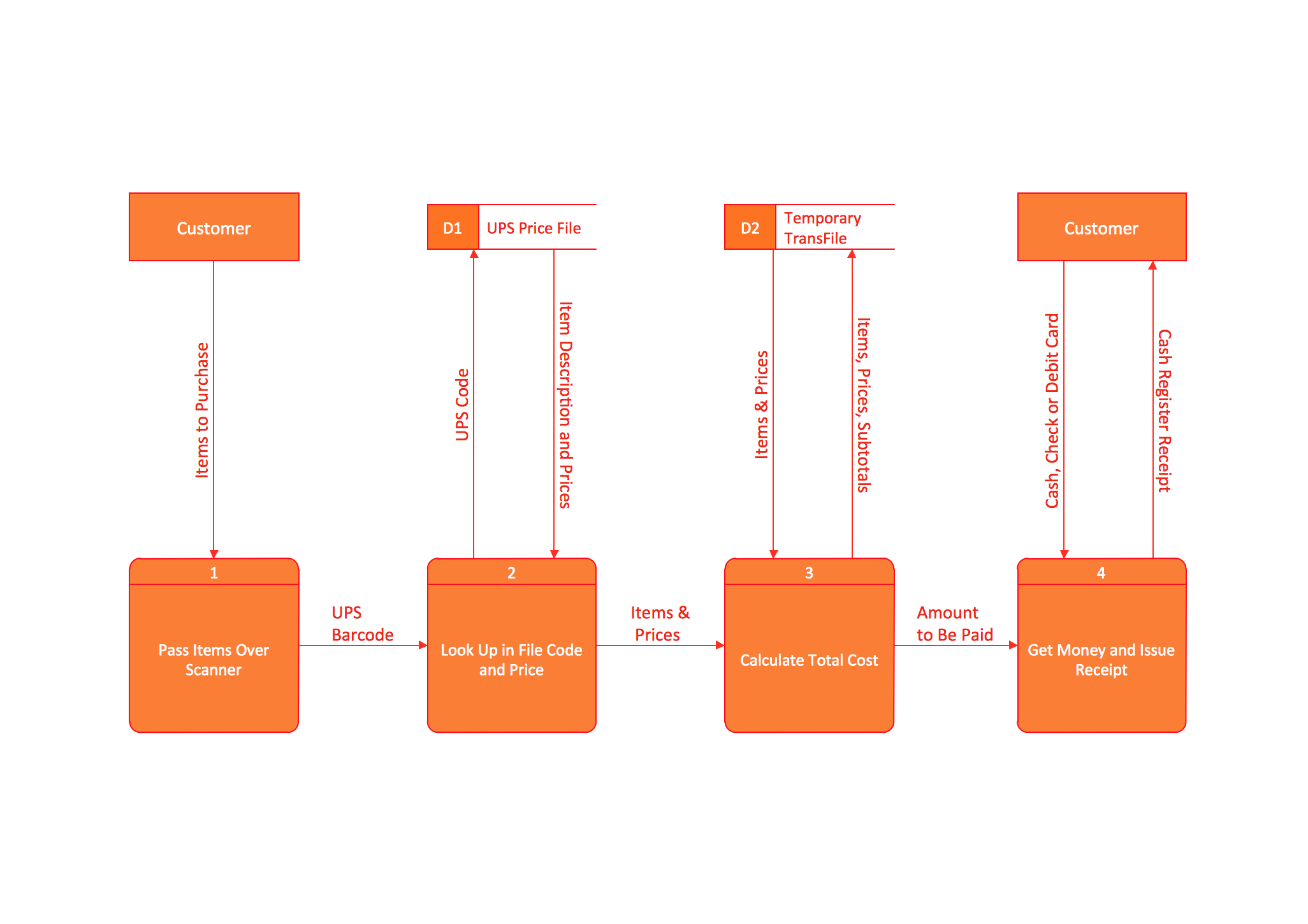
In software engineering, it is important to understand how the system would cooperate with external sources, like data sources. To give this information a visual representation, data flow diagrams (DFD) were used for years. The entire system is usually divided into smaller ones, and all of them process data flows in appropriate ways. The visualizing business processes which engages the data transfer, is commonly preformed using DFDs (data flow diagrams). DFD is used to show the data flow processing and transformation. This DFD represents the electronic system of a customer purchase. It was created using Gane/Sarson notation. Data flow diagrams helps you to sort through and clarify transferring process making it available for analysis, and representation. ConceptDraw DFD solution introduces the vector library, containing the full set of icons from DFD notations.Data Flow Diagram (DFD) *
Picture: Data Flow Diagram (DFD)
Related Solution:
This sample shows the Flowchart that displays the layout and work flow of the cloud marketing platform. This diagram has a style of the marketing brochure. This style displays the central product that is related to the other issues. Using the ready-to-use predesigned objects, samples and templates from the Flowcharts Solution for ConceptDraw DIAGRAM you can create your own professional looking Flowchart Diagrams quick and easy.Flowchart Marketing Process. <br>Flowchart Examples *
Picture: Flowchart Marketing Process. Flowchart Examples
Related Solution:
3D Network Diagrams are very popular diagrams in the field of network technologies. They have more visual, clear, attractive and understandable look than 2D. ConceptDraw DIAGRAM gives the opportunity to draw the professional looking 3D Network Diagrams easy, quick and effective. This example shows the 3D Network Diagram. It was created in ConceptDraw DIAGRAM using the 3D network elements from the Computer and Networks solution from the Computer and Networks area of ConceptDraw Solution Park.3D Network Diagrams. Computer and Network Examples *
Picture: 3D Network Diagrams. Computer and Network Examples
Related Solution:
Cisco icons are globally recognized and generally accepted as standard for network icon topologies. The ConceptDraw vector stencils library Cisco buildings contains 21 symbols for drawing the computer network diagrams using the ConceptDraw DIAGRAM diagramming and vector drawing software.Cisco Buildings. <br>Cisco icons, shapes, stencils and symbols *
Picture: Cisco Buildings. Cisco icons, shapes, stencils and symbols
Related Solution:
A database is a data collection, structured into some conceptual model. Two most common approaches of developing data models are UML diagrams and ER-model diagrams. There are several notations of entity-relationship diagram symbols and their meaning is slightly different. Crow’s Foot notation is quite descriptive and easy to understand, meanwhile, the Chen notation is great for conceptual modeling. An entity relationship diagrams look very simple to a flowcharts. The main difference is the symbols provided by specific ERD notations. There are several models applied in entity-relationship diagrams: conceptual, logical and physical. Creating an entity relationship diagram requires using a specific notation. There are five main components of common ERD notations: Entities, Actions, Attributes, Cardinality and Connections. The two of notations most widely used for creating ERD are Chen notation and Crow foot notation. By the way, the Crow foot notation originates from the Chen notation - it is an adapted version of the Chen notation.ERD Symbols and Meanings
Picture: ERD Symbols and Meanings
Related Solution:
ConceptDraw
DIAGRAM 18