Made with
ConceptDraw
DIAGRAM 18

Business Processes description with ConceptDraw DIAGRAM

In the given article we will consider “business-process” and “business-processes reengineering” concepts and how the work with business-processes is realized in ConceptDraw.

The activity of a company of any size consists of the big amount of business-processes which repeat from day to day. This could be a transportation of the load or the new software development, sorting of the correspondence or the creation of the air liner. So any action happened inside the company, which has definite conditions at the input, the result at the output, resources and control mechanism is the business-process. At bottom of fact, business-process is any action, directed to the final receipt of the direct or indirect profit.

Let’s make some formal definitions.

Business-process is:

  • A consequence of actions directed to the transformation of data material flows having the aim to increase their value for a client or the process of creation of the added product cost or services, which satisfy client needs.
  • A quantity of inner correlated steps (functions) which start from one or more inputs and finish with the creation of output (product or service), necessary to a client.
  • A process of transformation of inputs into sets of outputs;
  • A totality of consequent actions for solving of any enterprise task.
  • Business-process is an operation, included into the system of operations, the aim of which is production and delivery of services/goods to operations which enter into the system and to other systems as well.
  • Any process can be optimized and the experience of a great number of companies shows that sometimes it is possible to spend several hours on the process which earlier took several weeks. At this the diminution of the time spent on the produce of goods or service does not influence on the quality of the final result! In our century of the strict competition and market overloaded with services and goods the possibility to accelerate and reduce the price of the final product or a service is of great importance. One of the main reasons of economical progress of Japanese corporations is exactly the thoroughly considered and executed strategy of business-processes optimization.

    The process of business-processes optimizations is called reengineering. At that the matter concerns not small change but radical redesign of the existing business-processes.

    But to redesign existing business-processes it is necessary to clearly conceive the current state of business-processes «as is». For description of business-processes several methods are developed.

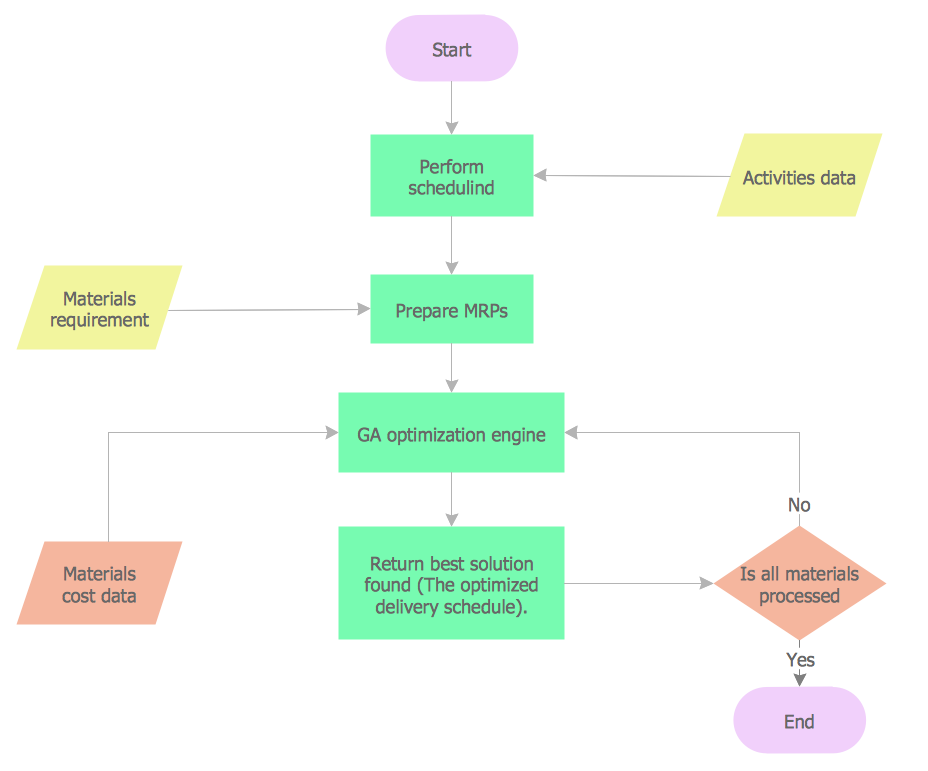
    The simplest variant of business-processes description is the usage of ordinary block-schemes. This way could be realized with the help of ConceptDraw as there are special libraries of objects and templates for creation of block-schemes. However, this method does not give a visual and convenient result for business-processes optimization. Therefore for description of business processes we recommend you to use more complex but more efficient methods.

    Methodology of the structural analysis and projection (SA/SD). At the heart of it there lies a methodology of the structural projection of software and information systems. SADT methodology is the continuation of SA/SD method.

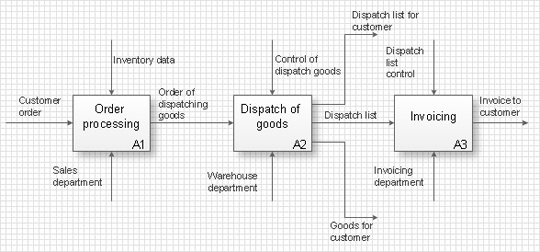
    The most worked out and commonly used methodology of business-processes description is IDEF methodology. Besides business-processes it allows to describe functional blocks, for example production and marketing. ConceptDraw lets creation of business processes description using IDEF0 and IDEF2 methods.

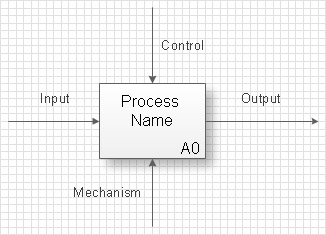
    Accordingly to IDEF method, business-process is described by following way- this is a rectangle (Activity Box) which defines directly the performed action and four arrows which denote the “input”, “output”, “mechanism” (or resources which are used in the process) and “management”
    (or the control of the process)

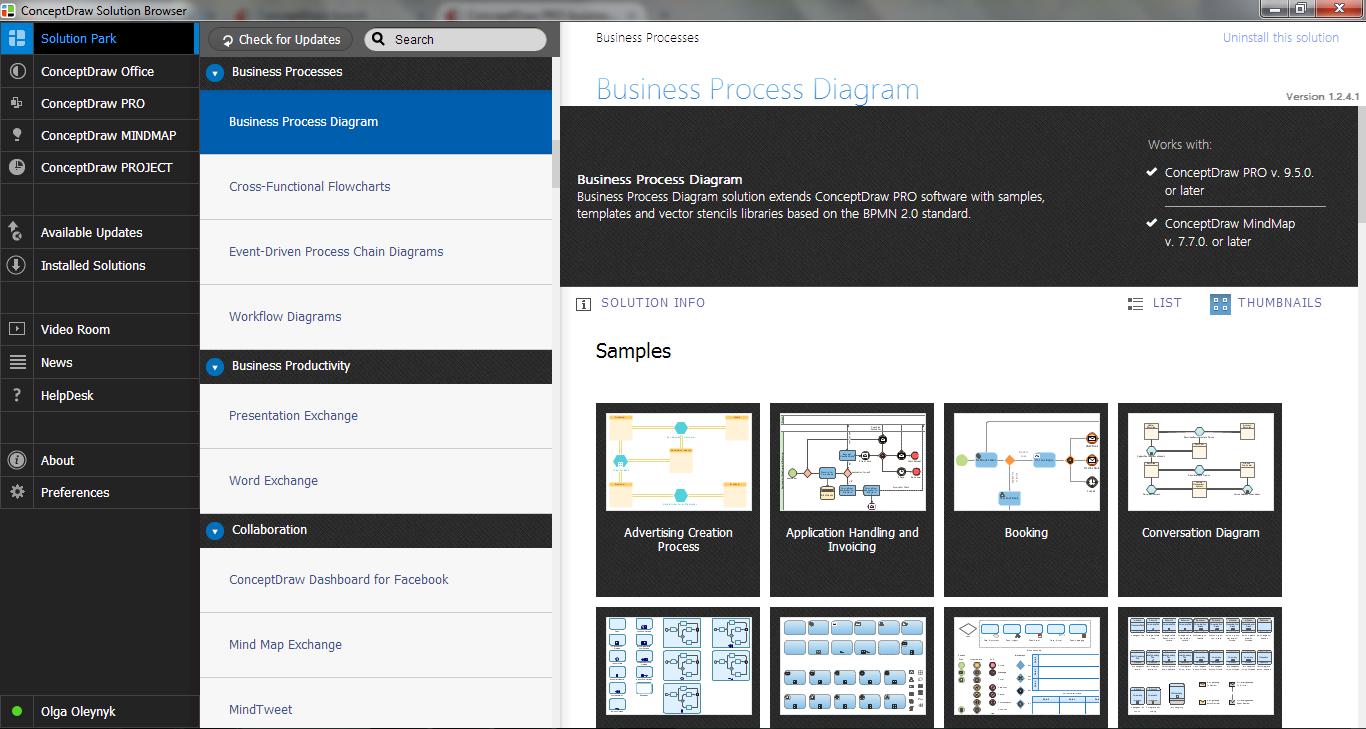
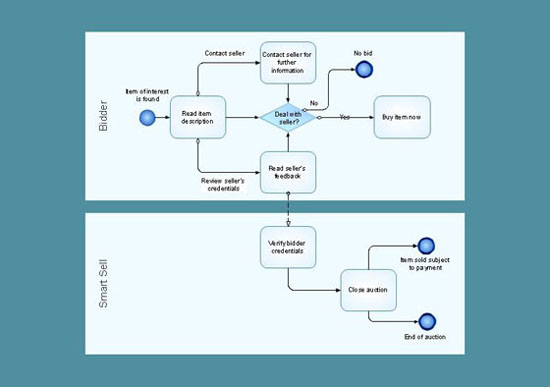
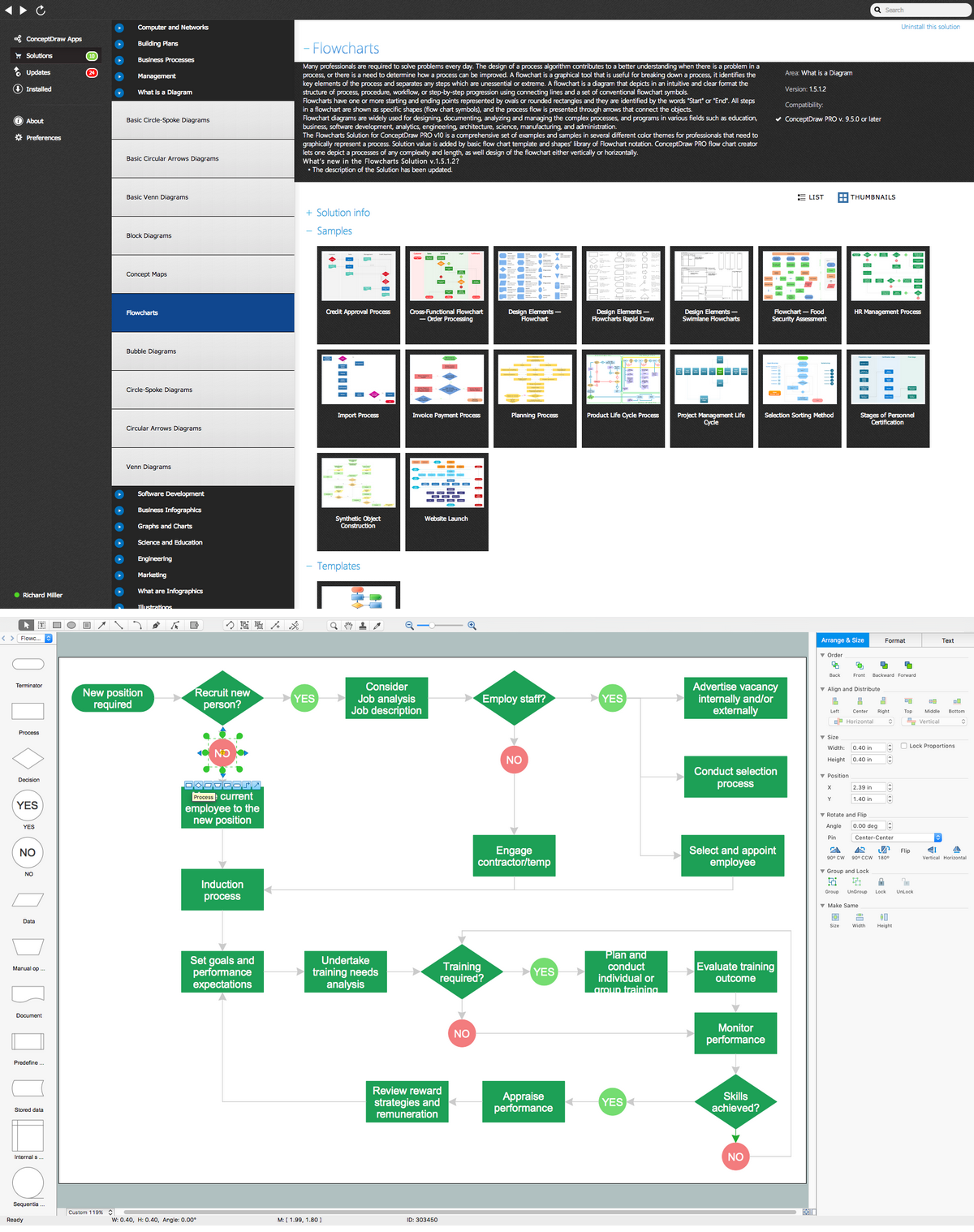
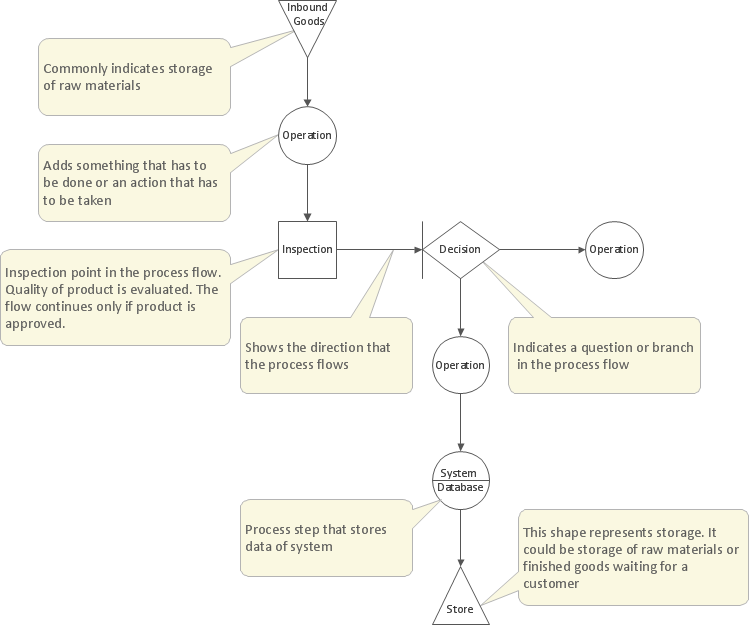
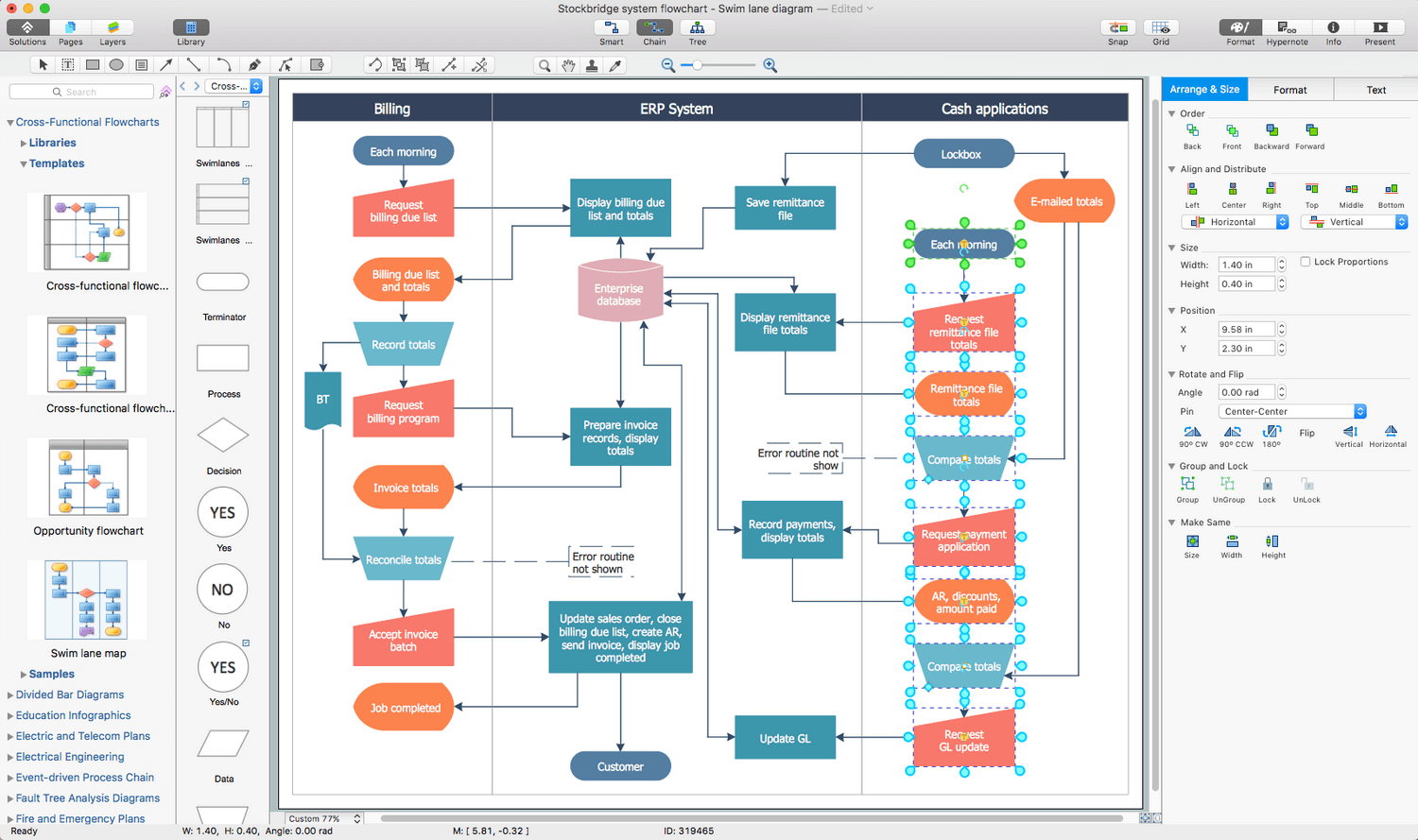
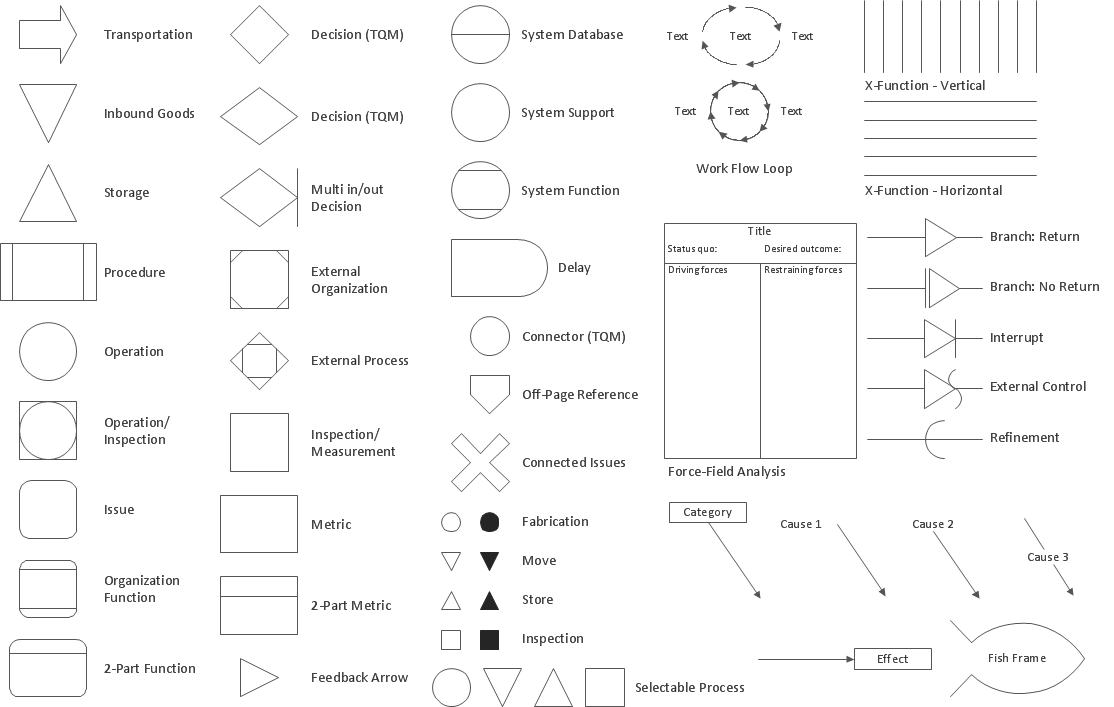
    To create the business-process description in ConceptDraw it is enough to open Business Processes section in ConceptDraw STORE and select a method. Besides IDEF methodology ConceptDraw allows usage of diagrams of business-processes modeling (BPML - Business Process Modeling Diagram), diagrams of quality control (TQM Diagram - Total Quality Management Diagram) and symbols of values flows.

    Business Process Diagram Solution in ConceptDraw STORE

    After this a scheme or a diagram, is created as simple as any other ConceptDraw diagram- with the help of Drag&Drop mechanism you arrange necessary libraries’ objects on a page of your document and connect them among each other with connectors.

    Thus, all the activity of a company can be described as the totality of many small business processes, which can be optimized by the way of reengineering for getting new most effective business processes. The obtained optimized description is called “normative” or “to be” and is realized with the help of the same method with the help of which the description “as is” was created.

    Business Processes description with ConceptDraw DIAGRAM  *


    TEN RELATED HOW TO's:
    This sample shows the Strategic Plan of the Broadband Lifecycle that was developed by Strategic Networks Group. The Broadband Lifecycle represents the advance of the broadband investments.Successful Strategic Plan *
    Picture: Successful Strategic Plan
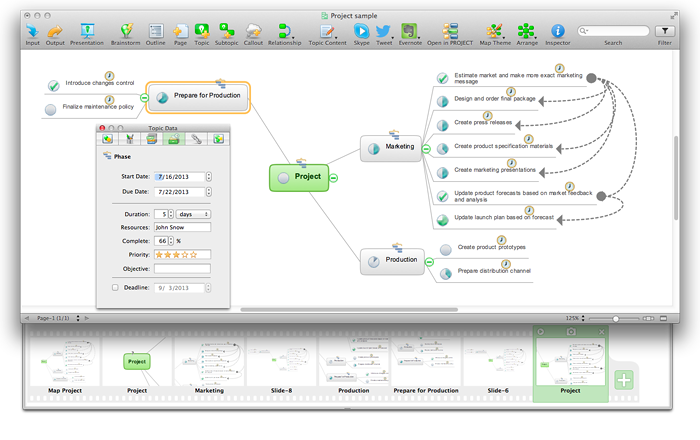
    Mind map that organizes targets and goals of a sales plan.Sales Plan *
    Picture: Sales Plan
    Related Solution:
    A flowchart is a simple but very functional tool when it comes to understanding a workflow or to removing unnecessary stages from a process. When drawing flowcharts, keep in mind that there are four common types of flowcharts, like document flowcharts and data flowcharts that show control over a data or document flow over a system. To show controls on a physical level, use system flowcharts. In addition, to show controls in a program, you can draw a program flowchart. This flowchart diagram represents the piece of an article editing process, that involves the author and editor. It was created using the Basic Flowchart notation that consists from the basic flowchart symbols. The start and the end of the process are indicated with "Terminator" symbols. The "Process" symbols show the action steps consisting from making edits and searching for a compromise, when the author does not agree with the suggestions of the editor. The "Process" symbol is the general symbol in process flowcharts. The "Decision" symbol indicates a branching in the process flow. There are two branches indicated by a Decision shape in the current flowchart (Yes/No, Disagree/Agree). This basic flowchart can be used as a repeating unit in the workflow diagram describing the working process of some editorial office.Types of Flowcharts *
    Picture: Types of Flowcharts
    Related Solution:
    This sample was created in ConceptDraw DIAGRAM diagramming and vector drawing software using the UML Deployment Diagram library of the Rapid UML Solution from the Software Development area of ConceptDraw Solution Park. This sample shows the work of the ATM (Automated Teller Machine) banking system that is used for service and performing of the banking transactions using ATMs. System engineers can use comprehensive UML diagrams solution.UML Deployment Diagram Example - ATM System<br>UML diagrams *
    Picture: UML Deployment Diagram Example - ATM SystemUML diagrams
    Related Solution:
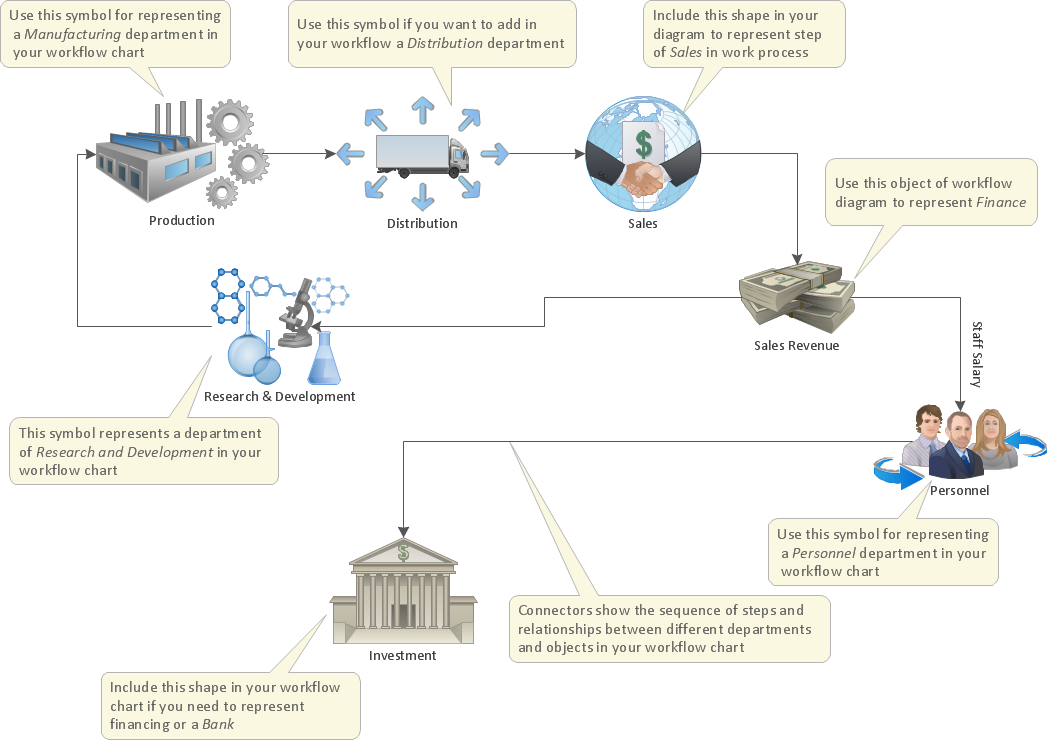
    ConceptDraw DIAGRAM - workflow software extended with the Workflow Diagram solution provides a complete set of samples, templates and features help you to draw diagrams faster. A workflow software you use for drawing workflow diagrams and business process flow diagrams should provide a wide set of examples allows you get closer with workflow diagrams, learn symbols meaning, find appropriate layout and design, and then start drawing your own workflow diagram masterfully. Workflow diagrams used for orchestrating organizational processes between company departments and humans, so critical process diagrams used to train many people to interact must be clear and professional to convey an idea from a view. Thats a reason we created a lot workflow symbols and workflow icons collected them into special Workflow Diagram solution in ConceptDraw Solution Park.Workflow Diagram Examples *
    Picture: Workflow Diagram Examples
    Related Solution:
    UML Activity Diagram illustrate the business and operational step-by-step workflow of components in a system and shows the overall flow of control.UML Activity Diagram. Design Elements *
    Picture: UML Activity Diagram. Design Elements
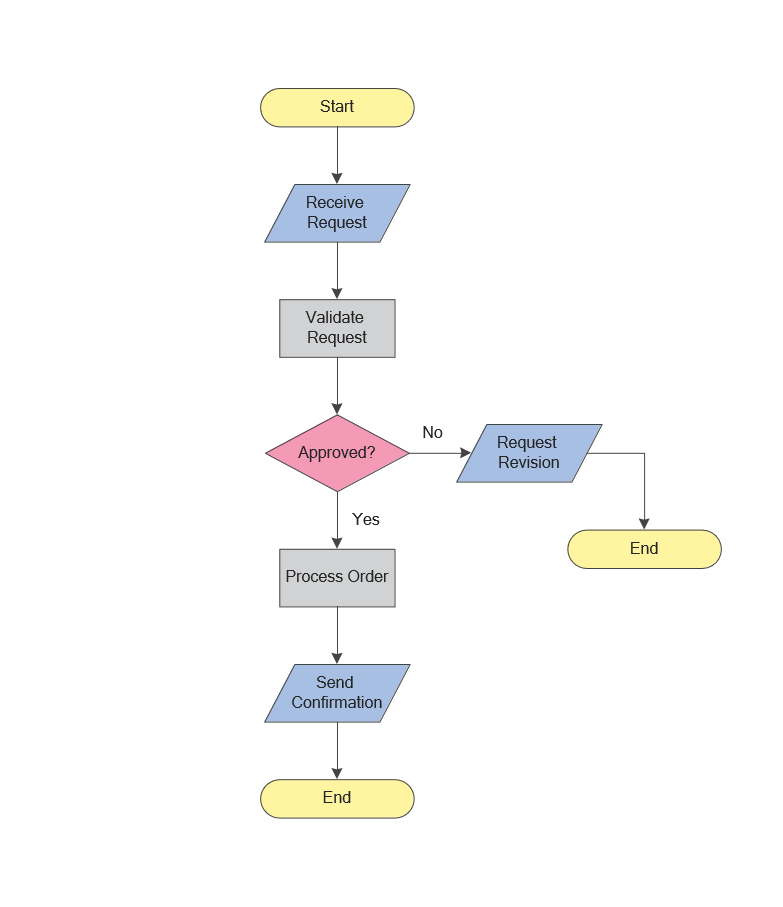
    A flowchart is a powerful tool for examining processes. It helps improving processes a lot, as it becomes much easier to communicate between involved people, to identify potential problems and to optimize workflow. There are flowcharts of different shapes, sizes and types of flowchart vary from quite basic process flowcharts to complex program flowcharts. Nevertheless, all these diagrams use the same set of special symbols like arrows to connect blocks, parallelogram to show data receiving or rectangles for showing process steps. Basic flowcharts are used to represent a simple process algorithm. A basic flowchart notation consists of rectangles (business processes), arrows (the flow of information, documents, etc.). The same notation is used in items such as the "decision", which allow you to do the branching. To indicate the start of the entire business process and its termination can be used the "Terminator" element. The advantages of Basic Flowchart are simplicity and clarity. With it you can quickly describe the business process steps. Creating of Basic Flowchart does not require any special knowledge, as easily understand by employees with different levels of education and IQ.Types of Flowchart — Overview
    Picture: Types of Flowchart: Comprehensive Overview
    Related Solution:
    An example of marketing analysis diagram, can be used to analyse product market and define marketing strategy.Marketing Analysis Diagram *
    Picture: Marketing Analysis Diagram
    Related Solution:
    A concept map is a way of representing relationships between ideas, images, or words. How to draw a Concept Map quick, easy and effective? ConceptDraw DIAGRAM offers the unique Concept Maps Solution from the Diagrams Area that will help you!Concept Map *
    Picture: Concept Map
    Related Solution:
    Planning a computer network can be a challenge for a junior specialist. However, knowing how to draw a computer network diagrams isn’t a rocket science anymore. There are a lot of special software for creating such diagrams with predesigned templates and examples. The core for Network Fault Tolerance System presented here, is the equipment of Cisco. You can see here the certified Cisco equipment icons. Generally, ConceptDraw DIAGRAM libraries contain more than half of a thousand objects representing the standardized images of Cisco equipment. ConceptDraw solution for network diagramming is a great network diagramming tool for any level skills - from students to network guru.How to Draw a Computer Network Diagrams
    Picture: How to Draw a Computer Network Diagrams
    Related Solution:
    ConceptDraw
    DIAGRAM 18