Made with
ConceptDraw
DIAGRAM 18

IDEF0 standard with ConceptDraw DIAGRAM

The activity of any organization is more or less branchy network of processes. The description of these processes is a hard technical task which requires definite methodology and standards.

For the first time this problem arose in the seventies of the past century during the development of complicated projects requested by the Air Forces of the USA. ICAM system (Integrated Computer-Aided Manufacturing) was developed and later on its basis there was developed the standard of structural description of IDEF0 processes. In 1993 the government of the USA accepted this standard as a federal standard.

In 2000 the new version of ISO 9000:2000 standards was accepted by International Organization of Standardization. The main idea of this standard is a representation of organization activity as a network of processes hence the management of organization is the management of this network of processes. It is for description of these networks the IDEF0 standard is used.

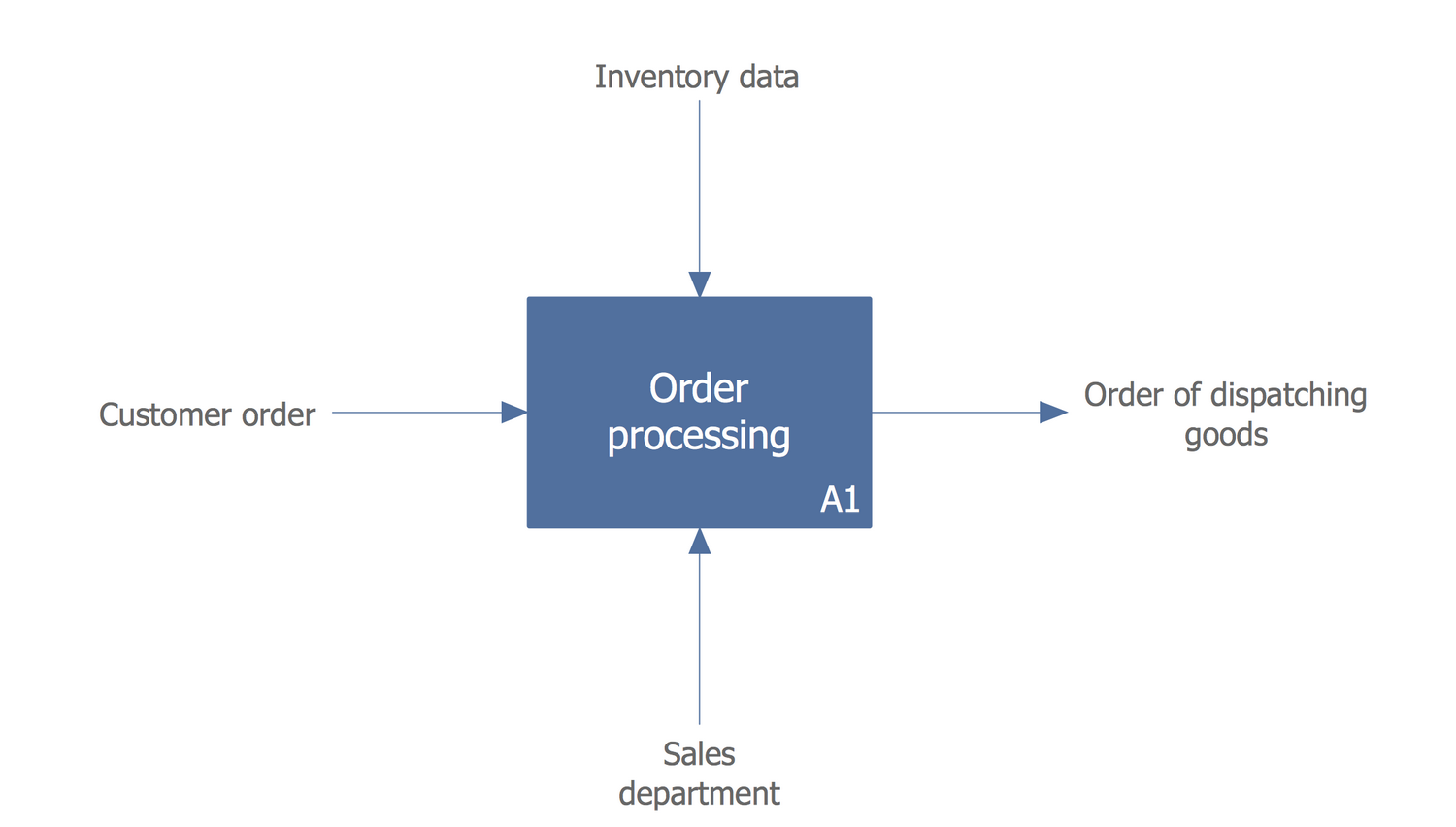
According to the IDEF0 standard any process can be described in the form of a block (Activity Box) which has inputs and outputs. The process consists in transformation of inputs into outputs under the influence of the management and in the presence of necessary resources. Outputs of the given process later on can be either inputs for the next process or resources, or management means.

IDEF0 diagram

Each side of the block has its meaning:

  • Top side - Control;
  • Left side - Input;
  • Right side – Output;
  • Bottom side – Mechanism.

Besides, each block on the diagram has its unique identification number. For instance, the optimization process of the initial code of the program product can be represented in the form of the following block in which already existing quick-and-dirty code is the input, technical task on modernization is the element of the process management, programmer and hardware are the modernization mechanism and at the output optimized code will result.

IDEF0 diagram

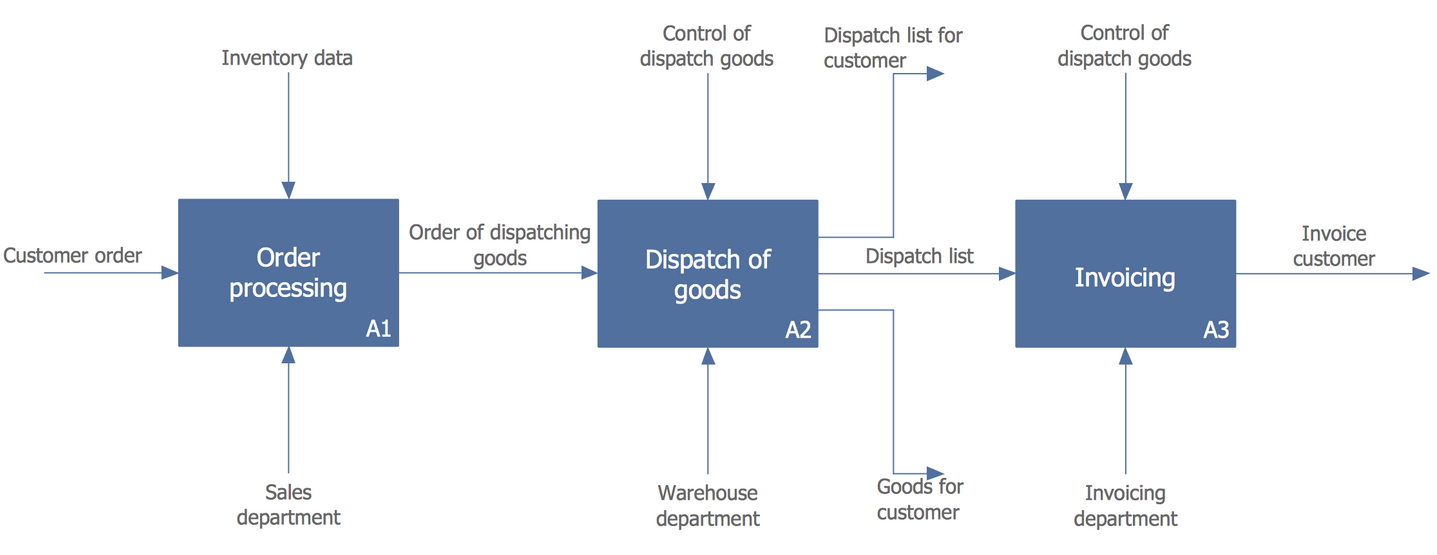
On the diagram an interaction between processes is presented by way of arrows, which connect outputs of one processes with inputs of others. Actually the diagram consists of only 2 elements: blocks-processes and arrows which connect them.

Depending on their position on the diagram arrows are classified into input and output arrows, arrows of mechanisms (resources) and management arrows. Besides, arrows can be distinguished by any other criteria. By prior agreement, for more pictorial presentation of consecution of processes, arrows can be marked out with color or with other line types (E.g. solid or dotted, thin or thick.) Various types of lines are used not only for obviousness like at presentations, for example. Also, using different arrow types it is possible to process the diagram of processes by means of computer programs and to get reports, which characterize the definite type of industrial process.

At composing the diagram of industrial processes the principal of decomposition is used, i.e. the complicated process is divided into small parts. The degree of the detailed elaboration is defined by the diagram developer. For instance, code optimizing process can be divided into constituents such as the optimization itself, results testing, bugs fixing, second testing and documenting of the new optimized code.

According to IDEF0 standard the process of diagram composing starts from presentation of the whole system as one block with a unique number A0. Besides the purpose of the diagram with the viewpoint in the form of the brief description are denoted. The definition of the diagram purpose allows choosing of processes which should be denoted and described on the given diagram, and the viewpoint defines the degree of the necessary detailed elaboration of these processes.

The diagram on which not detailed initial processes are represented is called a Parent diagram. The diagram of the detailed process from the Parent diagram is called a Child diagram. Correspondingly, the block which is worked out in detail in the Child diagram is the Parent Box, and all blocks which describe it in the Child diagram are Child Boxes.

Blocks numbers on the child diagrams begin with the number of the parent box. For example, if the parent box has number A15 then child boxes will have numbers A151, A152 and so on.

Accordingly to IDEF0 standard for description of notations and expressions used in the diagram, a glossary is used. For example, the notation of the computer Mac1 which is used as a mechanism may contain the description of computer parameters.

IDEF0 standard with ConceptDraw DIAGRAM *

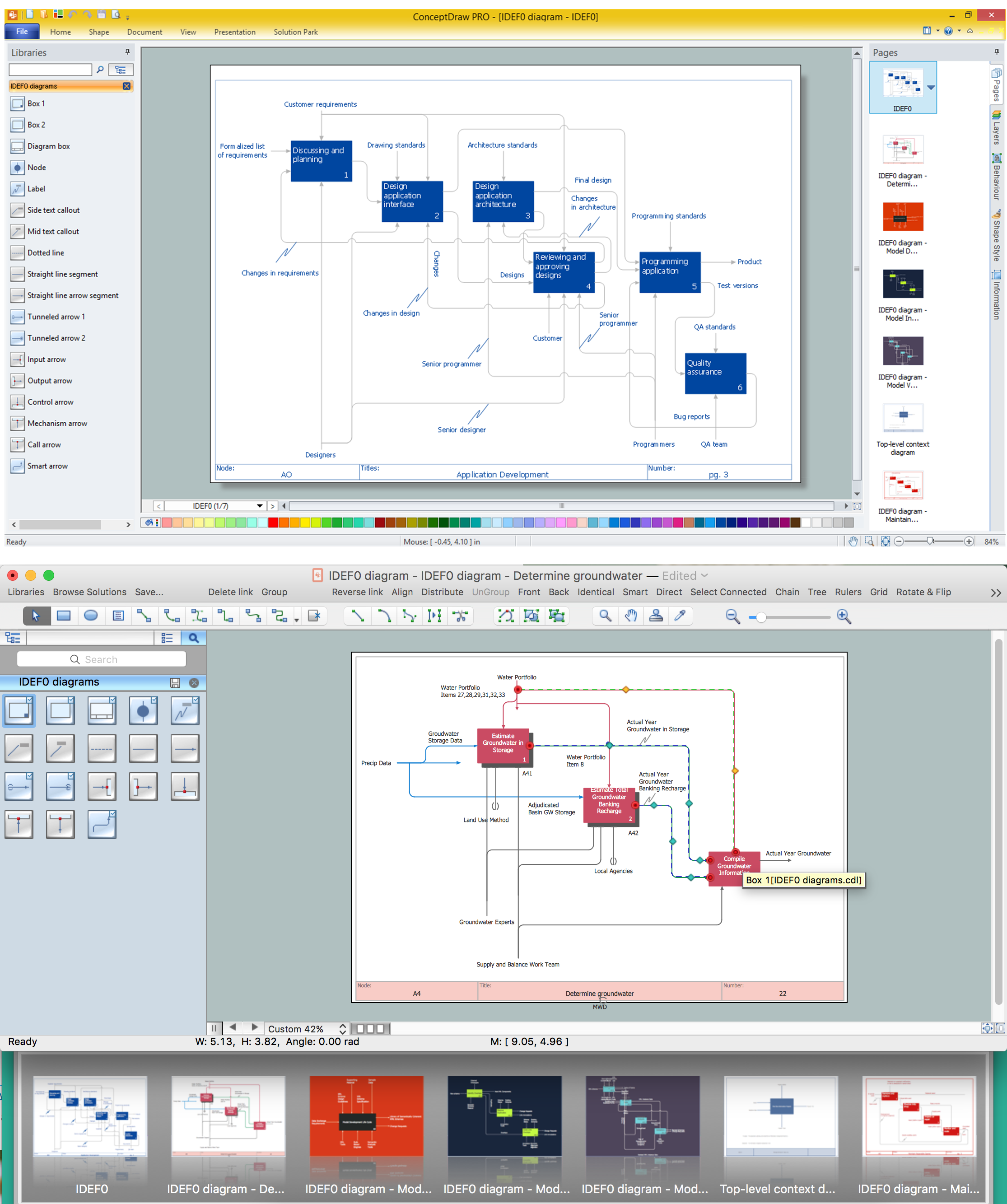
Example 1. IDEF0 standard diagram example (Mac OS X and Windows)

This IDEF0 diagram shows a detailed description of an application-development process. The steps of this process are represented by blocks which are visually arranged according to their logical levels.

All source documents are vector graphic documents. They are available for reviewing, modifying, or converting to a variety of formats (PDF file, MS PowerPoint, MS Visio, and many other graphic formats).
TEN RELATED HOW TO's:
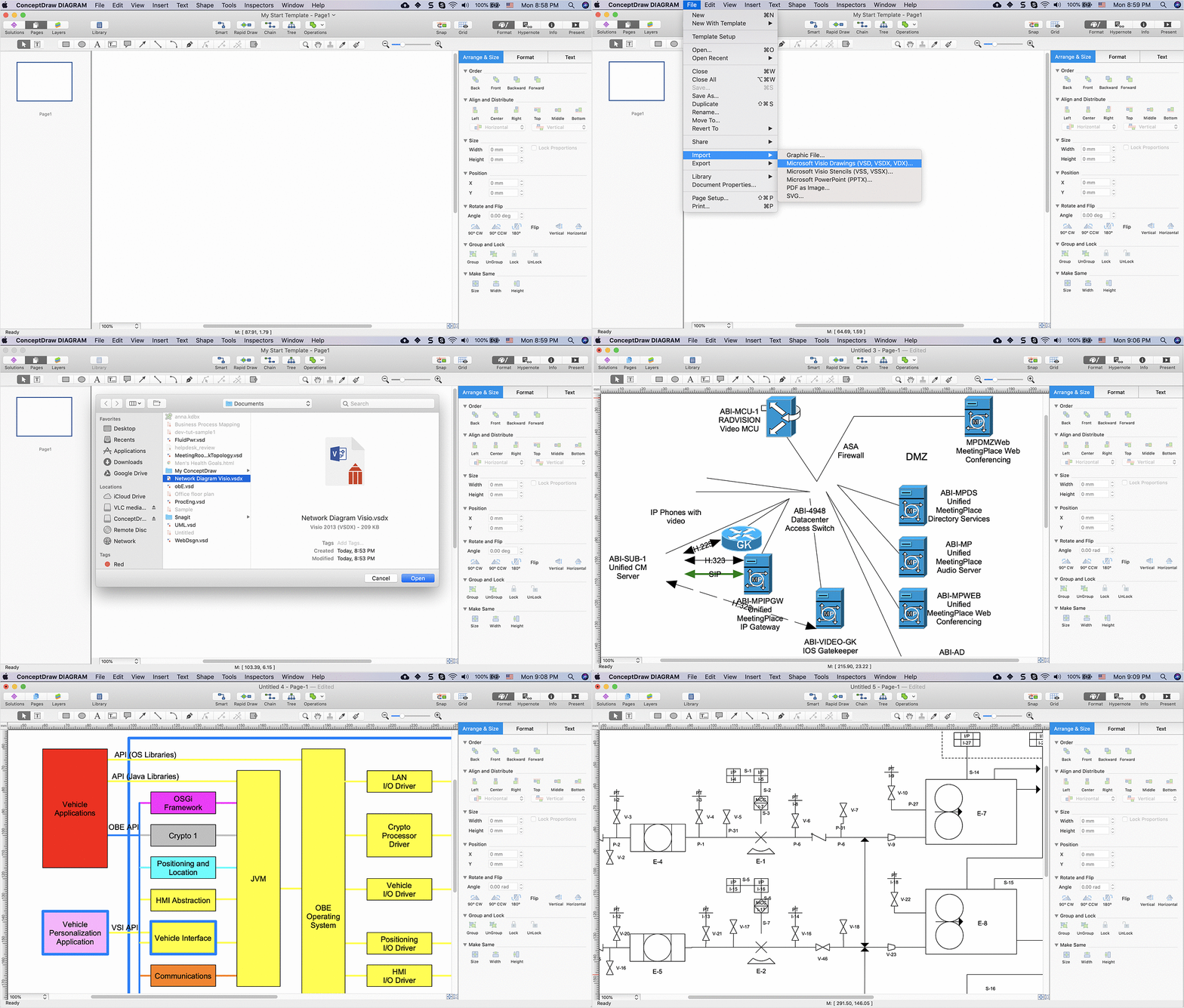
ConceptDraw DIAGRAM extended with IDEF0 Diagrams solution from the Software Development area of ConceptDraw Solution Park is a powerful diagramming and vector drawing IDEF0 software. All IDEF0 diagrams created in ConceptDraw DIAGRAM are vector graphic documents and can be reviewed, modified and converted to MS Visio XML format. To obtain the IDEF0 Visio documents from ConceptDraw DIAGRAM documents use the wide export possibilities of ConceptDraw DIAGRAM.IDEF0 Visio *
Picture: IDEF0 Visio
Related Solution:
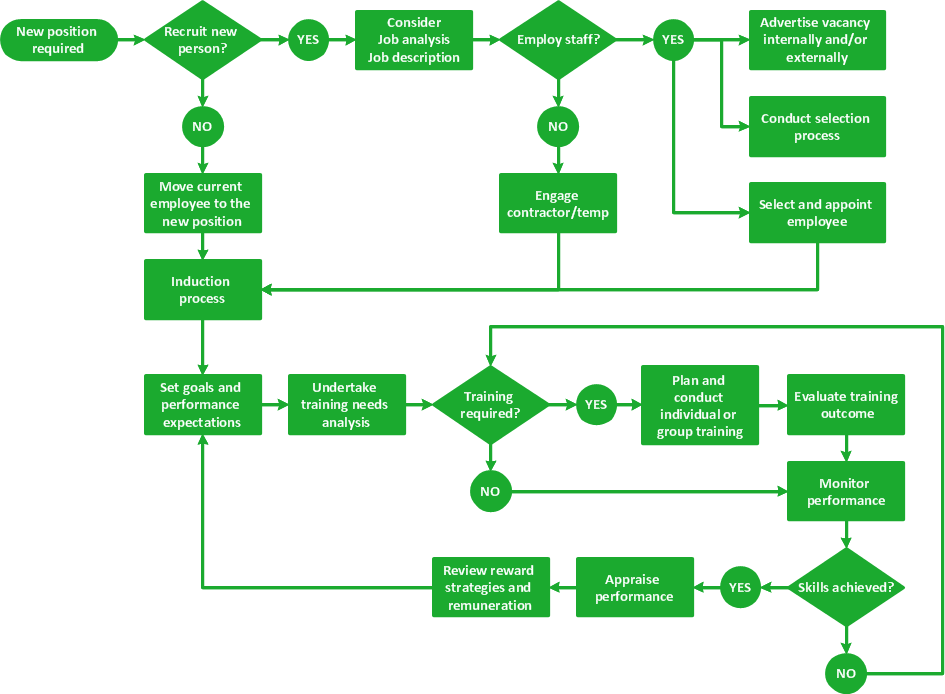
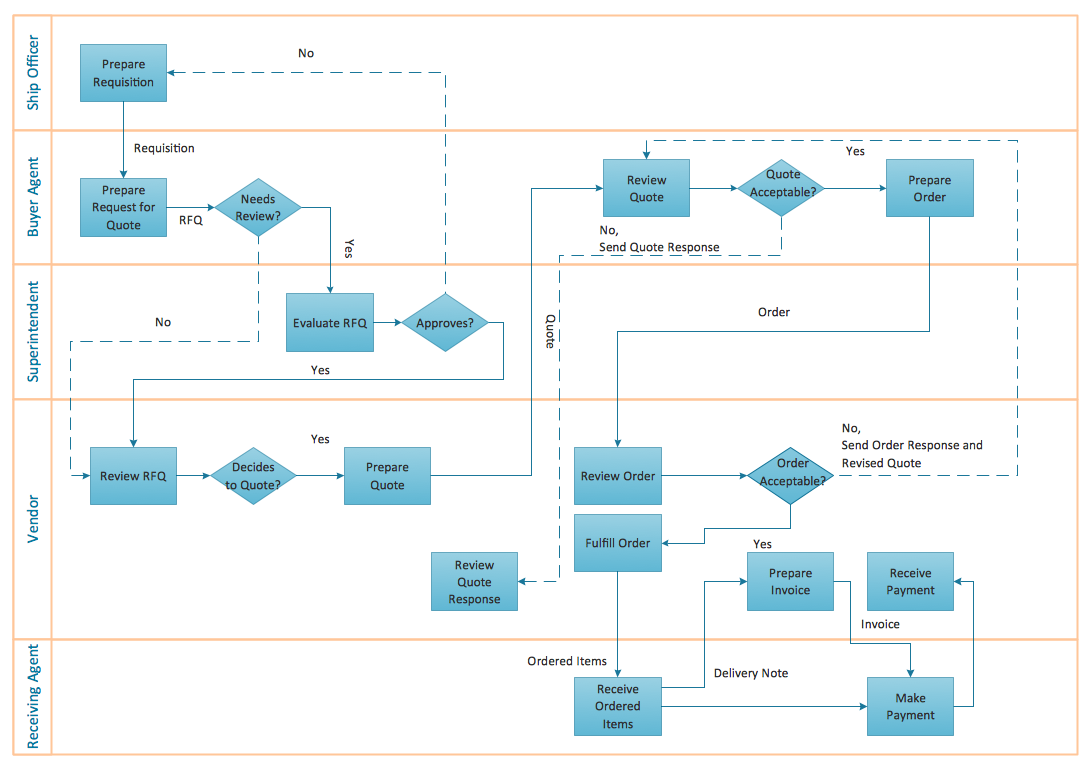
When thinking about data visualization, one of the first tools that comes to mind is a flowchart design. You can find flowchart symbols, shapes, stencils and icons easily on the Internet, but it might take time to systematize this information. Nevertheless, once you start flowcharting, you’ll love its simplicity and efficiency. This diagram consists from standard flowchart symbols, approved by ANSI (American National Standard Institute) for drawing flowcharts. A flowchart is a diagram that represents a step-by-step algorithm of any process, displaying the process stages as boxes that are connected with arrows. Flowchart design makes it clear and readable. Flowchart designed using ConceptDraw DIAGRAM flowchart software allows to make attractive and clear process presentation, it makes interpretation of the business process flow fresh and versatile. Great flowchart design view is a big advantage over the diagram created manually on a paper.Flowchart design
Picture:
Flowchart Design
Flowchart Symbols, Shapes, Stencils and Icons
Related Solution:
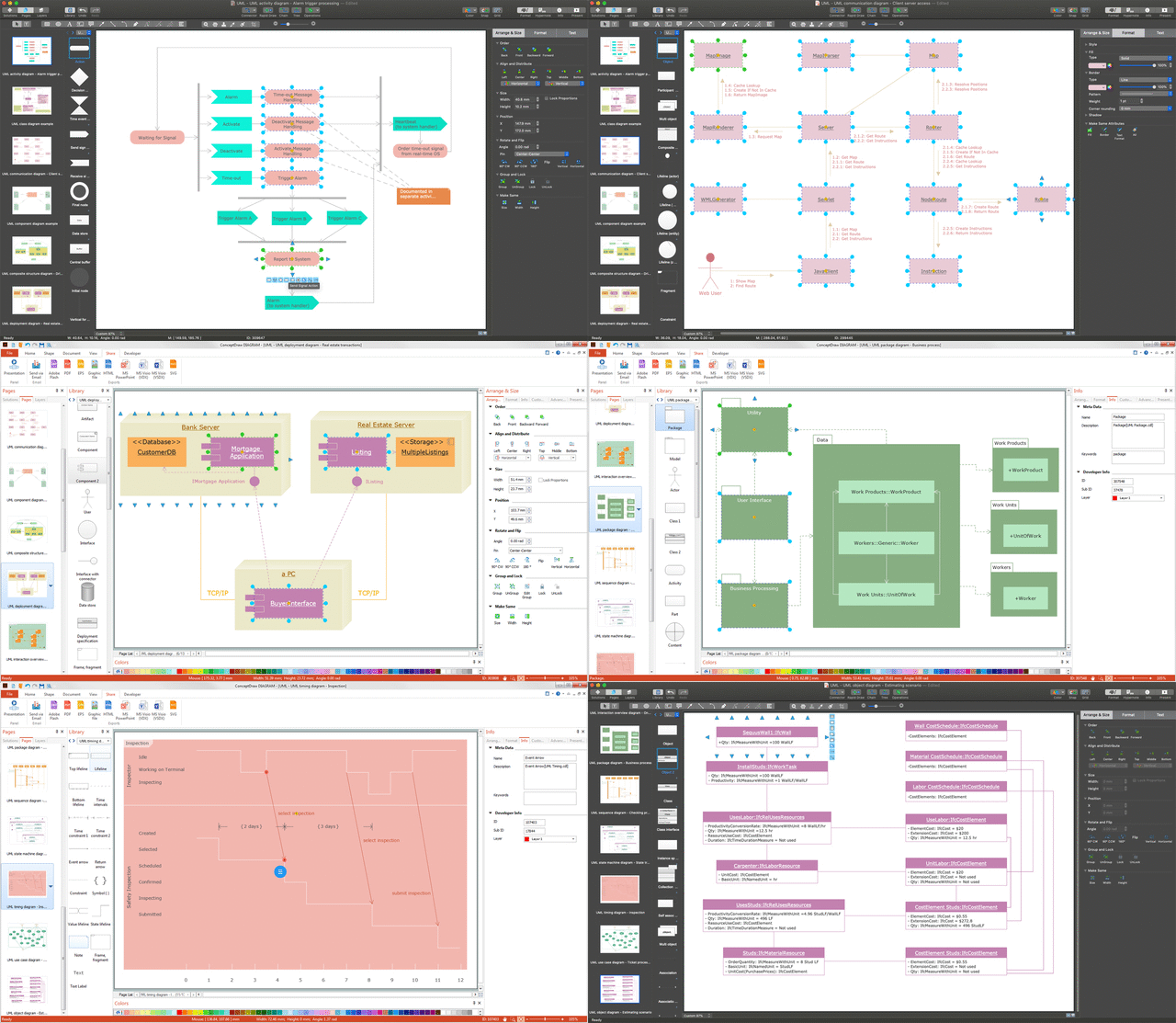
The vector stencils library IDEF0 Diagram from the solution IDEF0 Diagrams contains specific IDEF0 diagram symbols such as arrow symbols and entity symbols for ConceptDraw DIAGRAM software.IDEF0 Diagram
Picture: IDEF0 Diagram
Related Solution:
Use Case Diagrams technology. IDEF3 Standard is intended for description and further analysis of technological processes of an enterprise. Using IDEF3 standard it is possible to examine and model scenarios of technological processes.IDEF3 Standard *
Picture: IDEF3 Standard
Creation of various types of Integration DEFinition (IDEF) diagrams - IDEF0, IDEF1X, IDEF2, IDEF3 and many other is a sufficiently complex process that requires powerful automated tools. ConceptDraw DIAGRAM diagramming and vector drawing software offers you such tool - IDEF Business Process Diagrams solution from the Business Processes area of ConceptDraw Solution Park.Integration Definition *
Picture: Integration Definition
Related Solution:
ConceptDraw DIAGRAM diagramming and vector drawing application is a powerful IDEF0 software thanks to the IDEF0 Diagrams solution from the Software Development area of ConceptDraw Solution Park.IDEF0 Software *
Picture: IDEF0 Software
Related Solution:
IDEF →
IDEF Business Process Diagrams solution from the Business Processes area of ConceptDraw Solution Park extends ConceptDraw DIAGRAM vector graphics and diagramming software with the ability of fast and easy drawing various types of IDEF diagrams.IDEF *
Picture: IDEF
Related Solution:
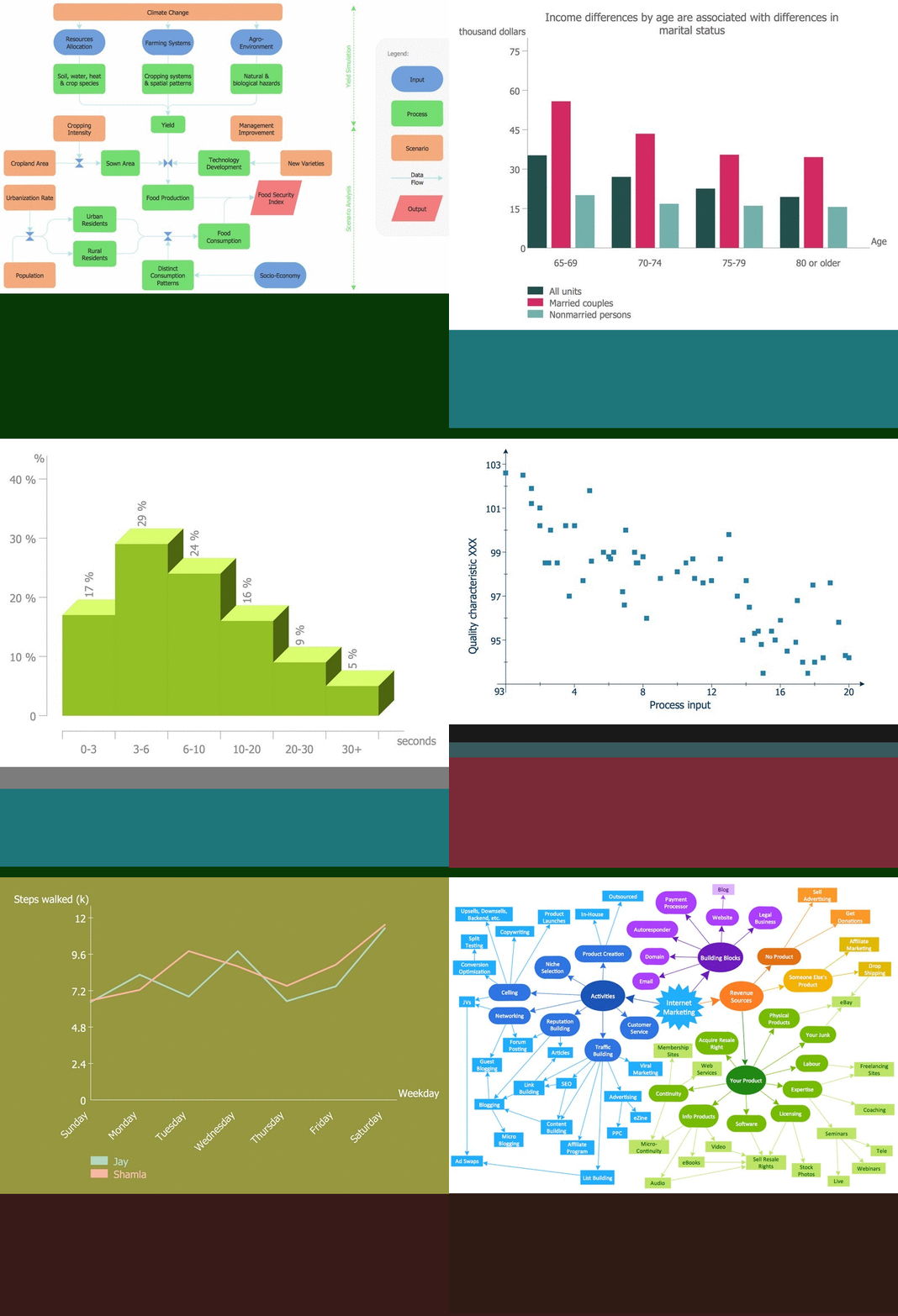
While creating flowcharts and process flow diagrams, you should use special objects to define different statements, so anyone aware of flowcharts can get your scheme right. There is a short and an extended list of basic flowchart symbols and their meaning. Basic flowchart symbols include terminator objects, rectangles for describing steps of a process, diamonds representing appearing conditions and questions and parallelograms to show incoming data. This diagram gives a general review of the standard symbols that are used when creating flowcharts and process flow diagrams. The practice of using a set of standard flowchart symbols was admitted in order to make flowcharts and other process flow diagrams created by any person properly understandable by other people. The flowchart symbols depict different kinds of actions and phases in a process. The sequence of the actions, and the relationships between them are shown by special lines and arrows. There are a large number of flowchart symbols. Which of them can be used in the particular diagram depends on its type. For instance, some symbols used in data flow diagrams usually are not used in the process flowcharts. Business process system use exactly these flowchart symbols.Basic Flowchart Symbols Meaning
Picture: Basic of Flowchart: Meaning and Symbols
Related Solution:
When we think about programming, we usually imagine sleepless nights spent on writing kilobytes of code. However, from another point of view, Software development with ConceptDraw DIAGRAM makes a programmer's life endlessly easier. This tool is unique to fulfill all your needs in short period of time. Over the recent years object-oriented methodology has become more and more widespread. Thanks to this methodology developers manage to deal with growing complexity of applications. More and more programs are written in such programming languages as C++, Java, Visual Basic and Object Pascal. However, the complexity of the designed systems imposes extended requirements as to design of graphic documentation. ConceptDraw possesses powerful tools for designing of technical documentation for object-oriented projects. The libraries included in the package allow to easily draw class hierarchies, object hierarchies and diagrams of data flows with the use of the most popular notations, including UML and Booch notations. And the library for projecting COM-interfaces will spare developers of ActiveX-servers a headache.Software development with ConceptDraw DIAGRAM  *
Picture: Software development with ConceptDraw DIAGRAM
ConceptDraw Quality MindMap solution is a perfect additional tool for the quality team of your organization.Quality issues in heir organization *
Picture: Quality issues in heir organization
Related Solution:
ConceptDraw
DIAGRAM 18