Defensive Strategy Diagram – 46 Defence
There are many defensive formations within the well-known game of football (American football), which all can be illustrated with help of the Football solution – a useful tool for making the football related drawings within a short period of time as everything you need can be found there. Having both ConceptDraw DIAGRAM diagramming and drawing software and Football solution downloaded from ConceptDraw STORE will ensure your success with creating the mentioned charts.
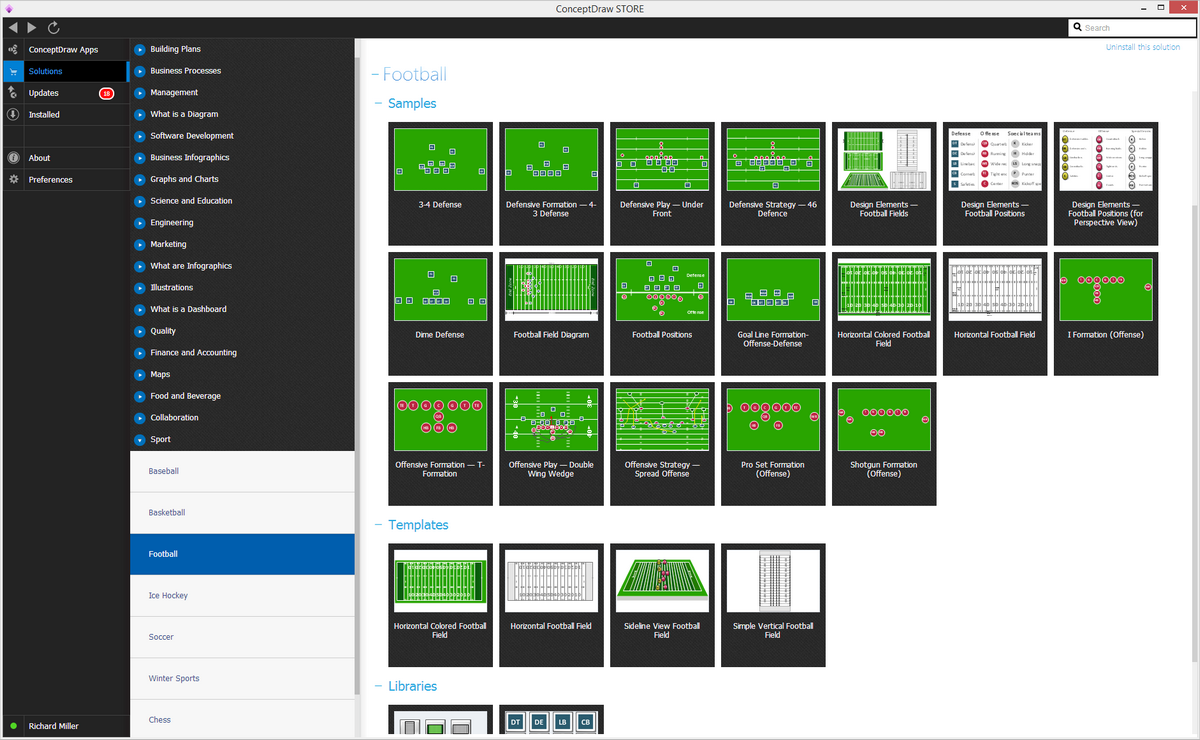
Sample 1. Football Solution in ConceptDraw STORE
It is well-known that there are no rules regarding the formation of the defensive players in football as well as their movement before they snap of the ball. That is why the tactics and deployment of defensive players are connected only by the imagination of the line of scrimmage and the play designer. The most popular defensive formations used in football are 4–3 defense, 6–1 defense, 2–5 defense, 5-3 defense and 6-2 defense.
4–3 defense consists of four defensive linemen as well as three linebackers and four defensive backs, two of each are safeties and corners. This formation is known to be very effective against the pass and the run. The defensive tackles line up opposite the offensive guards, having the defensive ends straight on the outside shoulders of the offensive tackles. On the passing downs, the middle linebacker is known to be often responsible to cover any appeared running backs, the strong-side linebacker covers the so-called Tight End and the weak-side linebacker blitzes or covers a back in an attempt of sacking the quarterback.
For the first time the previously mention defense was used as a base in 1956 by the New York Giants, but later lots of teams experimented with it during the 50s, so there are multiple claimed inventors of it. There are a few different variations of the 4–3 defense such as the 4-3 over defense, 4-3 under defense, 4-3 umbrella defense, 4-3 slide defense and 4-3 swim defense.
Another, 6-1 defense, originally was invented in 1950 by Steve Owen as a counter for the powerful passing attacks of Cleveland Browns, being called the "Umbrella" defense. The reason for such name was chosen because of the four defensive backs and the tactic of allowing the defensive ends to fall back into the pass coverage, which is converting the defense. Using this defense, the Giants defeated the Browns during the regular season in 1950 twice.
The so-called “2–5 defense” was originally a 5–2 arrangement, with two linebackers and five defensive linemen.
The 5-3 defense is based on two standard formations, which are the 5-3-3 and the 6-2-3. It consists of five defensive linemen, three defensive backs (two corners, one safety) and three linebackers and it appeared in the early thirties as a response to the need of improving the passing offenses of the time, such as the T formation. Growing in importance as the 40s progressed, it became more effective versus the T formation than the other standard defense of the time. Five man lines by 1950 were standard in the NFL, either the 5-2 Eagle or the 5-3. The Cleveland Browns were using a 5-3 as their base defense.
The 6-2 defense is known to be consisting of six defensive linemen, three defensive backs (two corners, one safety) and two linebasockers. As the primary defense in football at all levels, during the 1930s, combining enough passing defense to handle the passing attacks along with the ability to handle the power running games of the times, this formation was replaced in the NFL with the 5-2 and the 5-3 defenses after the T formation grew popular in the 40s.
In lots of different colleges, the mentioned defensive front has remained viable for a much longer period of time for a reason of colleges are known to be having run a lot more than the NFL. There are common six-man fronts which are seen in this era, which are the tight six (four linemen between linebackers, linebackers over offensive ends), the split 6 (all linemen outside linebackers, linebackers over guard-center gap) and the wide tackle 6 (two linemen between linebackers, linebackers over offensive tackles).
38 defense is also known as a “split middle”, being referred to the positions of the defensive players on the so-called “line of scrimmage”. The DT's are known to be the only down lineman. Two stand-up players (Rover and Monster) are in "5" techniques when two linebackers are 3 yards off the ball behind the mentioned DT's. A combination of the 6–2, 46 and 4–4 is designed to confuse the offenses and to stop the run.
Three players in the secondary all cover the “deep thirds” and the confusing element is either the "8" techniques or the "5" techniques can drop or rush into the flats. The LB's have the so-called “hook zones”. Each of the football players on the line has a two gap responsibility which they have to perform.
The “seven-man line defense” uses 7 down linemen on the line of scrimmage and the most common seven-man line defenses were the 7-1-2-1 defense and the 7-2-2 defense. The mentioned defenses were most of all commonly used before the forward pass became prevalent. Although, they were still popular before the inception of the so-called “platoon system”, being still sometimes used in such situations, as the goal-line ones.
The 5–2 defense is another technique consisting of five defensive linemen, four defensive backs (two safeties, two corners) and two linebackers. Originally, this was the first important defense with four defensive backs, being used for combating the passing attacks of the time. The Oklahoma 5-2 is a later evolution of the original 5-2, which is known to become the professional 3-4 once the defensive ends of the original “5-2” are substituted for the 3-4 outside linebackers.
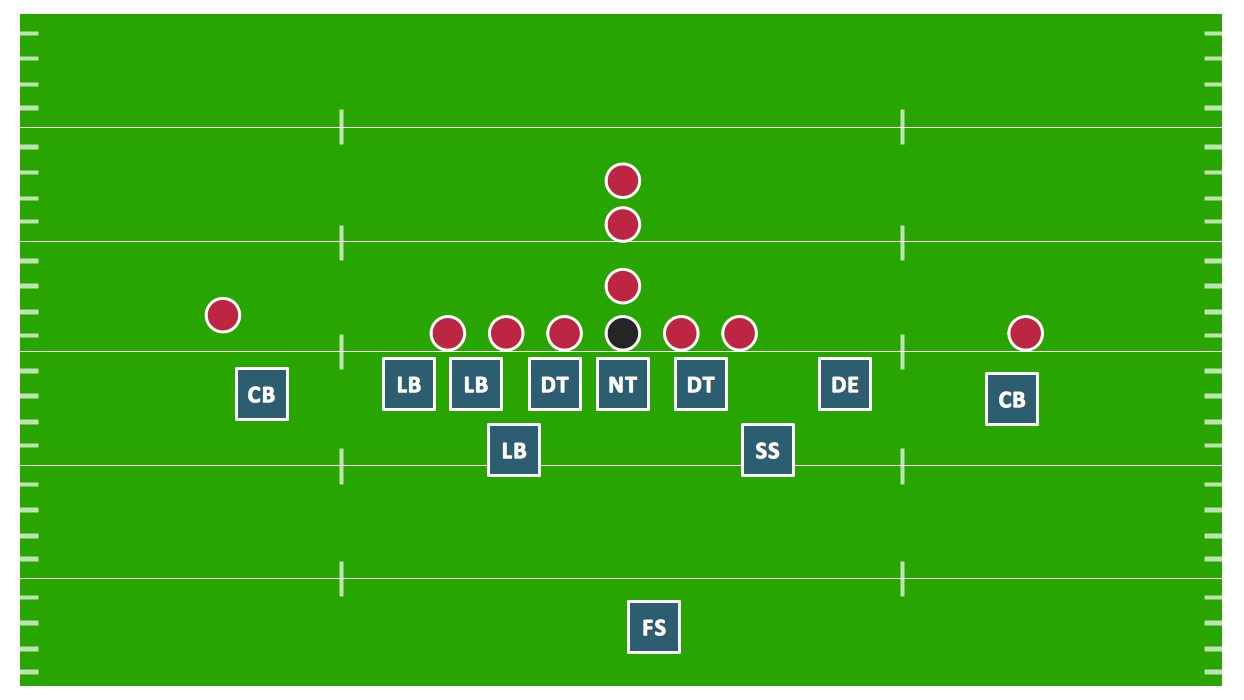
Sample 2. Football — Defensive Strategy — 46 Defence.
The differences between the 3-4 and the Oklahoma 5-2 are largely semantics and getting to know about all the existing defensive strategies is always better with the help of ConceptDraw STORE, especially the Football solution, where all the ConceptDraw DIAGRAM users can find the pre-made examples of the positions they can always use as the drafts for their own drawings.
TEN RELATED HOW TO's:
The Basketball Field library from the Basketball solution provides a complete set of ready-to-use predesigned vector courts: horizontally and vertically located, whole and half of court, colored and not, courts with views from different sides.
All courts objects are designed according to the real basketball courts dimensions. Simply drop the needed basketball field in the vector from the library to design your own basketball diagram.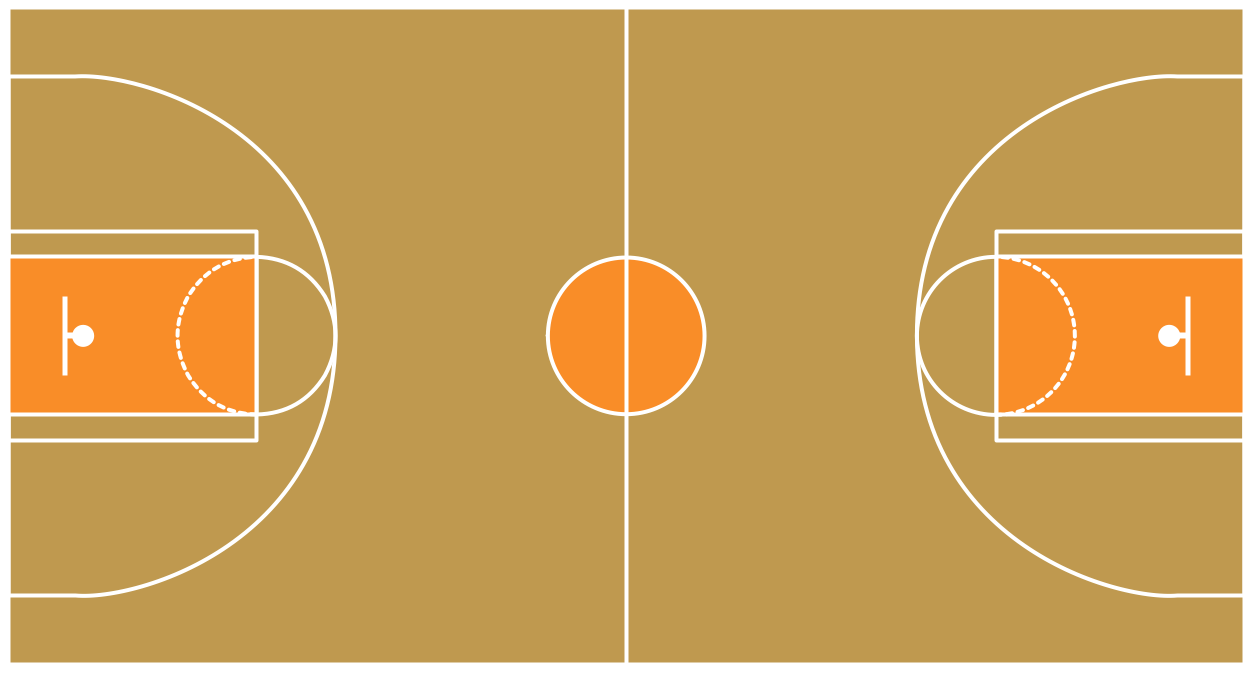
Picture: Basketball Field in the Vector
Related Solution:
A Storage area network (SAN) is a dedicated network that provides access to data storage and operations only on the block level. SAN usually has own network of storage devices/elements and disk arrays that are connected with each other and to a remote data-sharing network. SANs are widely used for enhancing the storage devices (optical jukeboxes, disk arrays, tape libraries) that are accessible for networked servers.
This example was created in ConceptDraw DIAGRAM using the Computer and Networks Area of ConceptDraw Solution Park. It shows the hybrid of Storage area network (SAN) and Network Attached Storage (NAS) technologies.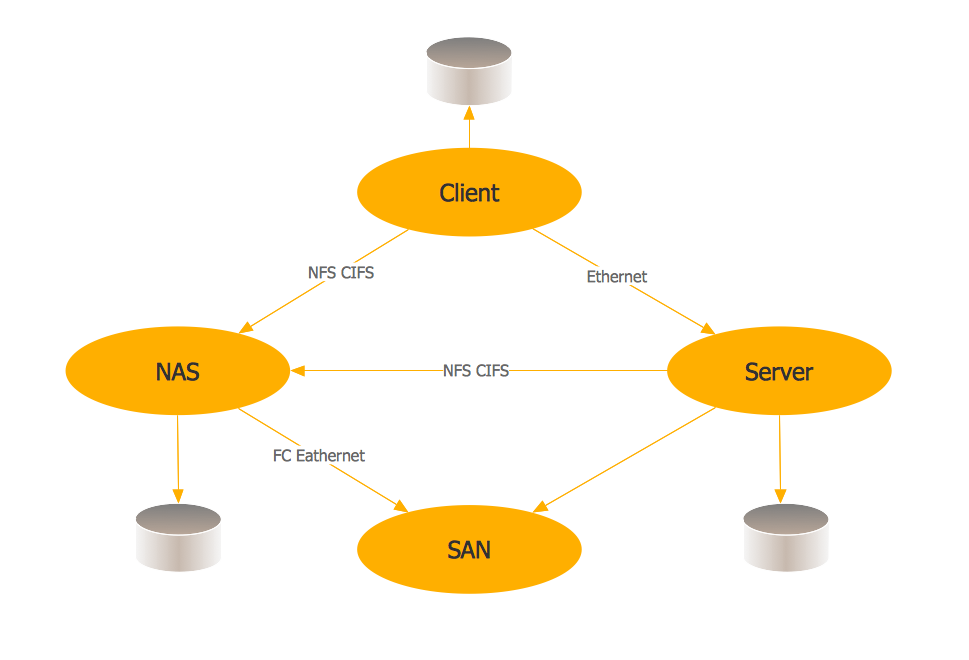
Picture: Storage area networks (SAN). Computer and Network Examples
Related Solution:
Public catering business will always be in demand.To attract a lot of clients, it’s important to have a detailed banquet hall plan, a diverse menu and reasonable prices. If you want to create a good plan, you can use drawing software.
When planning and considering the layout of a banquet hall, one must take into consideration, that it is very significant to make it stylish with correctly selected appointment and celebratory belongings. Tables and seating must be handily arranged. The furniture arrangement can changes depending on client requirements, kind of banquet and amount of guests. ConceptDraw Cafe and Restaurant Plans solution supplies a dozens of predesigned vector graphic objects of banquet furniture and accessories. Thus you can design the Banquet Hall layout for the celebrations in any style and any number of guests.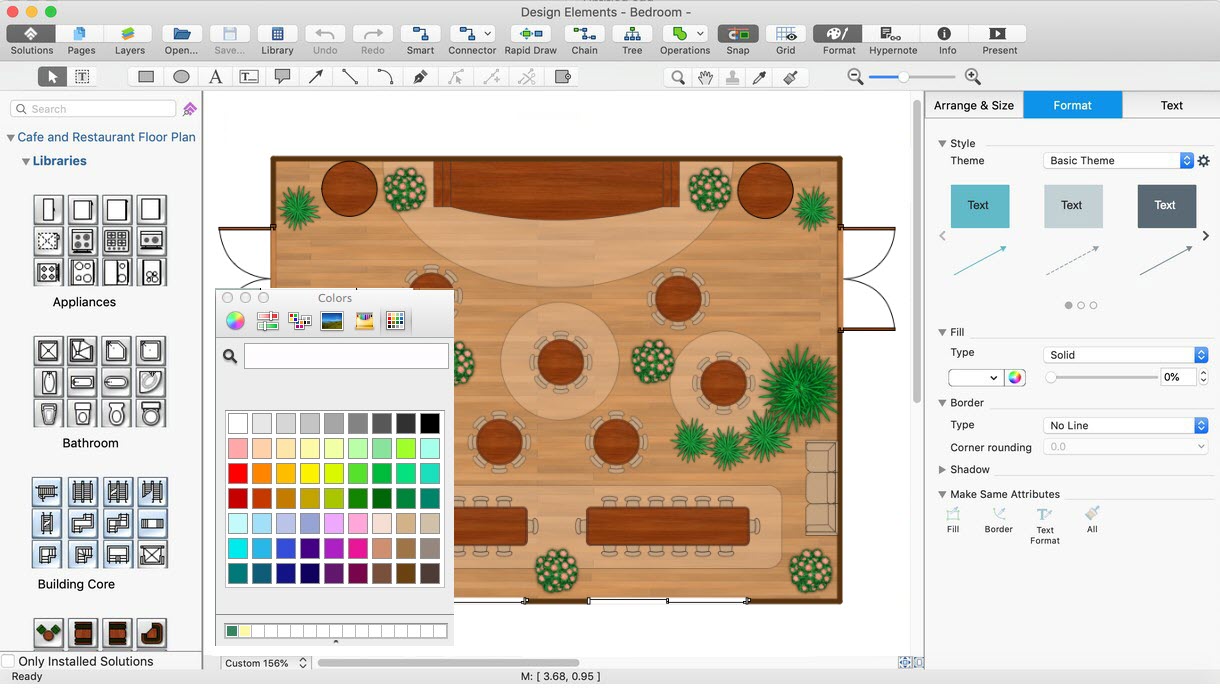
Picture: Banquet Hall Plan Software
Related Solution:
Working as a designer, you might find developing projects exciting and difficult at the same time. It is a challenging task to create a usable interior design that will fulfill all the customer’s requirements. So, in order to aid yourself, you can use special software to create site plans, landscape designs, furniture layouts.
This example of an interior plan introduces an internal area of a small cafe. The floor plan demonstrates interior angle "view from above". It involves many different elements of furniture such as tables , chairs and various cushioned furniture. Also it includes a kitchen fixtures and furniture. Making this plan was managed by the ConceptDraw Cafe and Restaurant Floor Plan solution. The libraries, composing this solution contain about vector graphic 300 objects. It can be use to help interior designers to develop interior design proposals, communicate ideas and concepts that relate to a interior design.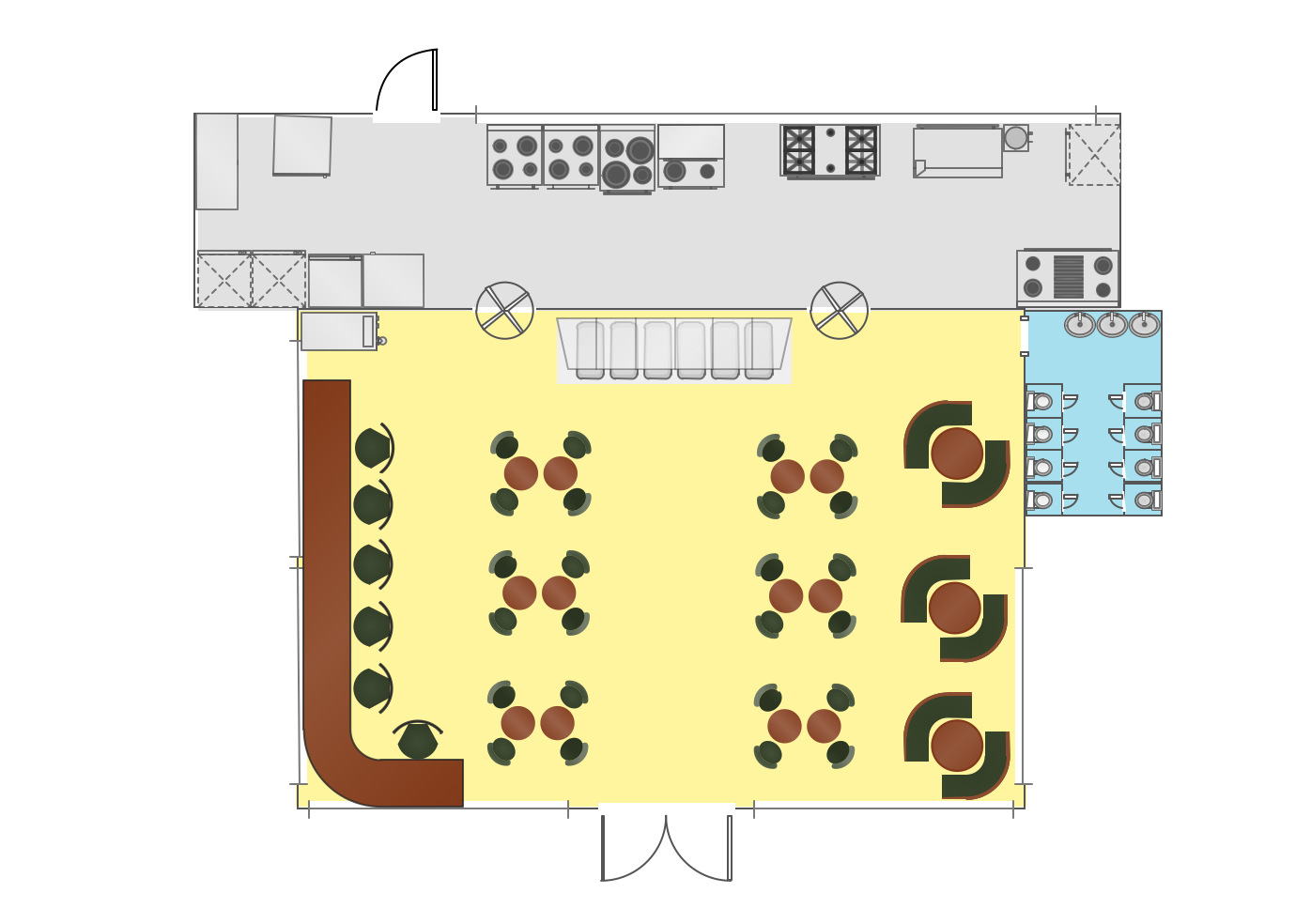
Picture: Interior Design
Related Solution:
ConceptDraw DIAGRAM software extended with the Baseball solution delivers libraries, templates and samples allowing baseball fans or specialists to draw baseball-related schemas in minutes.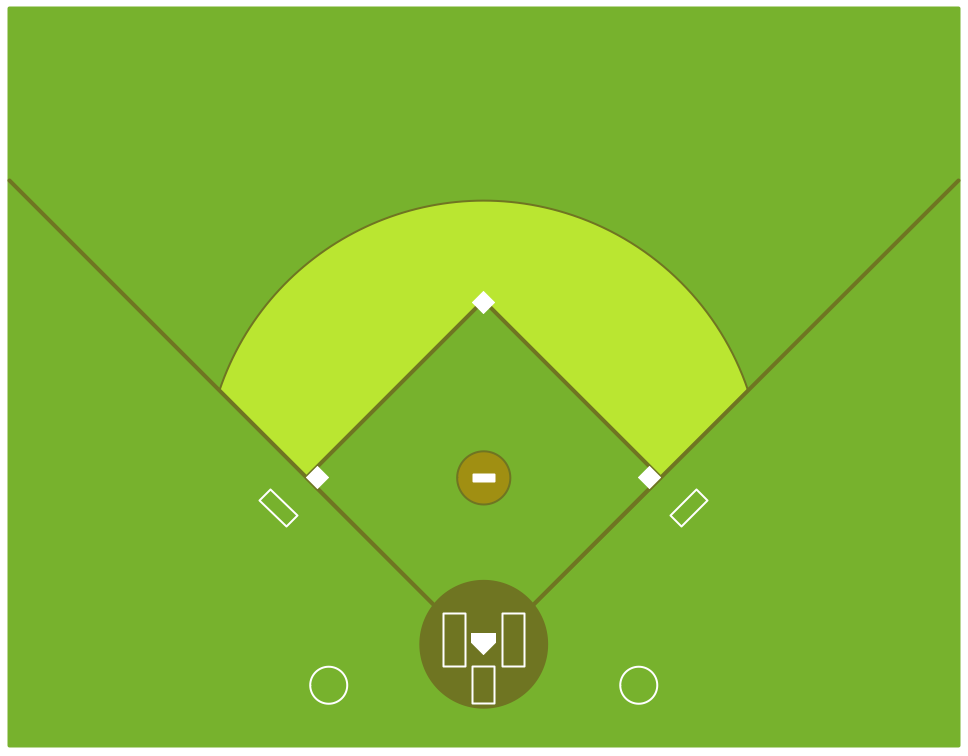
Picture: Colored Baseball Field Diagram
Related Solution:
Local area network connects computers and other network appliances within an area, such as office building or a campus. It can be difficult to provide such network without a predesigned plan. For these purposes you can use network diagram software, which helps you to create LAN network diagrams and office network diagrams quickly and effortless. This will speed up your work and you can save the diagram for the future network improvements.
The following diagram illustrates a network topology of the small office. LAN configuration has a star topology. The local network joins 8 computers among which are several desktop PCs, laptop, two iMacs and iBook. The end-point devices are divided into three groups. Each group is connected to its hub. There is a network printer and a modem, which are interconnected with other devices through a network server. Each computer on the LAN can access the server through a corresponding hub.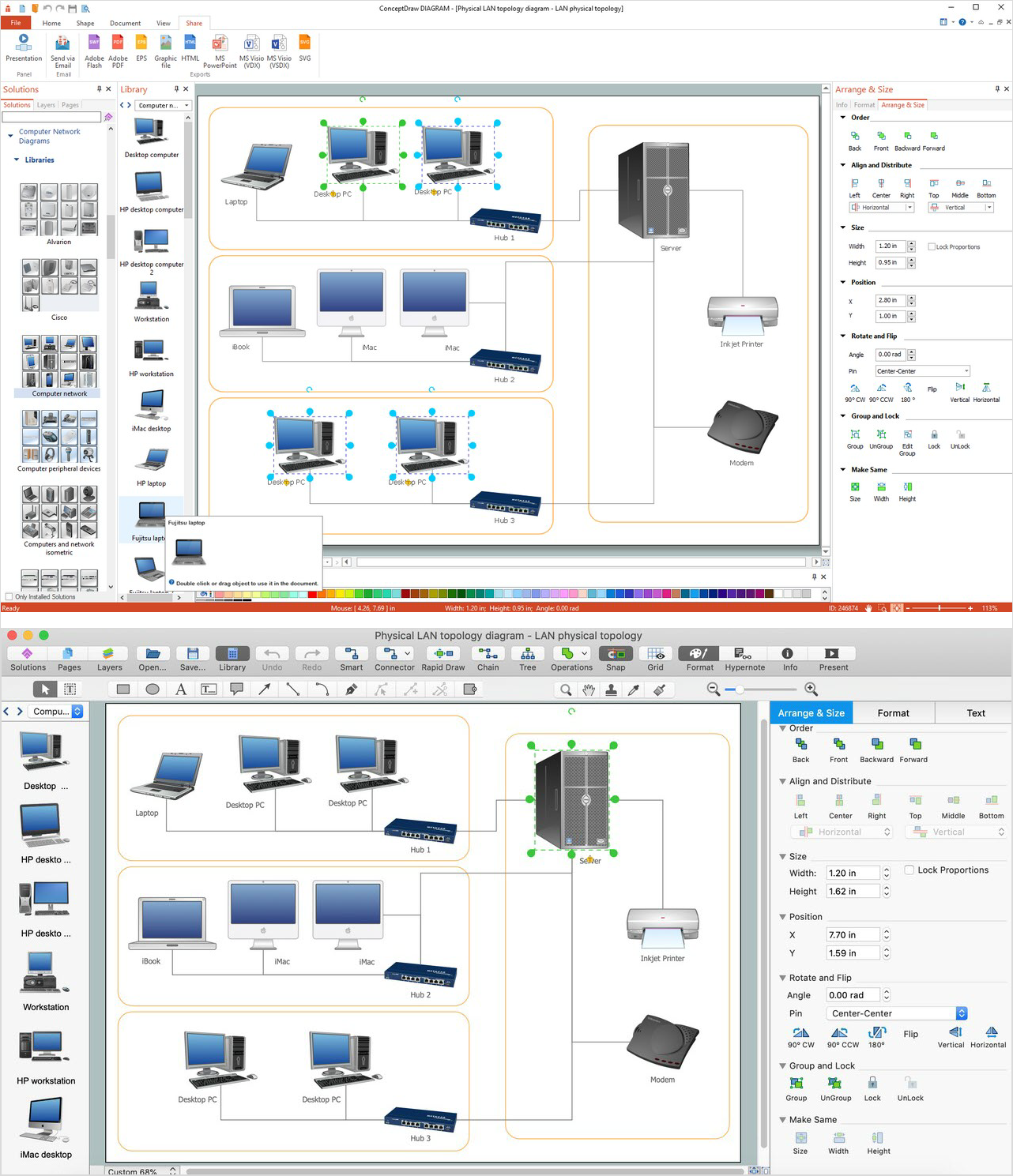
Picture: Network Diagram Software. LAN Network Diagrams. Physical Office Network Diagrams
Related Solution:
While creating flowcharts and process flow diagrams, you should use special objects to define different statements, so anyone aware of flowcharts can get your scheme right. There is a short and an extended list of basic flowchart symbols and their meaning. Basic flowchart symbols include terminator objects, rectangles for describing steps of a process, diamonds representing appearing conditions and questions and parallelograms to show incoming data.
This diagram gives a general review of the standard symbols that are used when creating flowcharts and process flow diagrams. The practice of using a set of standard flowchart symbols was admitted in order to make flowcharts and other process flow diagrams created by any person properly understandable by other people. The flowchart symbols depict different kinds of actions and phases in a process. The sequence of the actions, and the relationships between them are shown by special lines and arrows. There are a large number of flowchart symbols. Which of them can be used in the particular diagram depends on its type. For instance, some symbols used in data flow diagrams usually are not used in the process flowcharts. Business process system use exactly these flowchart symbols.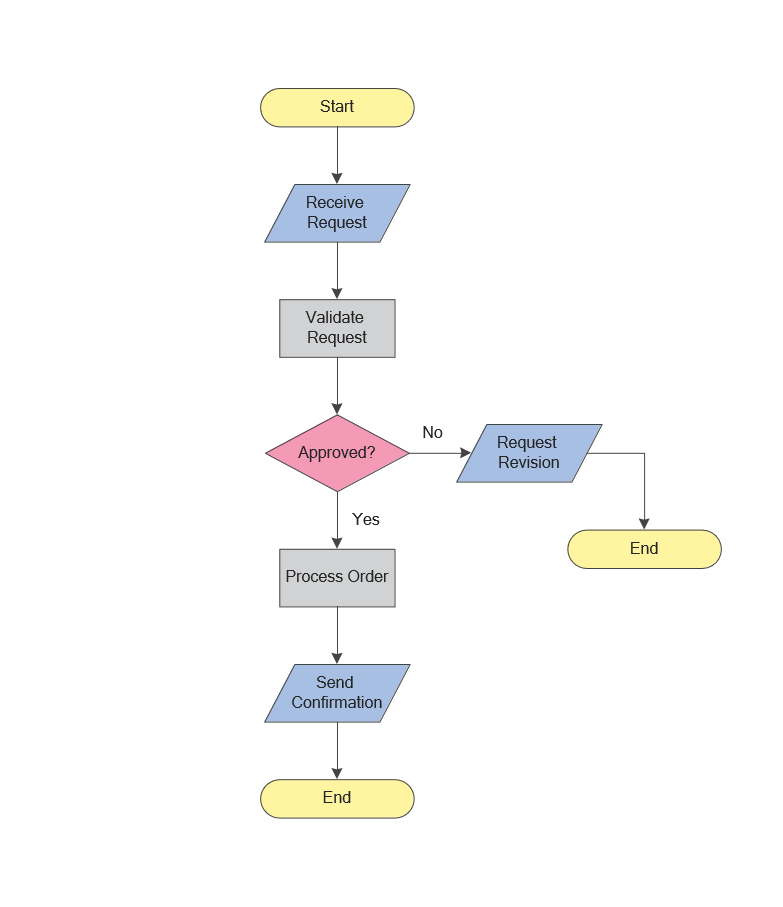
Picture: Flowchart Symbols: Meaning and Examples
Related Solution:
When trying to figure out the nature of the problems occurring within a project, there are many ways to develop such understanding. One of the most common ways to document processes for further improvement is to draw a process flowchart, which depicts the activities of the process arranged in sequential order — this is business process management. ConceptDraw DIAGRAM is business process mapping software with impressive range of productivity features for business process management and classic project management. This business process management software is helpful for many purposes from different payment processes, or manufacturing processes to chemical processes. Business process mapping flowcharts helps clarify the actual workflow of different people engaged in the same process. This samples were made with ConceptDraw DIAGRAM — business process mapping software for flowcharting and used as classic visio alternative because its briefly named "visio for mac" and for windows, this sort of software named the business process management tools.
This flowchart diagram shows a process flow of project management. The diagram that is presented here depicts the project life cycle that is basic for the most of project management methods. Breaking a project into phases allows to track it in the proper manner. Through separation on phases, the total workflow of a project is divided into some foreseeable components, thus making it easier to follow the project status. A project life cycle commonly includes: initiation, definition, design, development and implementation phases. Distinguished method to show parallel and interdependent processes, as well as project life cycle relationships. A flowchart diagram is often used as visual guide to project. For instance, it used by marketing project management software for visualizing stages of marketing activities or as project management workflow tools. Created with ConceptDraw DIAGRAM — business process mapping software which is flowcharting visio alternative or shortly its visio for mac, this sort of software platform often named the business process management tools.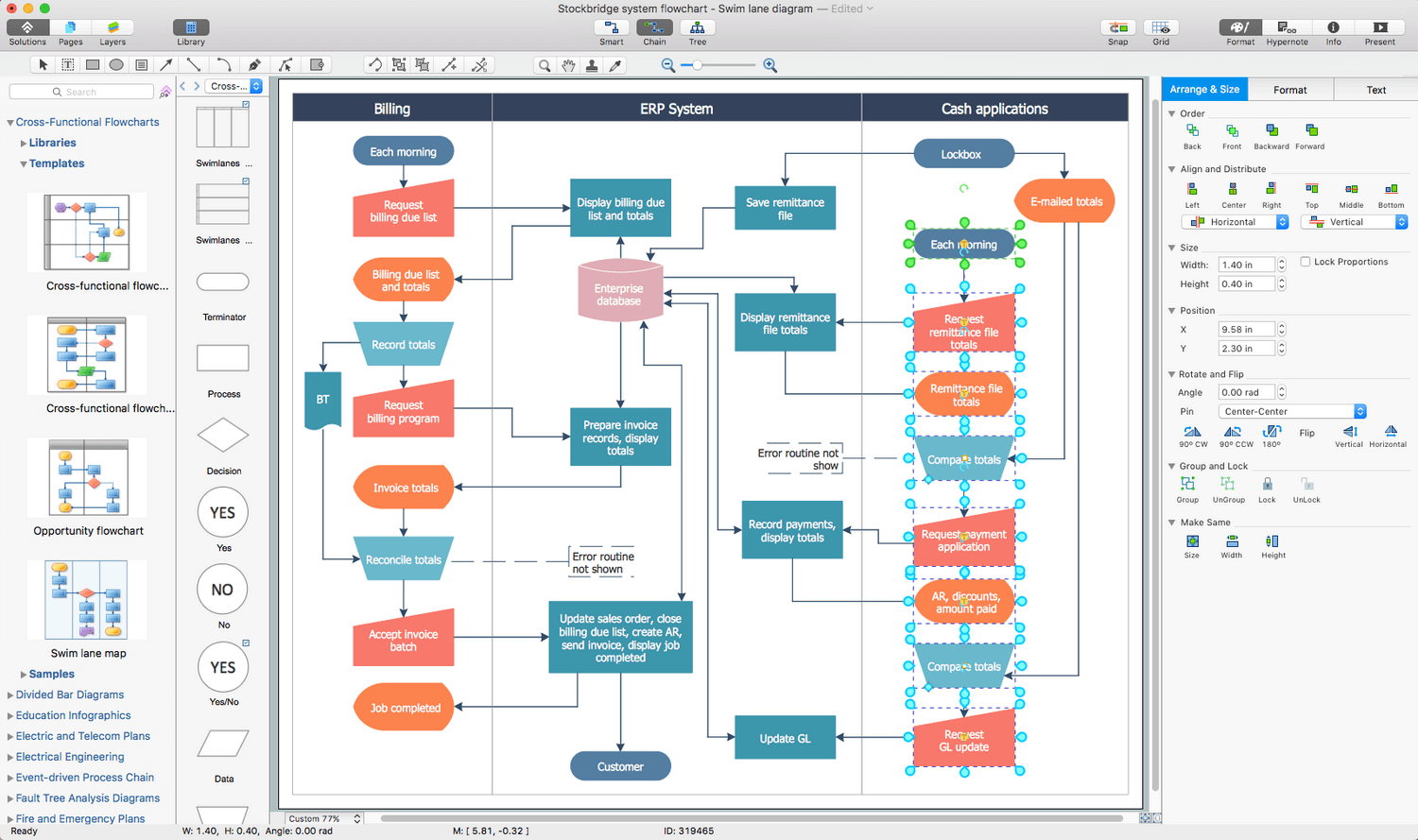
Picture: Process Flowchart: A Step-by-Step Comprehensive Guide
Related Solution:
Why do you need network visualizations? 🔸 Unlock the full potential of network visualization with our in-depth guide on using the ConceptDraw Network Visualization Tool. ✔️ Explore features, tips, and best practices to create stunning visual representations of your network architecture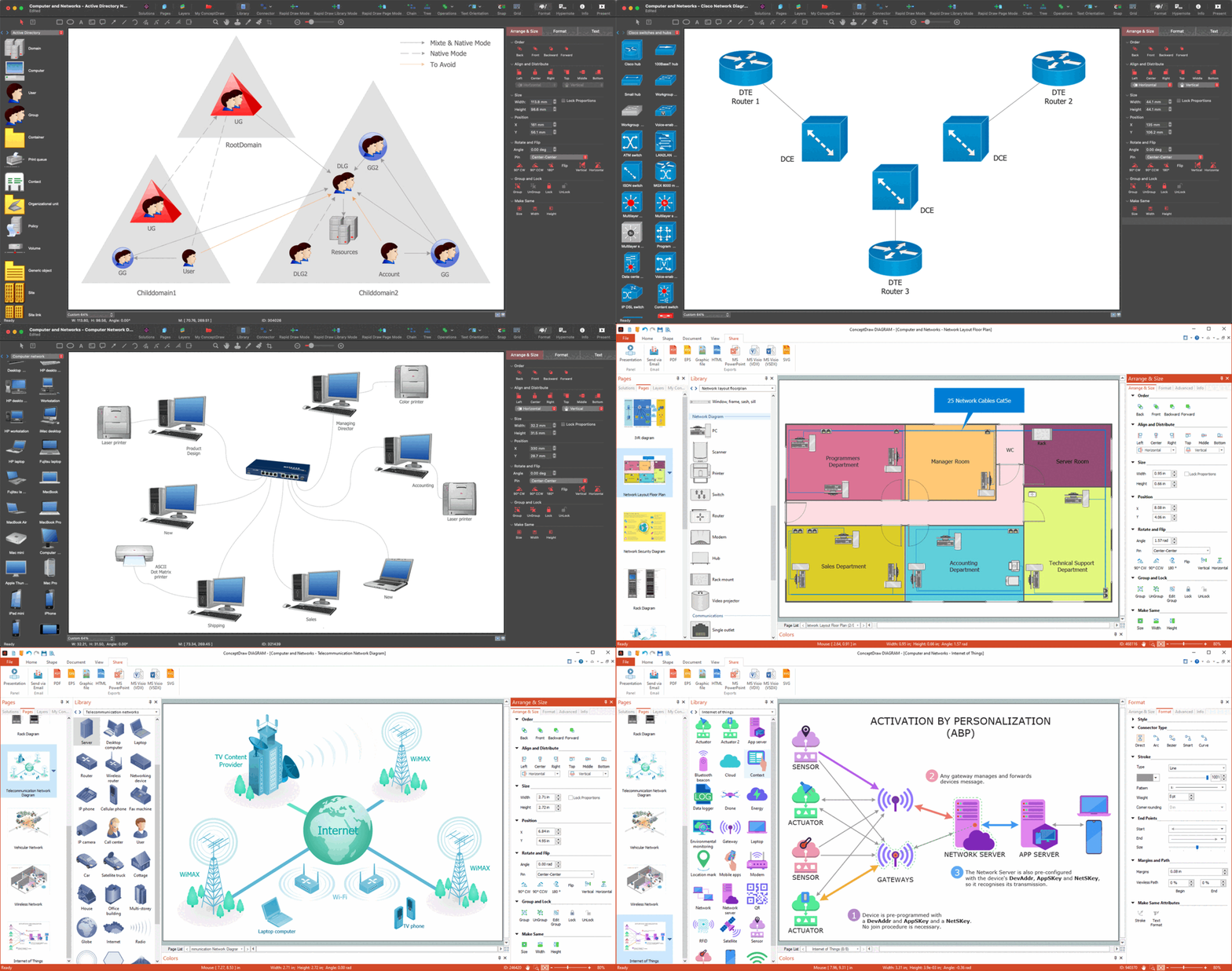
Picture:
Network Visualization Guide.
How to Use ConceptDraw Network Visualization Tool
Related Solutions:
ConceptDraw DIAGRAM diagramming and vector drawing software is the best for drawing professional looking Computer Network Diagrams thanks to the network icons from the libraries of Computer Network Diagrams Solution from the Computer and Networks Area of ConceptDraw Solution Park.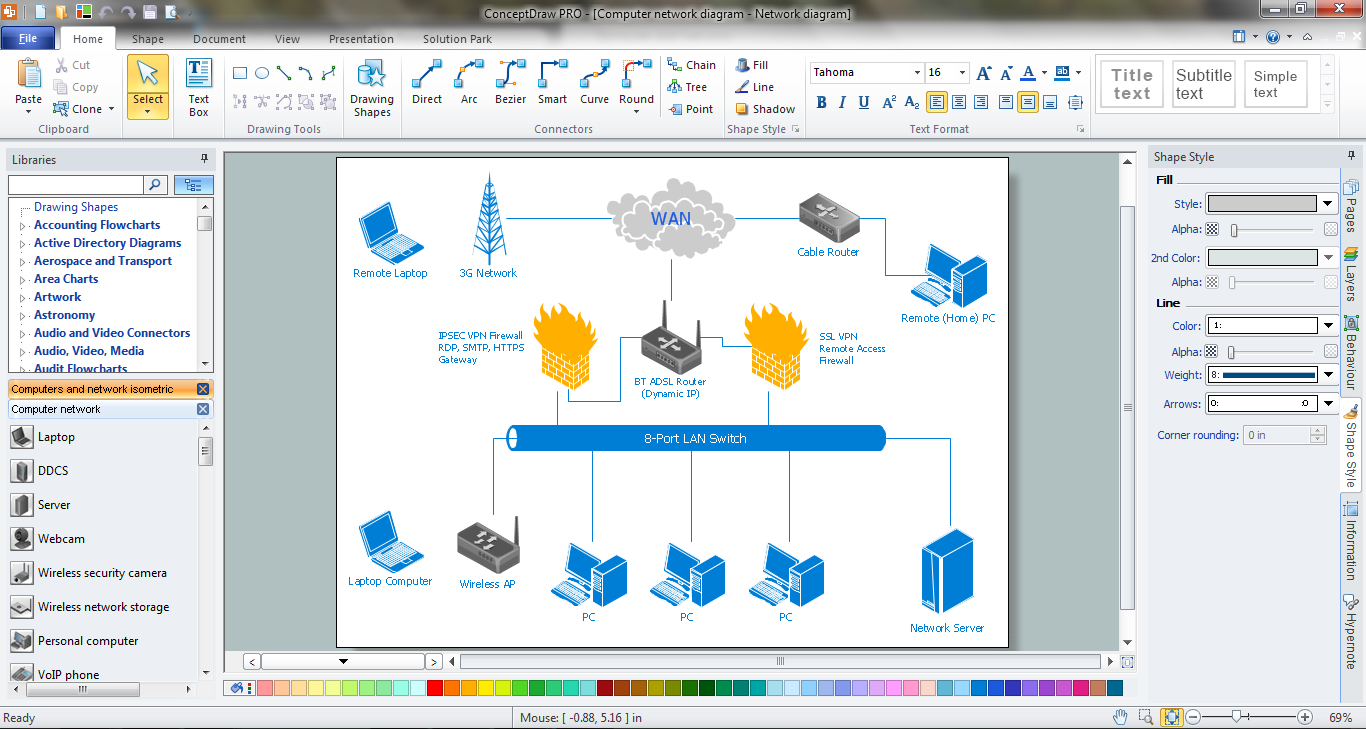
Picture: Network Icons
Related Solution:
