Made with
ConceptDraw
DIAGRAM 18

Program Evaluation and Review Technique
(PERT) with ConceptDraw DIAGRAM

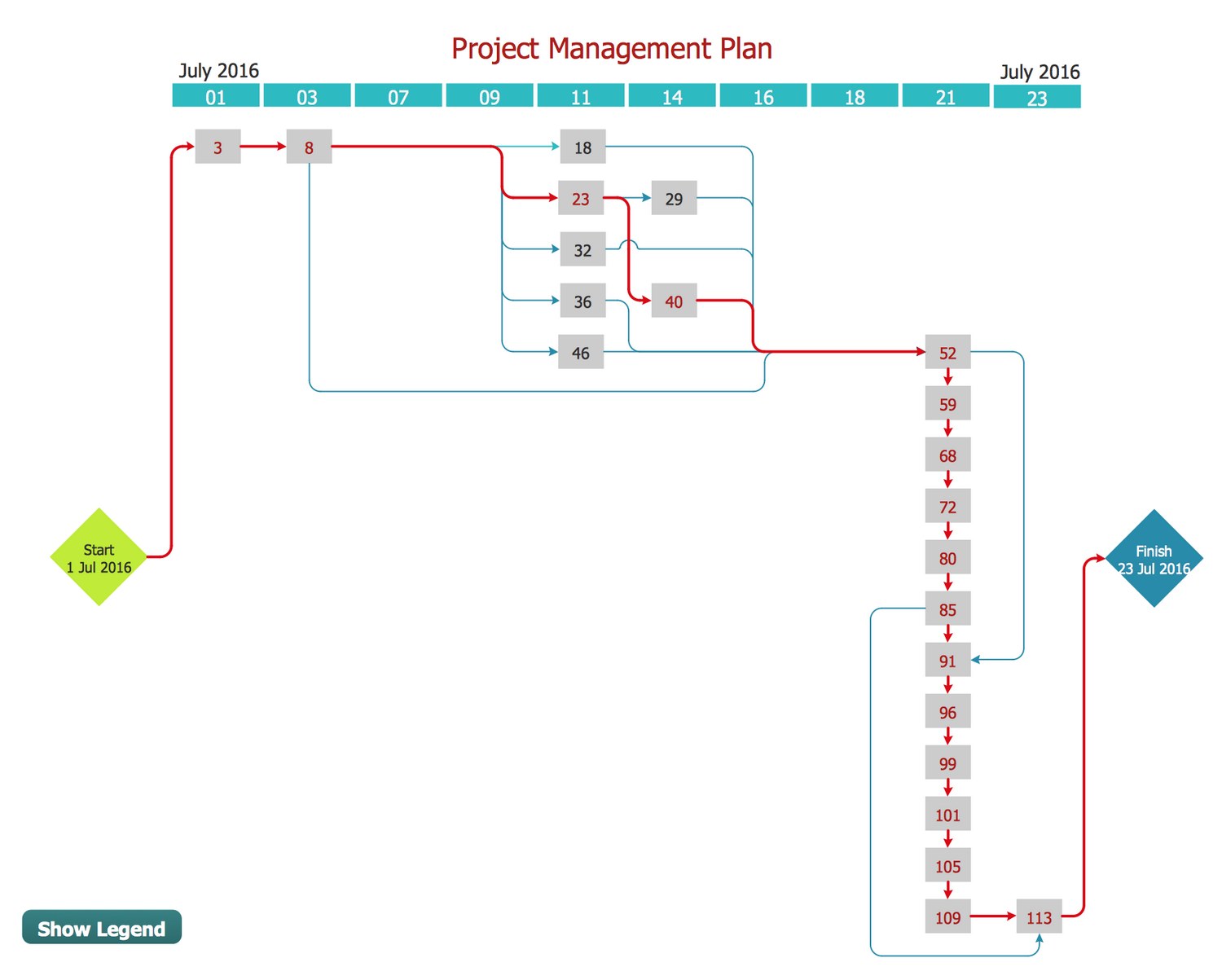
PERT method (Program Evaluation and Review Technique) is developed by the Ministry of Defense of the USA in 1958 in the framework of the project Polaris. PERT diagram is one of the tools for project management. With its help it is possible to analyze the time which is necessary for project execution and the consequence of tasks which involved into the project. The main advantage of such diagram type over the other diagram types is the possibility of calculation of the project fulfillment critical path that is the consequence of tasks which has the minimal float for execution and on which the total time for the whole project execution depends. If the task on the critical path is delayed than the execution of the whole project is delayed. There for it is important to calculate the critical path of the whole project execution and pay the most attention to tasks which appear on this way.

PERT Diagram is a more realistic approach of a project's time estimate analysis. After PERT chart was constructed user can discover the shortest possible duration for entire project timescale. The project timeline is the longest chain that might be taken with connected tasks on the PERT Diagram. Completion of serial tasks need to be accomplished in a presented order. At a project timeline can be independent tasks that not linked with main sequence they are called parallel tasks. PERT diagram is more suitable for Critical Path Analysis than Gantt chart for the reason that it undoubtedly better figure task dependencies. Project managers customarily utilize both methodologies.

It should be considered that PERT diagram does not give you ready concrete decisions but it helps you to find these decisions.

PERT diagram is constructed by definite rules. It represents the set of tasks, connected between each other in the consecution of their execution.
Program Evaluation and Review Technique (PERT) with ConceptDraw DIAGRAM title=

PERT benefits:

  • With a PERT method users can decide how to split project phases and choose the tasks' specification and dispose relations between them.
  • Different contractors involved in the project can coordinate the work on their tasks.
  • PERT determines schedule based on the availability of resources assigned to project tasks.
  • Decrease completion time of different tasks or supposed additional actions.
  • PERT utilizes resources within flexibility for implementing a thrift.
  • Attracting more management attention to critical stages of the project.

There are two variants of PERT diagram construction. In the first variant the duration is denoted on arrow connecting diagram nodes. Such diagram type is called AOA (activity on arrow).

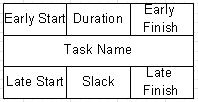
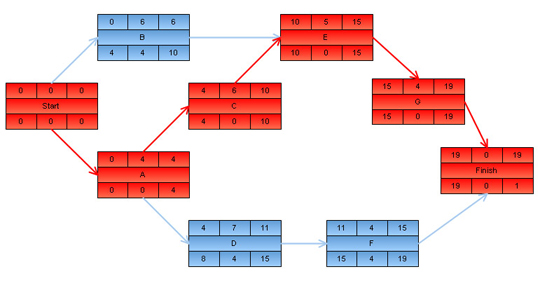
The second type of PERT diagram is called AON (activity on node). In such diagram the information about the task duration is denoted in the diagram node and each task is represented in the form of rectangle with the definite set of fields. These are the task name, duration, early and late starts and early and late finishes of the task and also the float for execution of the given task.

Program Evaluation and Review Technique(PERT) Diagram

Pic 1. PERT Diagram — AON (activity on node)

With the help of ConceptDraw you can build diagrams of any type, but we recommend you using of AON variant, because such diagram type is easier for building and perception.

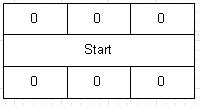
PERT diagram starts from the task which does not have duration and does not use resources and presents just a project start. This is done to denote the common start of the project as starting from the first day of the project several tasks are starting simultaneously. Analogously PERT diagram finishes with the task “finish”.

Program Evaluation and Review Technique - Start

Pic 2. PERT Diagram

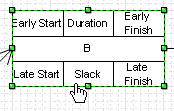
No task is able to start before the preceding task is finished. Also each task may represent a separate project with its subtasks, which can be displayed on a separate diagram. In ConceptDraw this can be realized in the form of hyperlinks assigned to such tasks. These hyperlinks may point at some pages of your ConceptDraw document where the corresponding PERT diagrams are placed.

Program Evaluation and Review Technique - Link

Pic 3. PERT Diagram — Task

Objects for PERT diagrams building are gathered in a separate ConceptDraw objects library. To start working it is enough to launch PERT Chart template from ConceptDraw STORE.

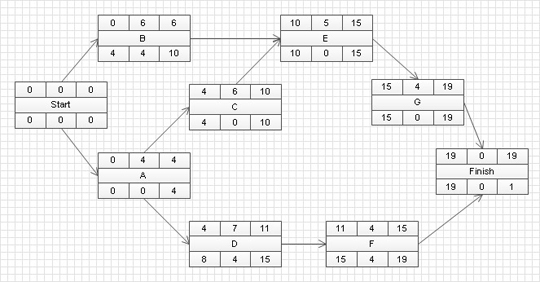
To create a PERT diagram with ConceptDraw, it is enough to drag on a document page the number of ready objects, representing tasks, and then connect them between each other and fill out necessary task fields.

Program Evaluation and Review Technique Diagram

Pic 4. PERT Diagram with ConceptDraw

However, a Gantt chart gives more information than PERT diagram, and that assume to expand the information on it:

  • activity name
  • normal duration time
  • early start time (ES)
  • early finish time (EF)
  • late start time (LS)
  • late finish time (LF)
  • slack

Task appeared on the calculated critical path are marked out with red color. This way any person is able to see at once tasks which require special attention.

Program Evaluation and Review Technique - Critical Path

Pic 5. PERT Diagram — Critical Path

ConceptDraw PERT diagram software works across any platform, meaning you never have to worry about compatibility again. ConceptDraw DIAGRAM allows you to make PERT diagram on PC or macOS operating systems.

The samples you see on this page were created in ConceptDraw DIAGRAM using the Seven Management and Planning Tools solution, and demonstrate the solution's capabilities and the results you can achieve using this solution.

Seven Management and Planning Tools solution

Program Evaluation and Review Technique <br>(PERT) with ConceptDraw DIAGRAM  *

Pic 6. Program Evaluation and Review Technique (PERT) Diagram — Software Development Plan

The following features make ConceptDraw DIAGRAM the best Program Evaluation and Review Technique (PERT) Diagram Software:

  1. You don't need to be an artist to draw professional looking diagrams in a few minutes.
  2. Large quantity of ready-to-use vector objects makes your drawing diagrams quick and easy.
  3. Great number of predesigned templates and samples give you the good start for your own diagrams.
  4. ConceptDraw DIAGRAM provides you the possibility to use the grid, rules and guides. You can easily rotate, group, align, arrange the objects, use different fonts and colors to make your diagram exceptionally looking.
  5. All ConceptDraw DIAGRAM documents are vector graphic files and are available for reviewing, modifying, and converting to a variety of formats: image, HTML, PDF file, MS PowerPoint Presentation, Adobe Flash, MS Visio.
  6. Using ConceptDraw STORE you can navigate through ConceptDraw Solution Park, managing downloads and updates. You can access libraries, templates and samples directly from the ConceptDraw STORE.
  7. If you have any questions, our free of charge support is always ready to come to your aid.


NINE RELATED HOW TO's:
Visual information is easier to perceive. You can teach even a child to make diagrams with a good flowchart example that would be interesting for it. Flowcharts can be fun, it’s not about business processes or programming algorithms. This flowchart shows step by step process of manufacturing of Nixtamal The product which is obtained by processing maize with calcium hydroxide. We must assume that the Aztecs were very fond of this product, if the recipe of its production came to our times. This flow chart was designed using ConceptDraw DIAGRAM with its solution for designing flowcharts of various types, sizes and purposes. ConceptDraw Flowcharts solution consists from the library of flowchart symbols, containing the set vector objects. Also there are a lot of diverse templates and samples of flow charts.Flowchart Examples and Templates for ConceptDraw DIAGRAM
Picture: Flowchart Examples and Templates
Related Solution:
The Flowcharts are widely used in engineering, architecture, science, analytics, government, politics, business, marketing, manufacturing, administration, etc.Flowchart of Products. Flowchart Examples
Picture:
Flowchart of Products
Flowchart Examples
Related Solution:
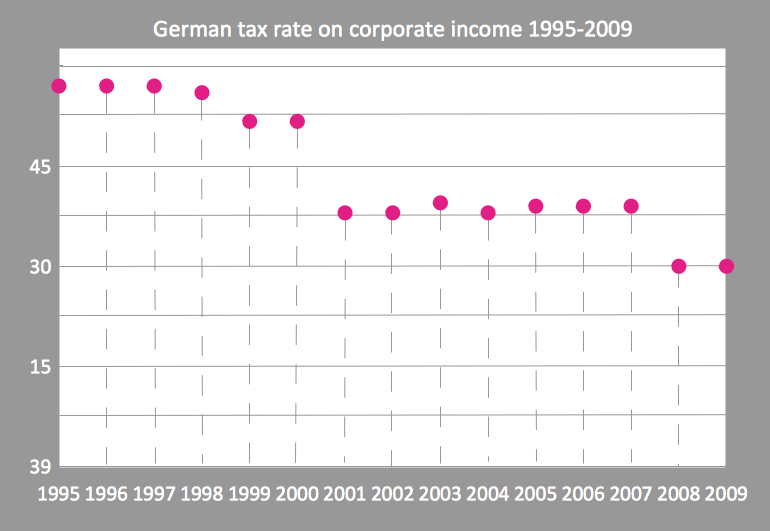
ConceptDraw provides some interactive xy chart and scatter graph symbols that offers advanced features yet is simple to use.Scatter Graph Charting Software *
Picture: Scatter Graph Charting Software
Related Solution:
When you prepare professional-looking presentation, you need to use ConceptDraw MINDMAP software for the amazing result.Create Captivating Presentations Easily
Picture: Create Captivating Presentations Easily
Related Solution:
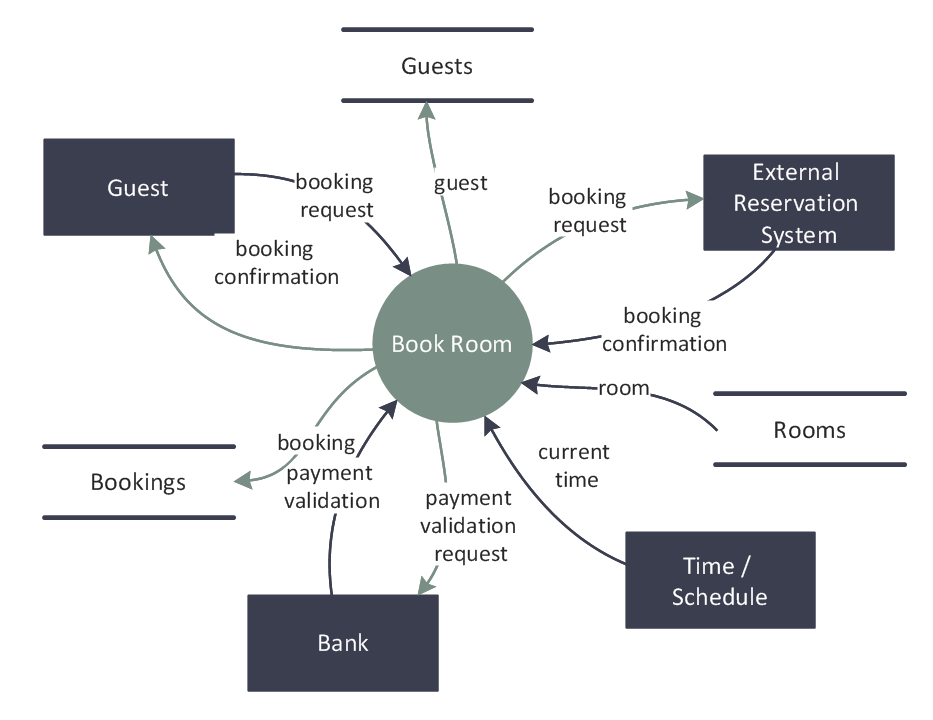
Data flow diagrams are the graphical tool, used in the visualization of data flow of some data processing systems. It is the valuable process modeling tool. Also designing DFD is the important component of the initial part of any information system development project. The standard symbols are used to represent the interaction of a system components and how various kinds of components influence on data flow. The ConceptDraw Data Flow Diagrams solution is design to assist professional software engineers in making DFDs according to Gane and Sarson, and Yourdon and Coad notations. Do you imagine yourself as a successful IT specialist? To your mind, they all use data flow diagram examples to learn and to get inspired. Aren’t you still with us?Data Flow Diagram Examples *
Picture: Data Flow Diagram Examples
Related Solution:
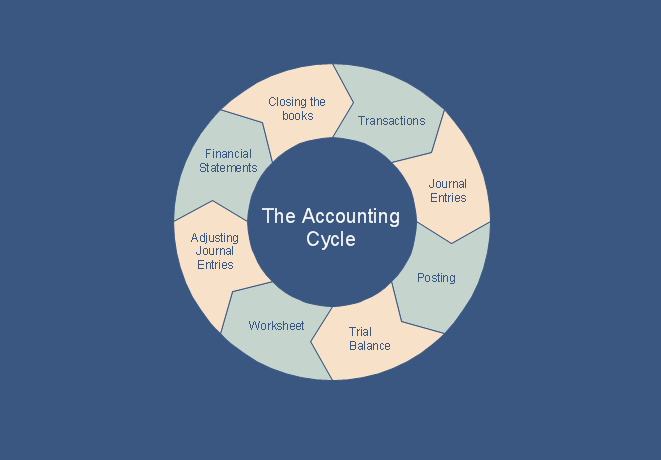
What is the accounting cycle? The accounting cycle is a sequence of steps that occur in the accounting period and include the processes of identifying, collecting, analyzing documents, recording transactions, classifying, summarizing, and reporting financial information of an organization.What is the Accounting Cycle? *
Picture: What is the Accounting Cycle?
Related Solution:
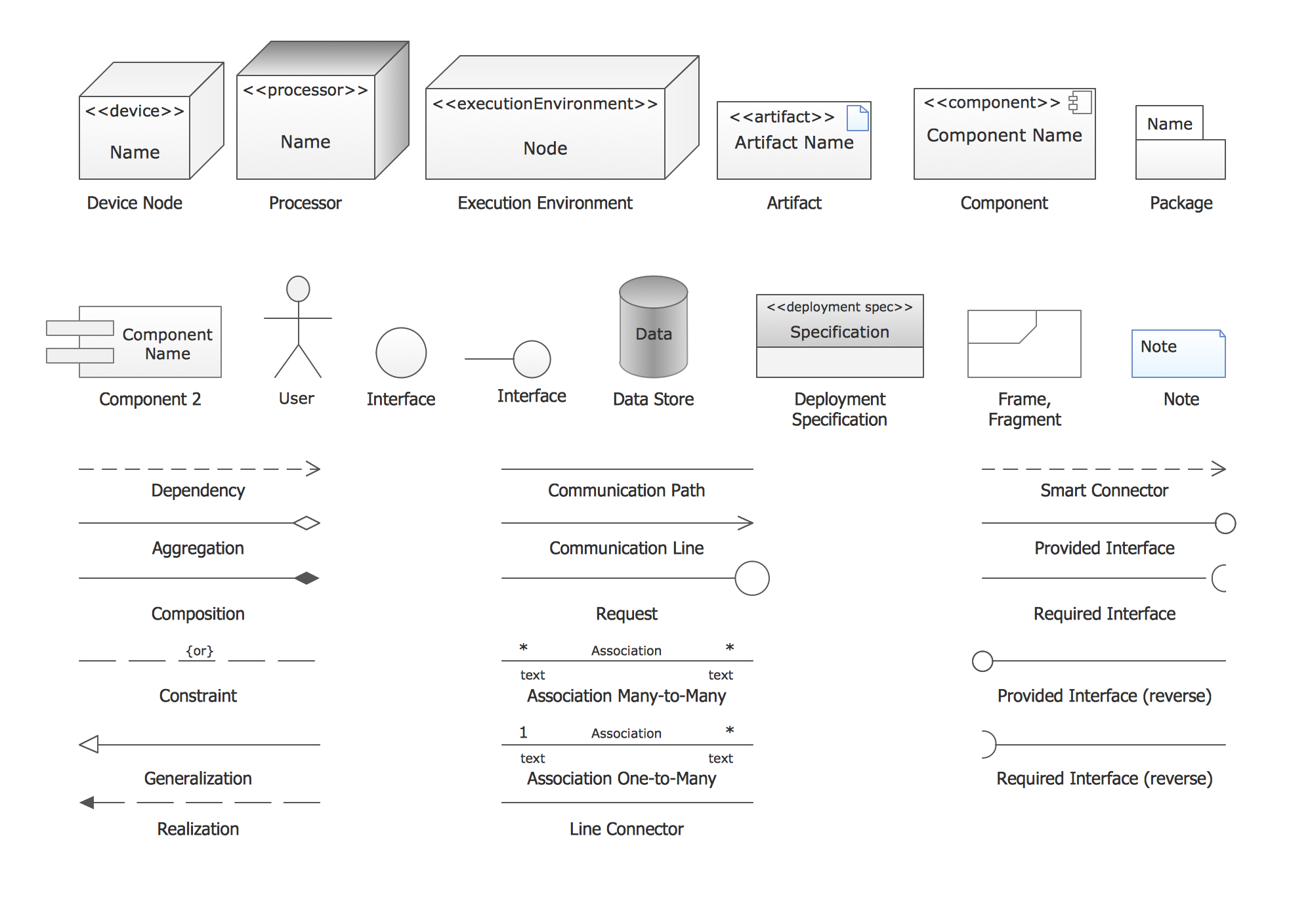
UML Deployment diagram describes the hardware used in system implementations and the execution environments and artifacts deployed on the hardware. ConceptDraw has 393 vector stencils in the 13 libraries that helps you to start using software for designing your own UML Diagrams. You can use the appropriate stencils of UML notation from UML Deployment library.UML Deployment Diagram. Design Elements *
Picture: UML Deployment Diagram. Design Elements
Related Solution:
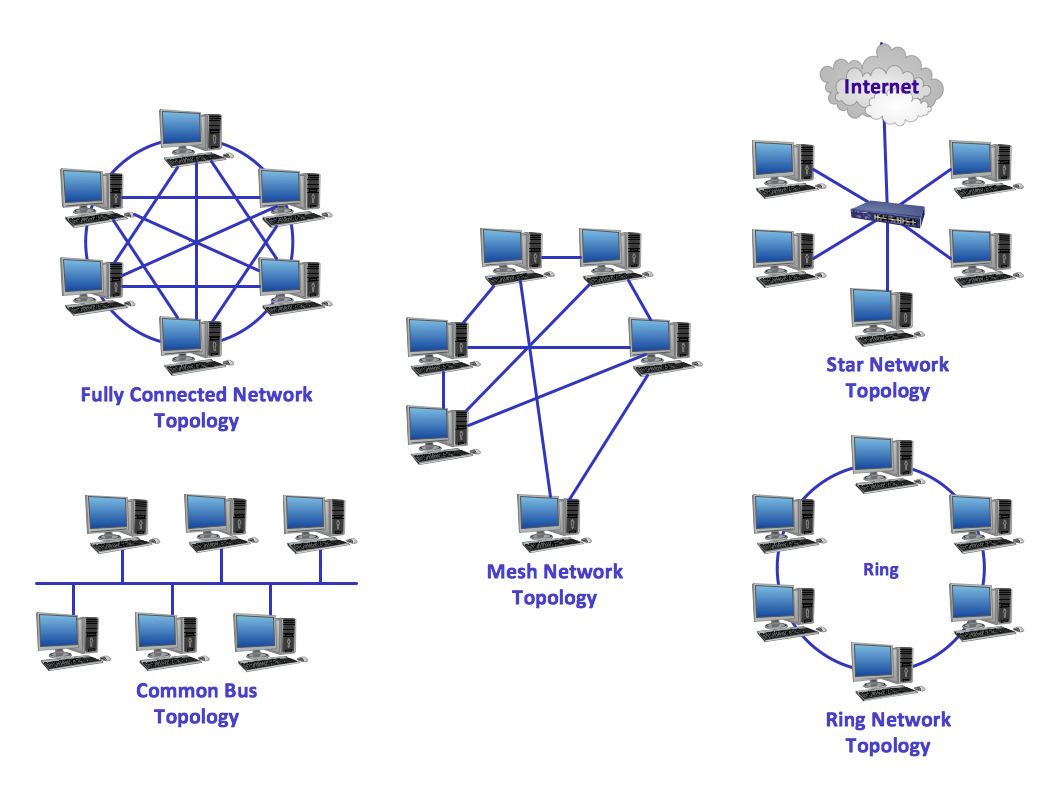
When describing any computer network, we imagine a set of devices and nodes, arranged in some way. Talking about network structures, we should distinguish physical and logical network topologies, as physical topology is about devices location and logical topology illustrates data flow. In the same time, they do not have to match, and some devices, such as repeaters, may have a physical star layout, but a bus logical topology. There are two main types of computer network topologies: Physical topology that show the physical organization of a network - equipment and types of connections. Star network topology involves a set of devices that is connected to a single hub (router). Ring network topology means that, devices connected according this topology have two connections, connecting with nearby devices to make a loop. Bus network topology is the topology presented at the current diagram. It is similar to a ring topology. The difference is that data moves up and down a linear connection, copying itself where network equipment works as bus-stations along the way. This network topology can be used for small network, or when adding an extra device into a network.Network Topologies
Picture: Network Topologies
Related Solution:
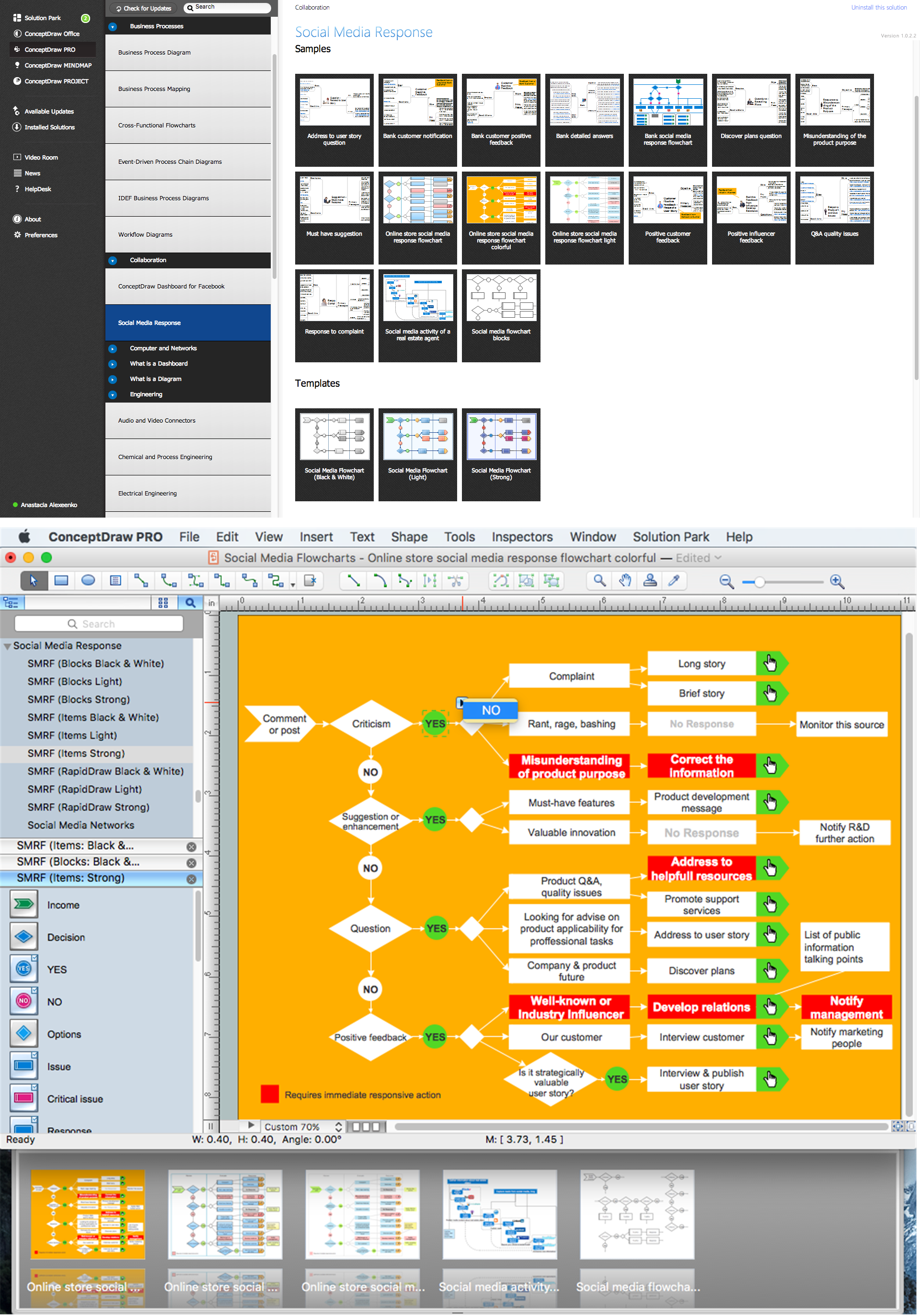
Organizing and Selecting Social Media Response Messages. Interactive Flowcharts can change the way one creates and organizes their social media response process.What is Interactive Flowcharts *
Picture: What is Interactive Flowcharts
Related Solution:
ConceptDraw
DIAGRAM 18