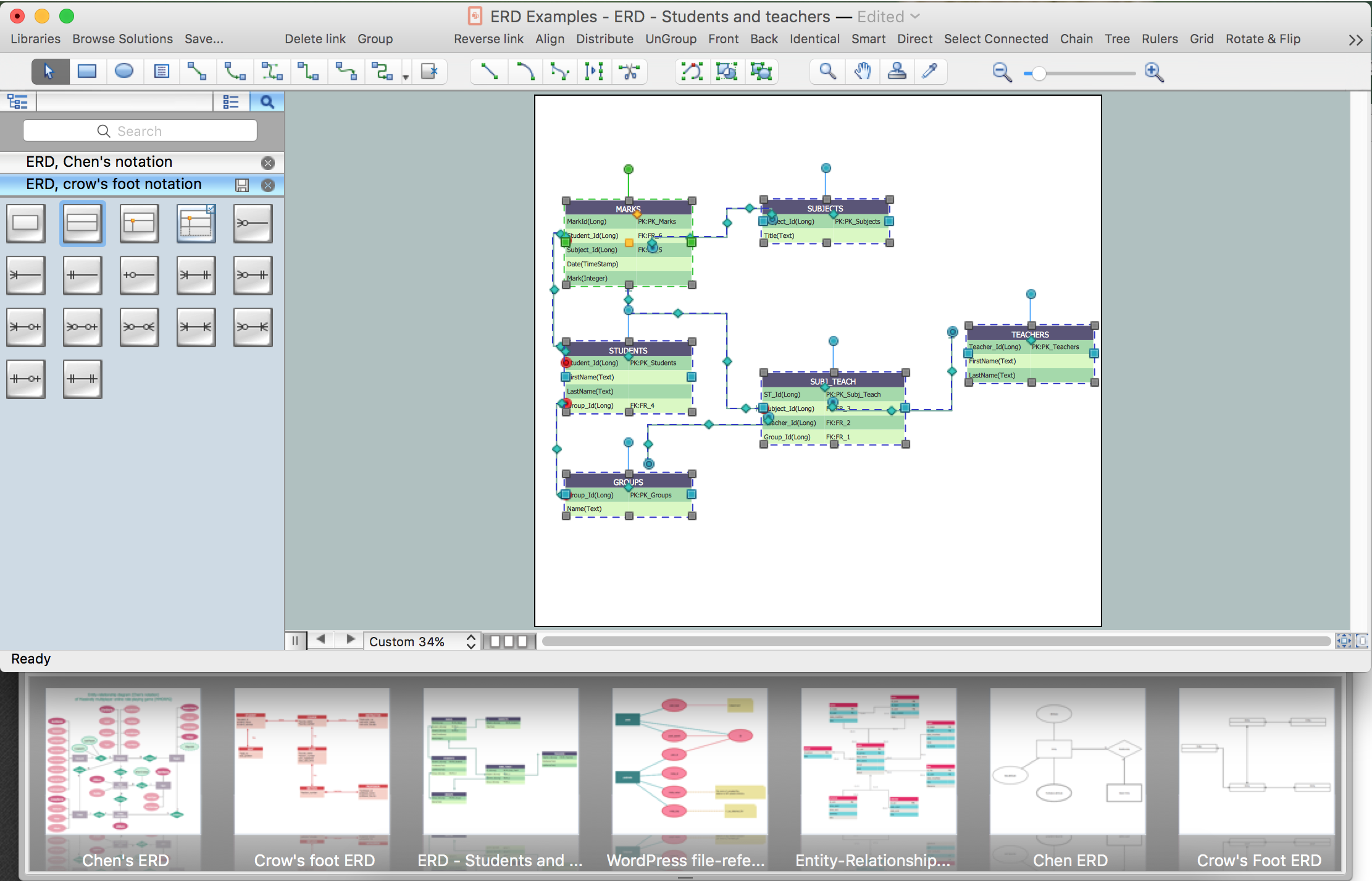
Entity Relationship diagrams are the powerful tool for clear and visual modeling the relationships between database entities. When developing Entity Relationship Diagrams are used a set of common block objects and lines to describe the structure of a database.
Use the ConceptDraw DIAGRAM software extended with Entity-Relationship Diagram (ERD) solution from the Software Development area of ConceptDraw Solution Park for designing ER diagrams, which offers the predesigned commonly used Entity relationship symbols and ER objects. Thanks to them you can make the ERDs easy understandable for all your colleagues.
When you need to visually represent the structure of relational database, Entity relationship diagram (ERD) is the best type of diagram for that case.
Most entity-relationship diagrams can be built with objects from Flowchart solution or ERD Solution which contains inbuilt templates. Follow these steps to create your own custom ERD diagram.
Don't be frightened if it looks complex, ConceptDraw DIAGRAM makes it easy to create an ERD, and hundreds of other diagrams, in minutes.
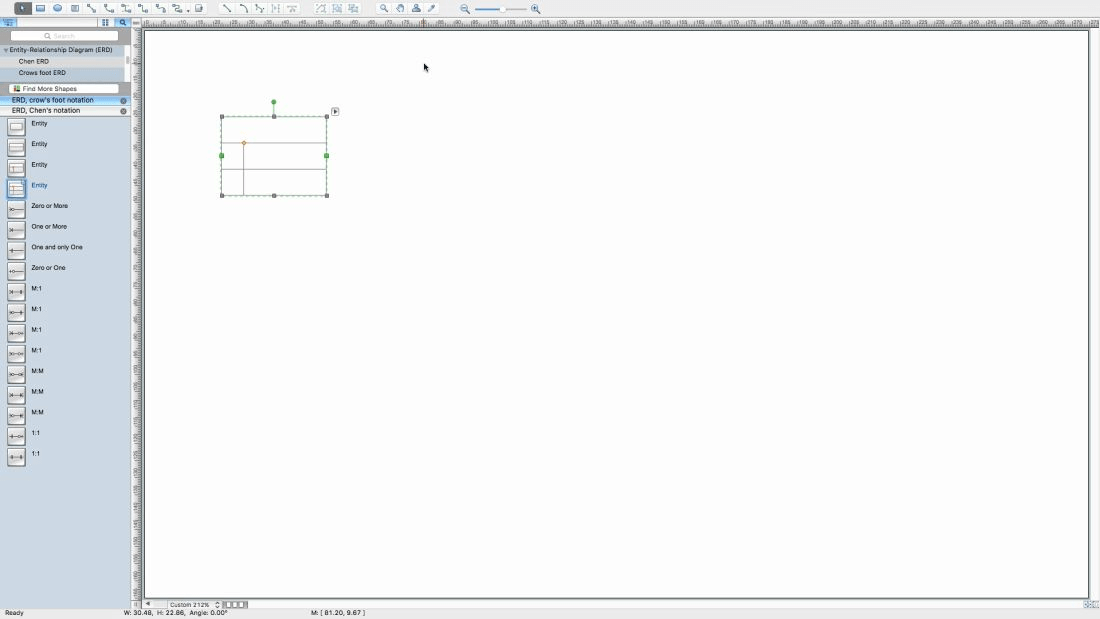
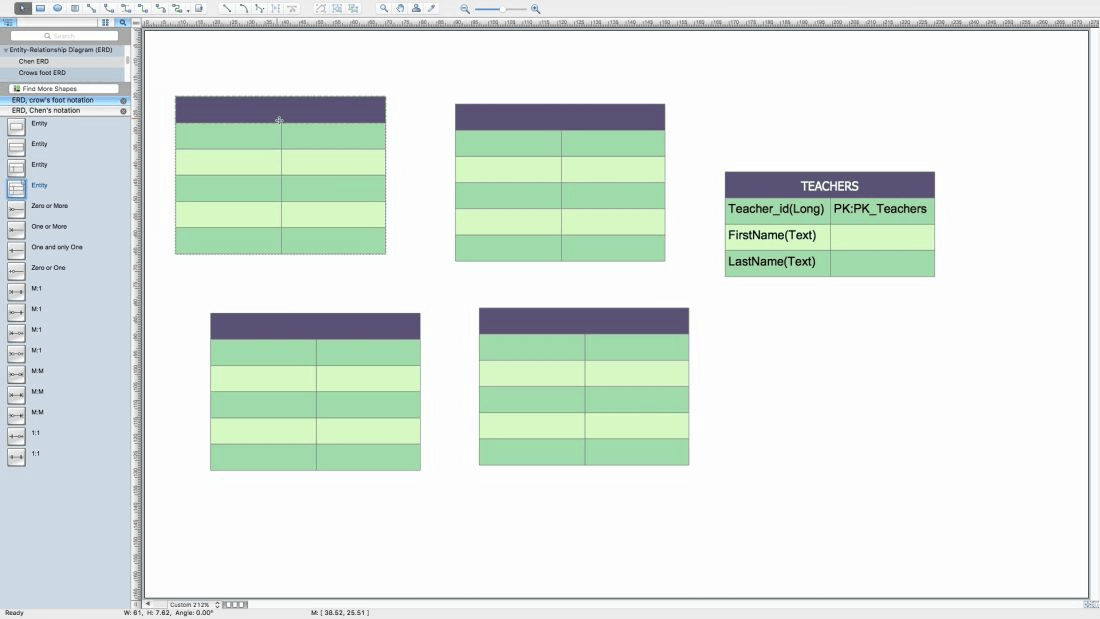
Start drawing with Entity object from Crow's foot ERD object.
Note: This object contains several levels:
1 - object itself
2 - lines in the object
3 - separate cell.
It is possible to set different setting to each level.
To switch from level to level, click on object with separate clicks when it's selected.
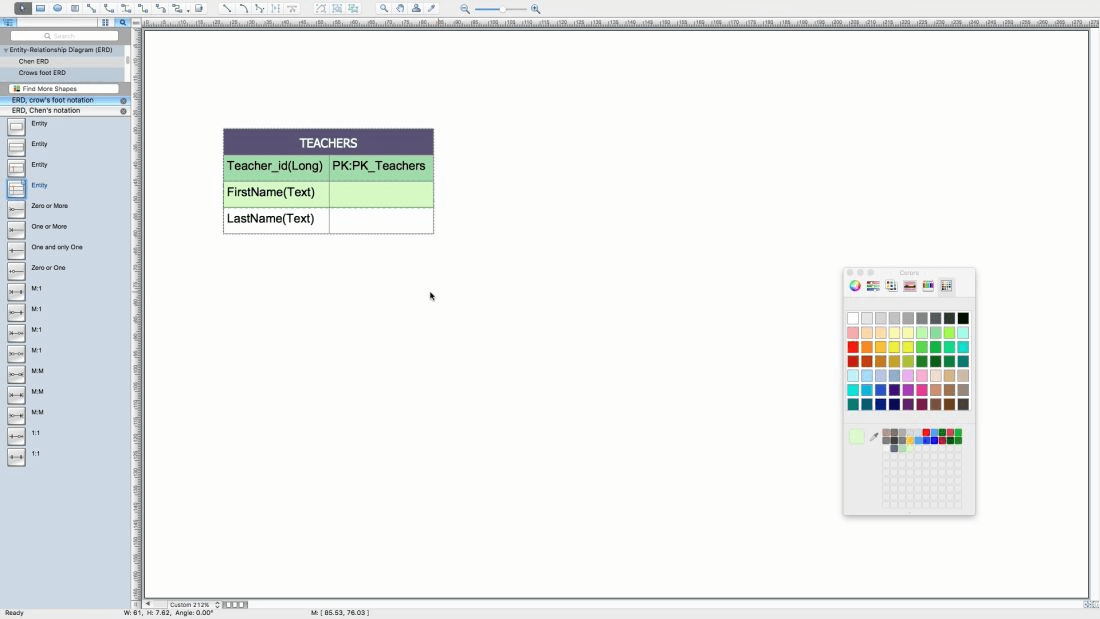
Add text.
Change object's color.
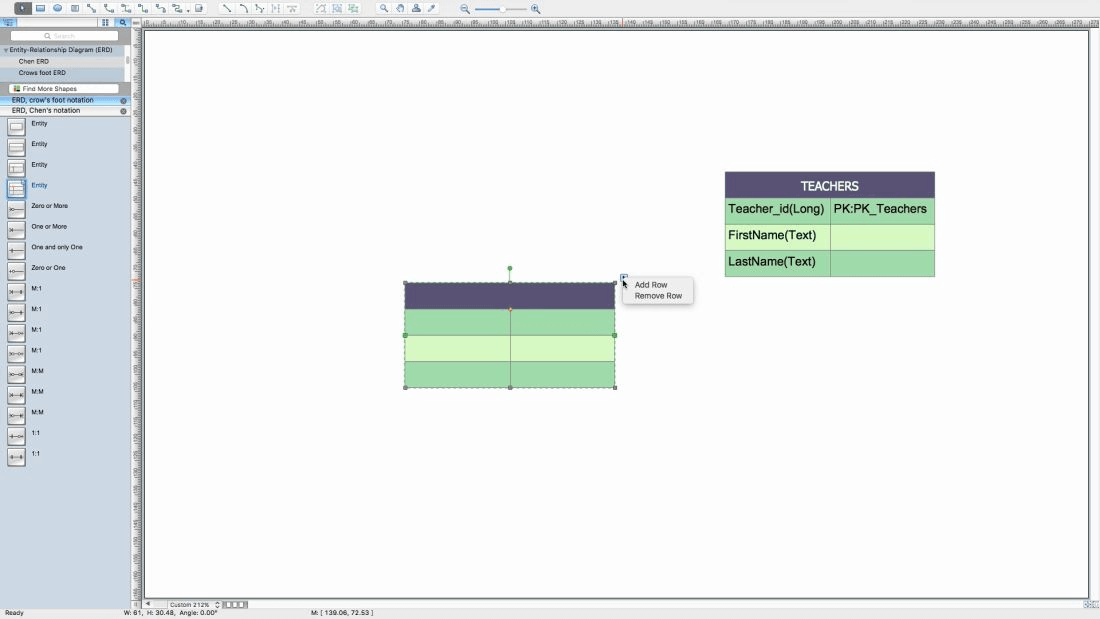
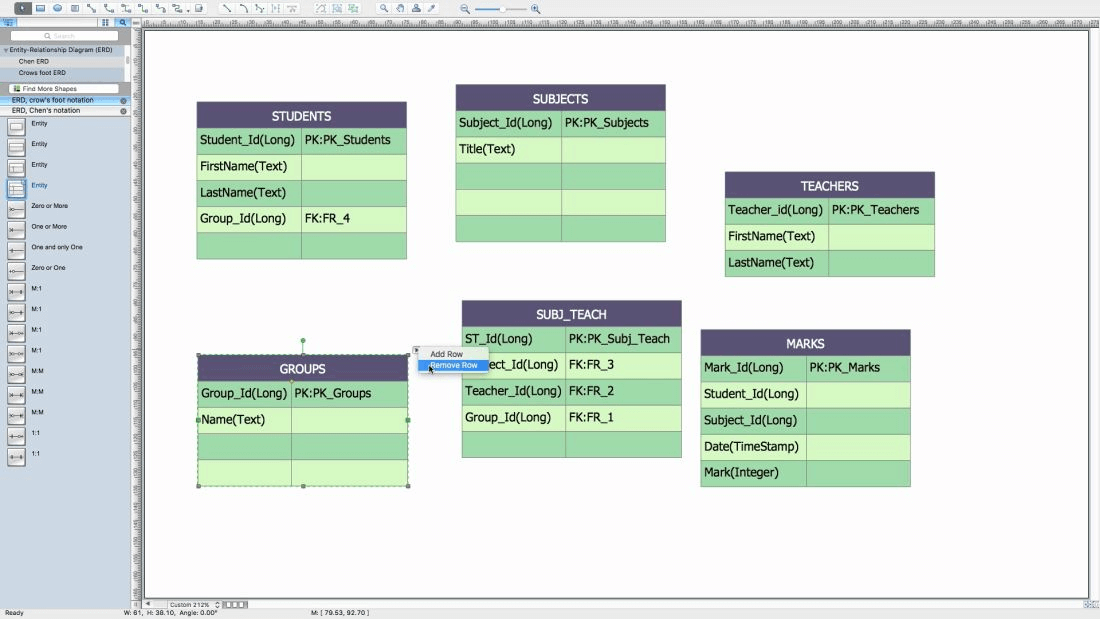
Copy Teachers table.
Add new rows via drop-down menu.
Note: Adding and removing is always performed from a bottom row.
New added row will have same preferences as bottom one.
Paste copied table as many times as you need.
Filling the table.
Note: To fill a separate cell, select it clicking with 3 separate clicks.
Delete excess rows via drop-down menu for each table.
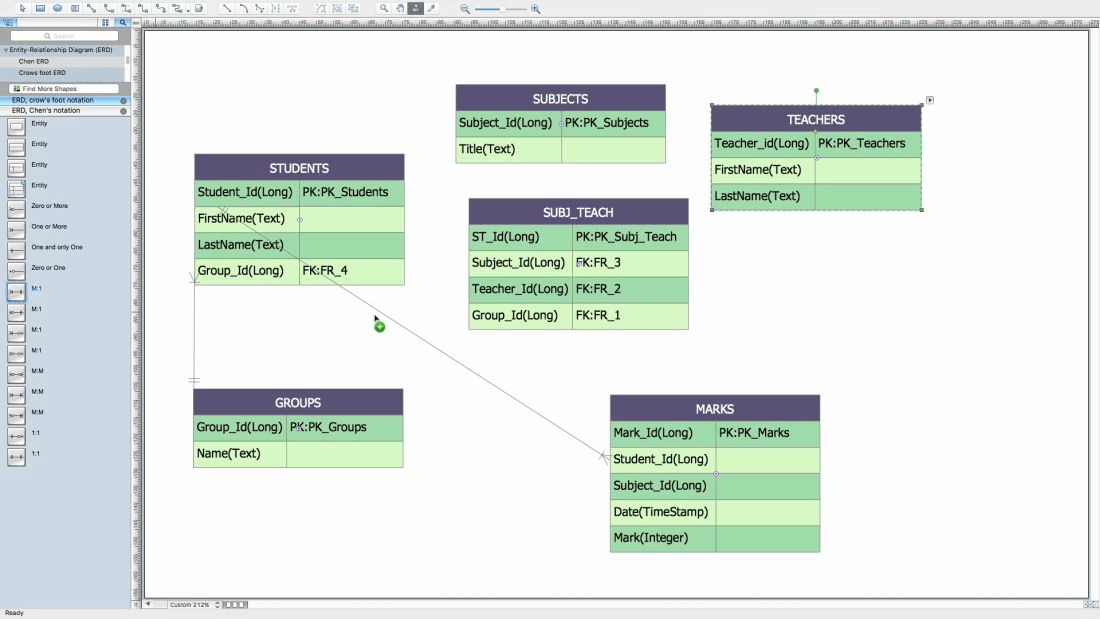
Use M:1 (many-to-one) connector from ERD Crow’s Foot Notation library.
Connect needed rows of tables.
If you want to change connectors' type, select all connectors with held Shift button and click on Smart connector icon at ribbon.
To change connectors' elbow position, pull the yellow control dot.
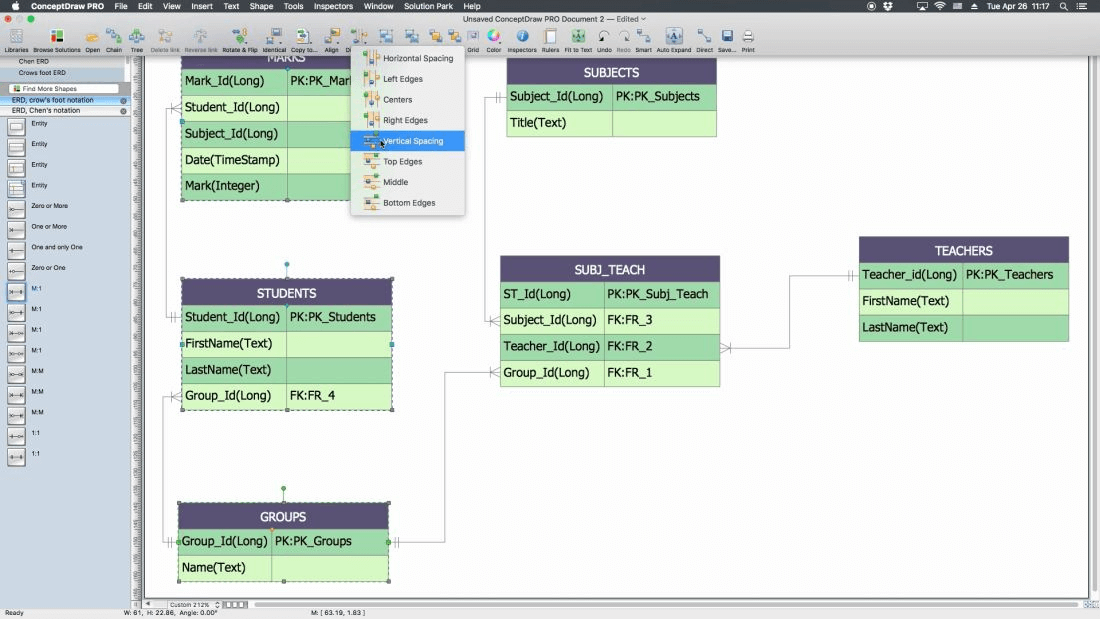
Select tables from left and set the same distribution.
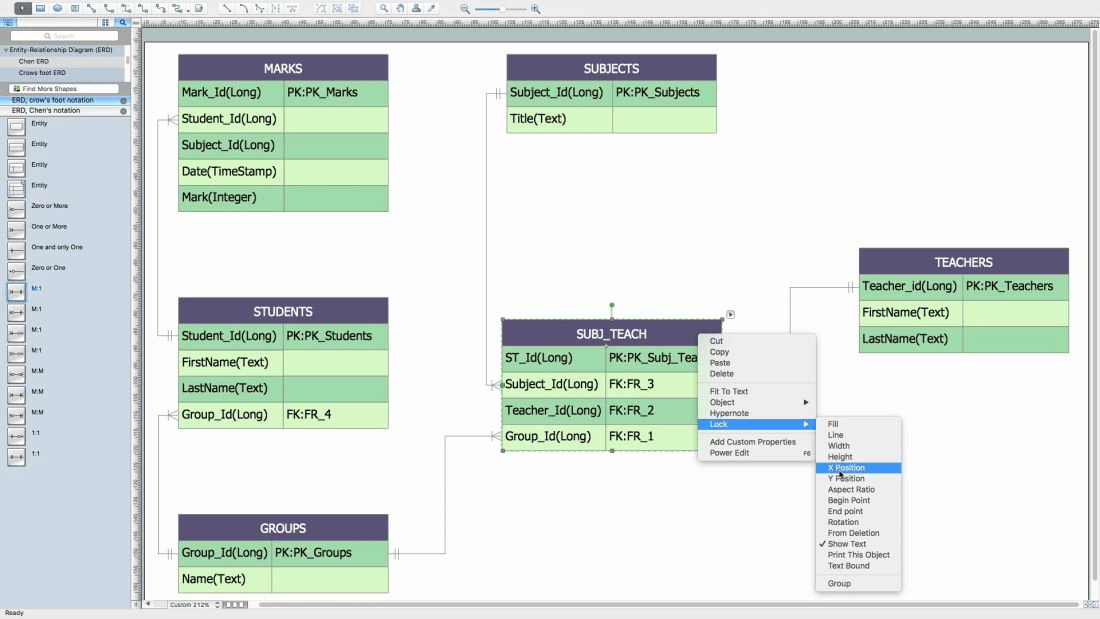
You may block the horizontal moving for object, so figure might be moved only vertically.
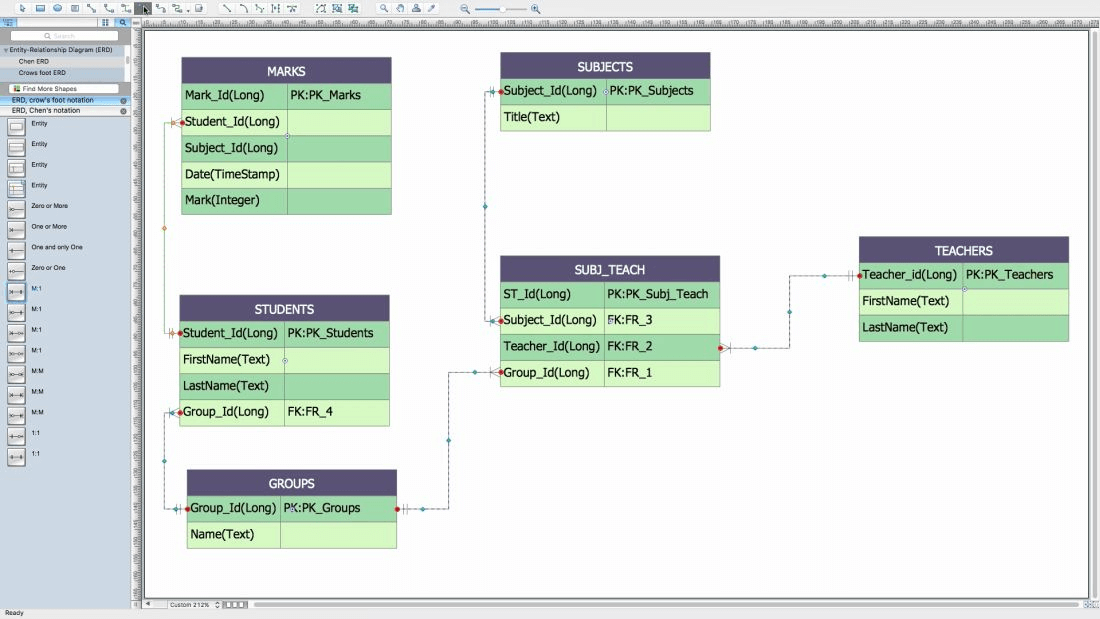
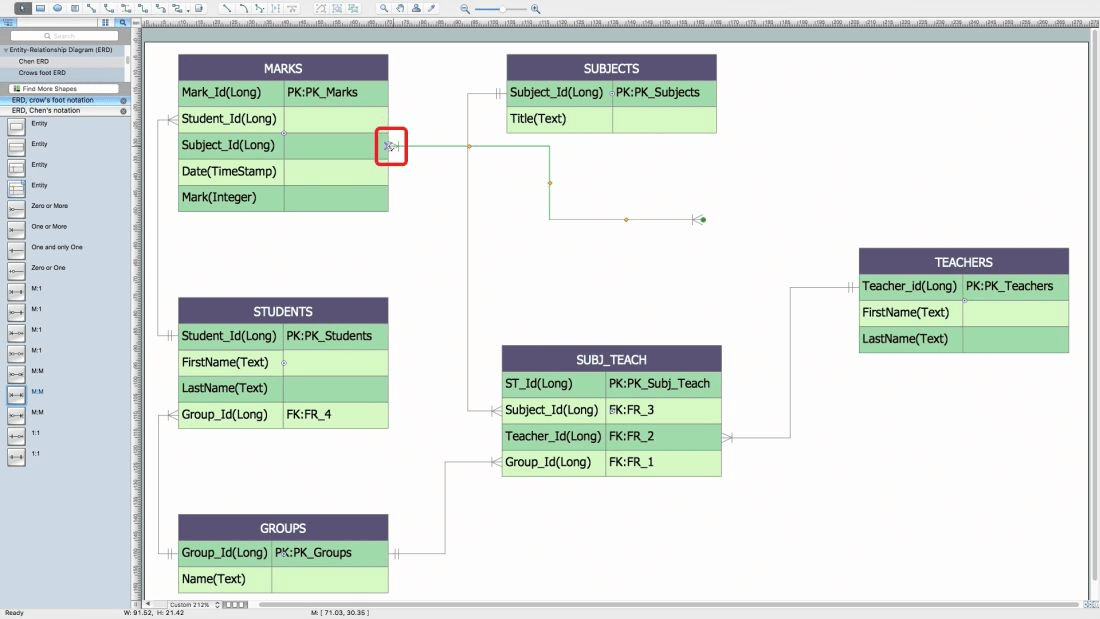
Use M:M (many-to-many) connector from ERD Crow’s Foot Notation library.
Set the needed connection.
Note: When connector's end reaches connection point, it changes its appearance.
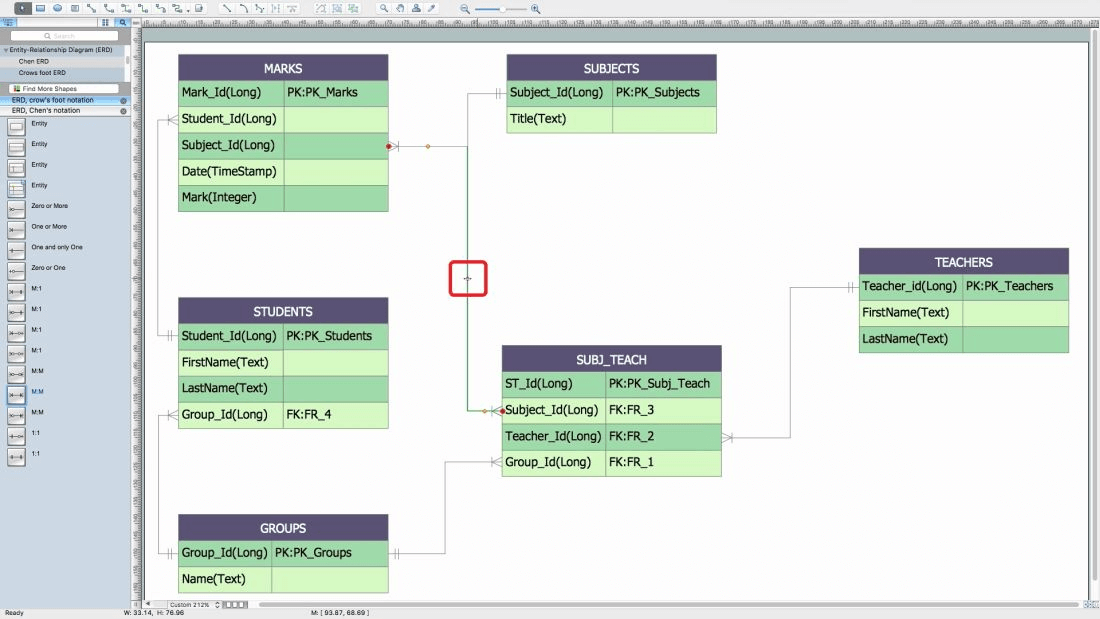
Edit connector's path manually with yellow control dots.
Select all with command+A.
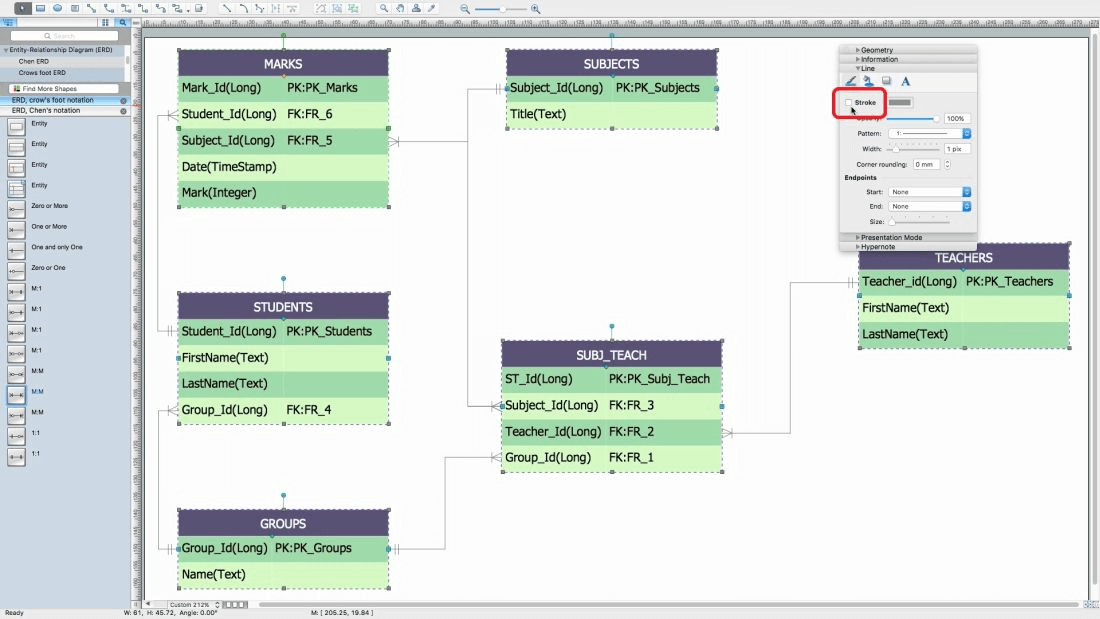
Inspectors - Line - remove object lines (stroke).
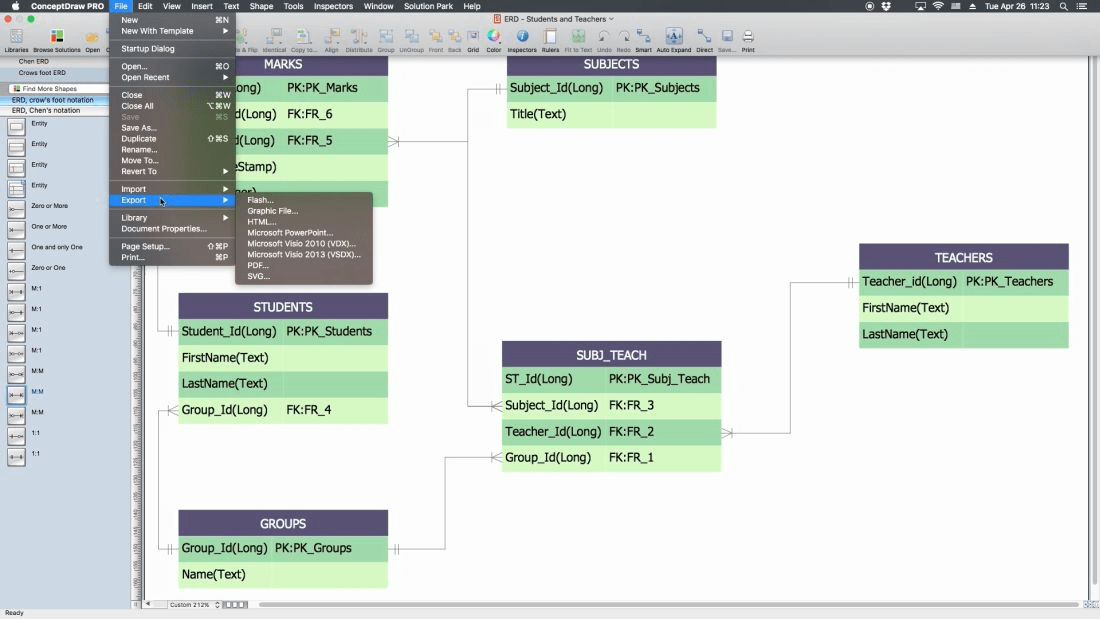
Export your document to one of graphic formats.
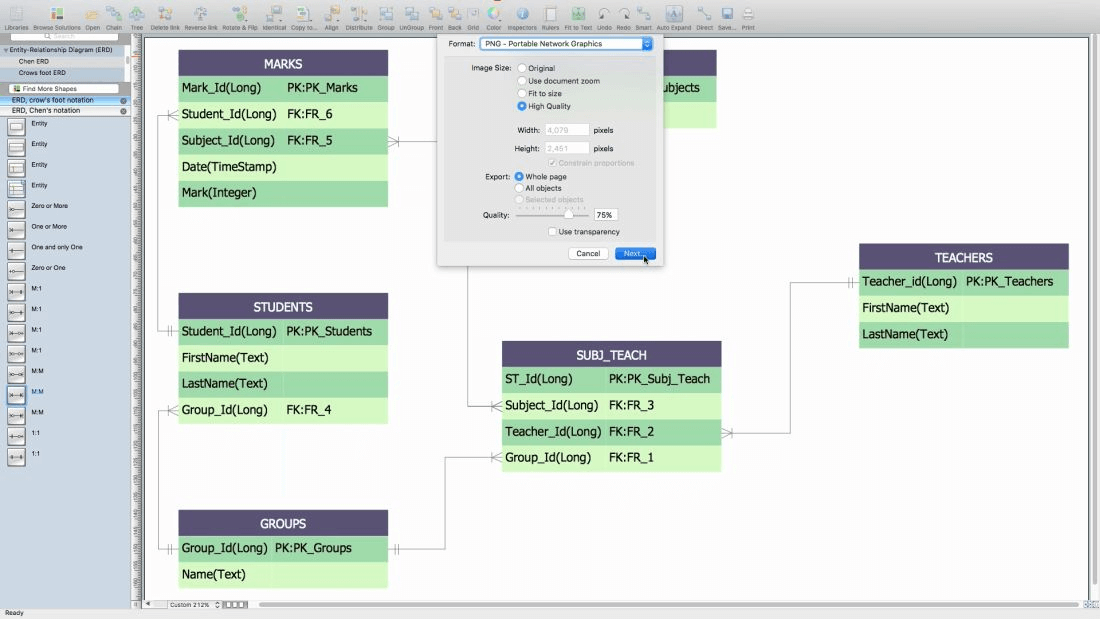
Set the format and quality.
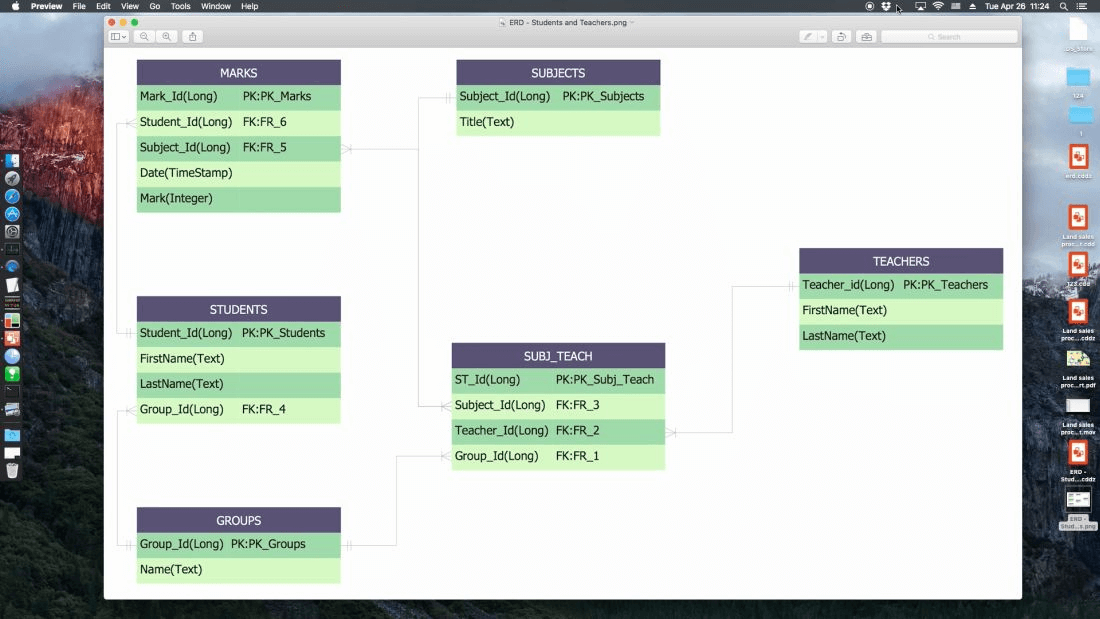
Your file is ready!
The Entity-Relationship Diagram (ERD) solution from ConceptDraw Solution Park extends ConceptDraw DIAGRAM ector graphics and diagramming software with the ability to describe successfully a database using the Entity-Relationship model and easy create ERD.
Video. How to Build an Entity Relationship Diagram (2min 05sec)
Use ConceptDraw DIAGRAM enhanced with Entity Relationship Diagram (ERD) solution to draw you own ER diagrams using Chen's or Crow's Foot notations.
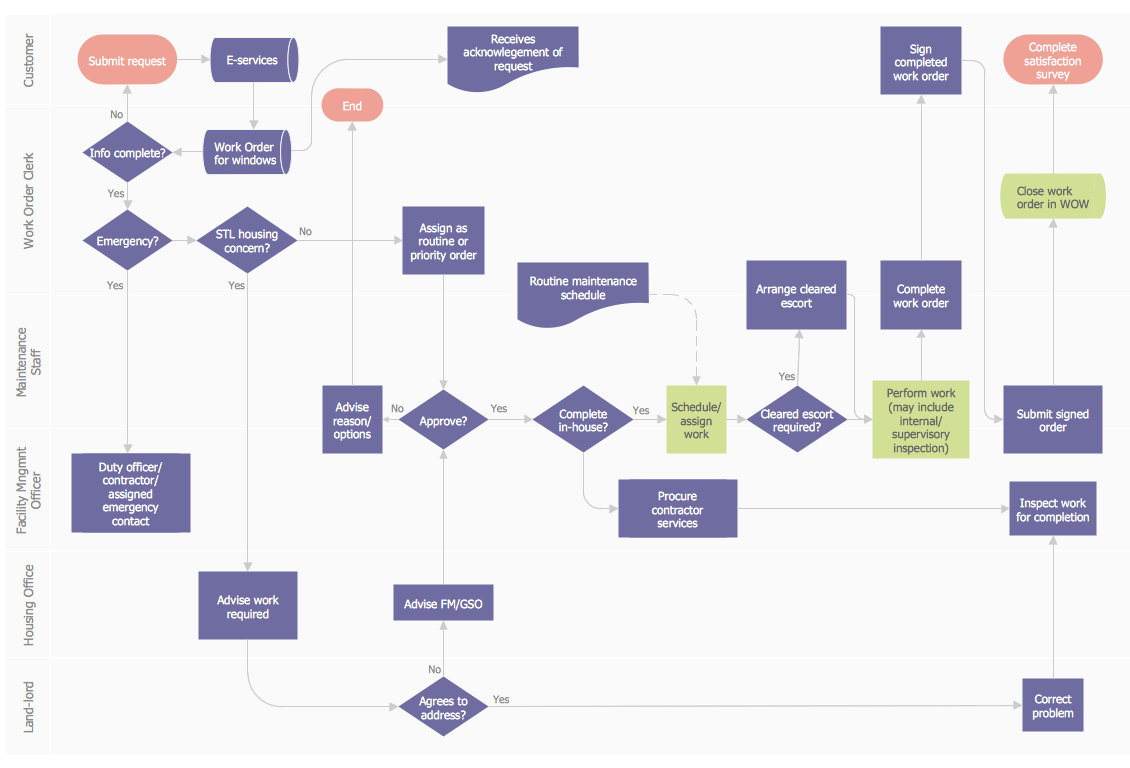
Working with personnel might be difficult if you are not prepared enough. To explain your workers all the details of communication with customers, you can draw an order process flowchart which will describe every step of the process and answer all the questions that might appear. You can view a lot of business process mapping diagram examples here, in ConceptDraw Solution Park.
This business process flow chart is created to illustrate the sample work order process. Before an organization can make some work for a person, the customer work order request must be completed. It is needed for tracking and accountability objectives. We used this business process flowchart to show a certain tasks and actions assumed by an organization. This flowchart depicts the outside inputs that are needed to launch a process, and ways the organization delivers its outputs. This business process flowchart was created with a help of ConceptDraw Business Process Mapping solution.
Picture: Work Order Process Flowchart. Business Process Mapping Examples
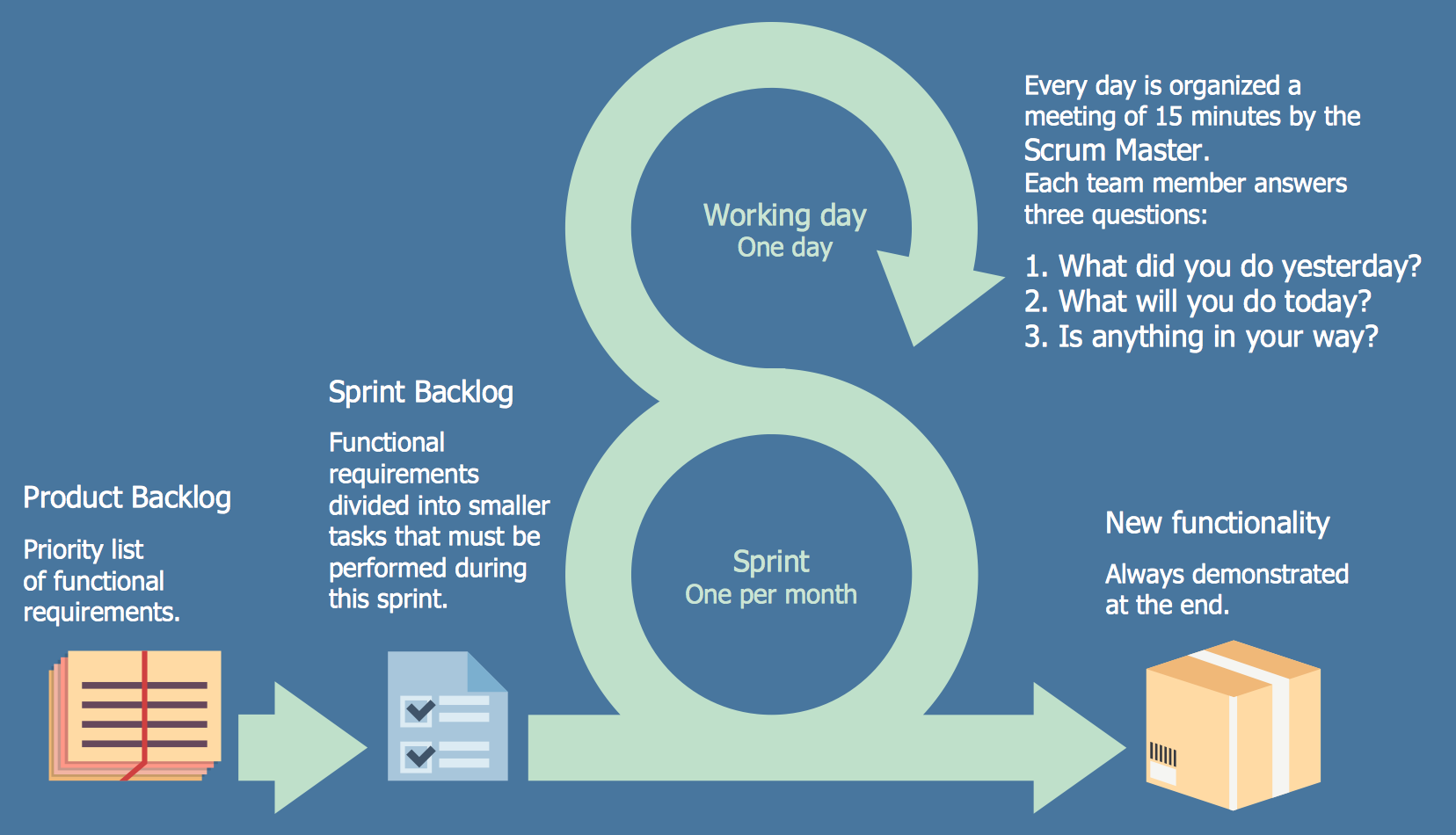
ConceptDraw DIAGRAM diagramming and vector drawing software extended with unique SCRUM Workflow solution from the Project Management area of ConceptDraw Solution Park allows fast and easy design professional-looking Scrum Workflow Diagrams and Scrum workflow scheme for projects required when working on projects and managing them, when developing software with cutting-edge Agile methodologies.
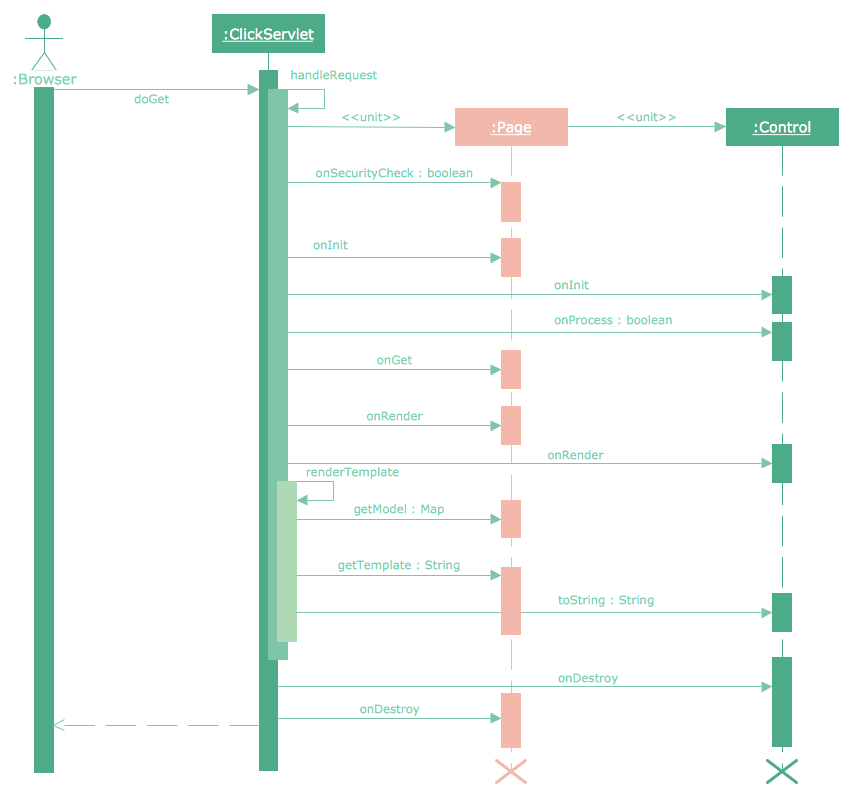
ConceptDraw DIAGRAM diagramming and vector drawing software as a sequence diagram tool provides the Rapid UML Solution from the Software Development Area that contains the UML Sequence library.
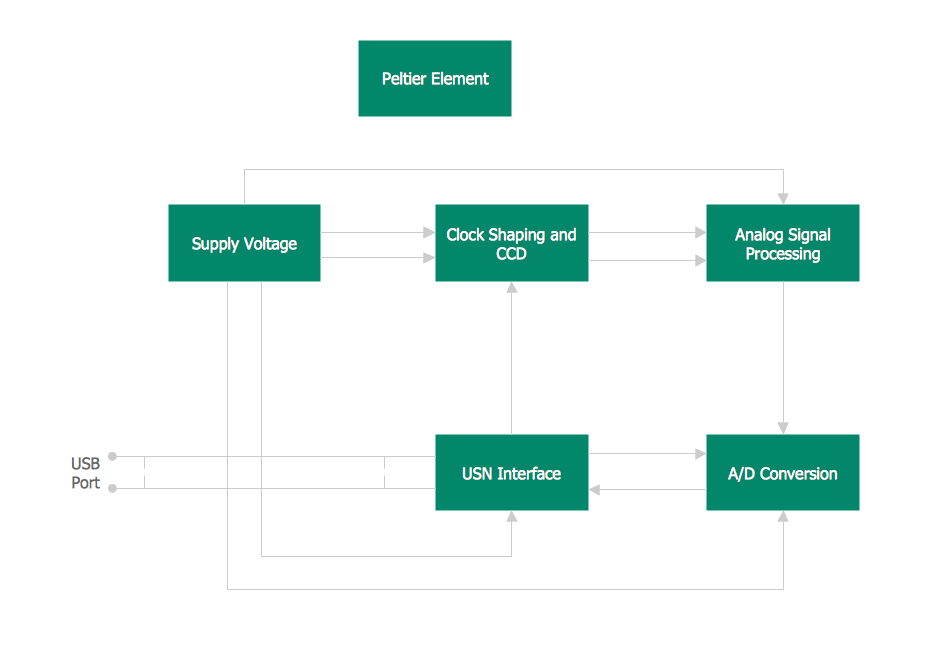
This template shows the Context Diagram. It was created in ConceptDraw DIAGRAM diagramming and vector drawing software using the Block Diagrams Solution from the “Diagrams” area of ConceptDraw Solution Park.
The context diagram graphically identifies the system. external factors, and relations between them. It’s a high level view of the system. The context diagrams are widely used in software engineering and systems engineering for designing the systems that process the information.
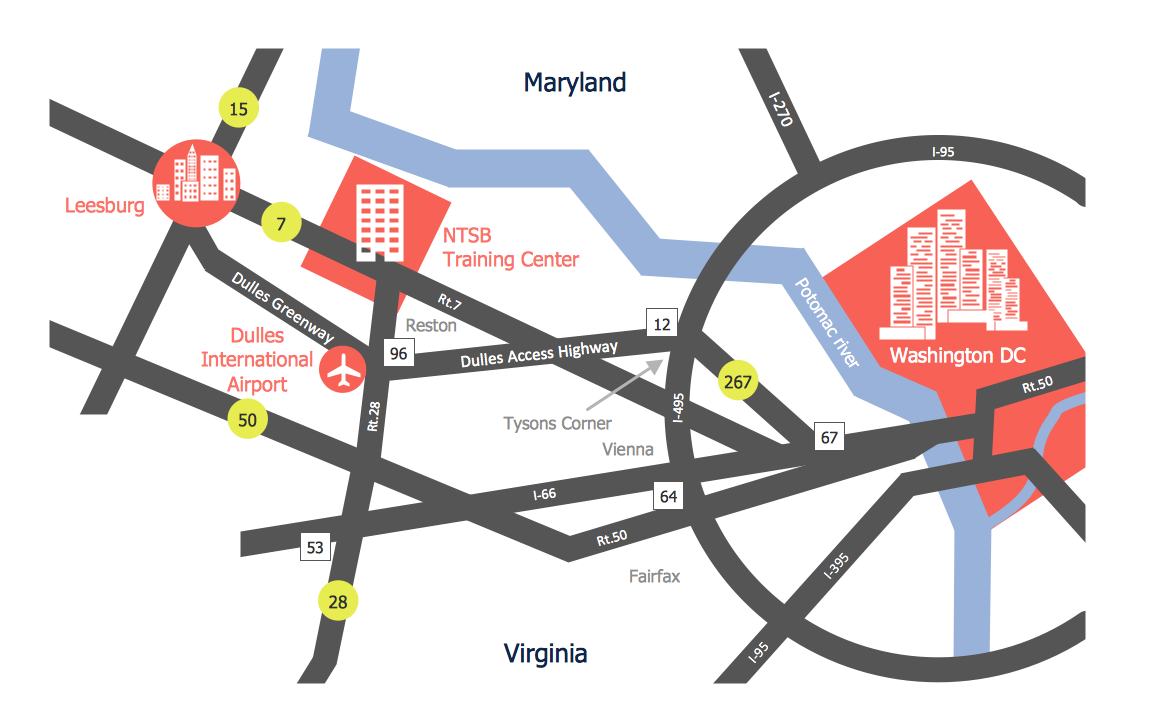
It is convenient to represent various routes, directions, roads on the directional maps and navigation schemes. ConceptDraw DIAGRAM diagramming and vector drawing software supplied with Directional Maps Solution from the Maps Area of ConceptDraw Solution Park is effective for drawing Directions Maps.
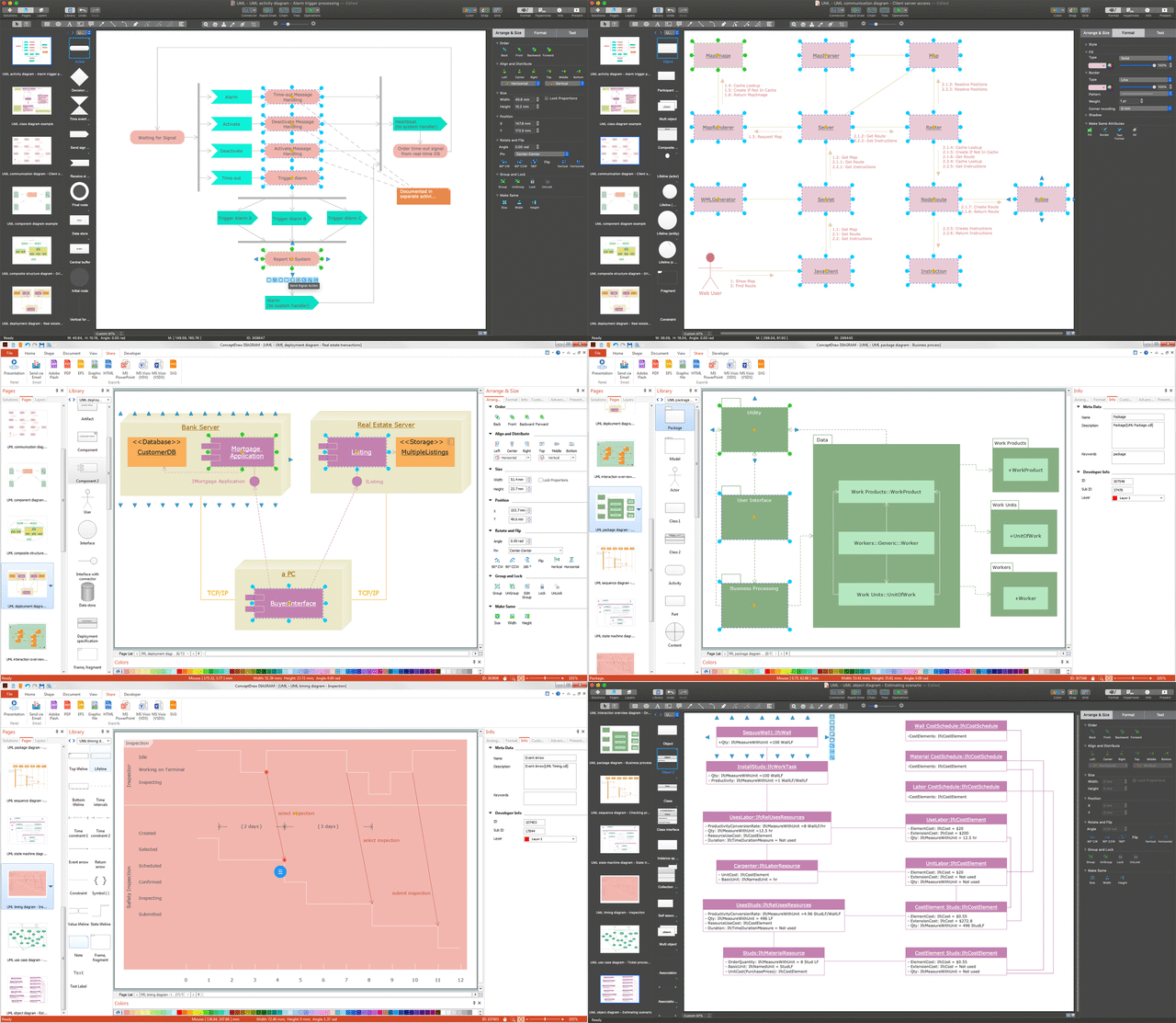
While developing software, it is very important to have a visual model, because it helps to represent the logic and the architecture of an application. Experienced engineers use UML diagrams to denote relationships between classes and their instances. UML is a general language for a set of diagrams like deployment diagrams, object diagrams or use case diagrams.
This diagram represents UML class diagram used for a software system development using an object-oriented method. Class diagrams are categorized as static structure diagrams that depict the physical structure of a system. Class diagram divides a software system's structure into "classes". Classes are defined by the methods and variables of objects. UML Class diagram is used to depict relationships and source code dependencies between objects.
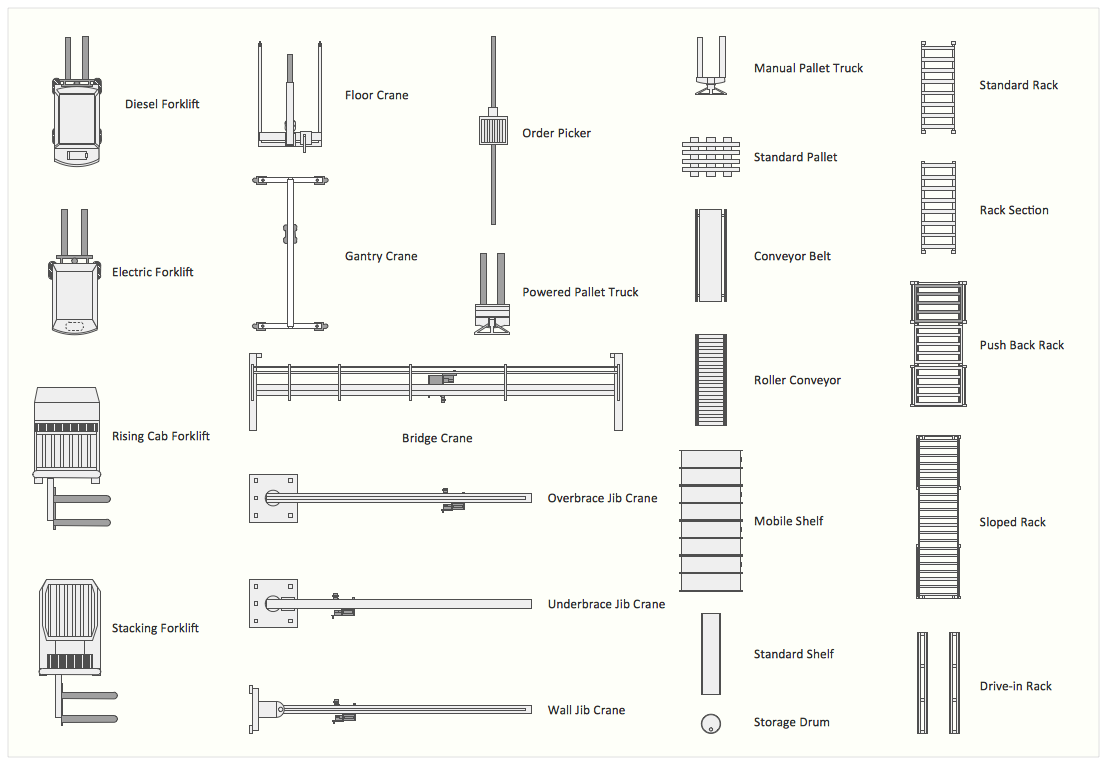
Talking about interior design, we usually mean apartments, houses or establishments. But there’s much more to this, for instance, interiors in warehouses, storage and distribution departments and machine shops also require designing. You can find all the necessary design elements such as cranes and forklifts in Plant Layout Plans solution ConceptDraw Solution Park.
This picture represents content of the Storage and Distribution library, providing the collection of vector images designed to plan layouts of industrial storage facilities (warehouses). Warehouse is a premises and equipment intended for the reception, distribution and storage of products manufactured at the plant, as well as to preparation the product for shipment to the consumer. This vector images library is supplied with ConceptDraw Plant Layout Plans solution. it will help to industrial architects and planners to design plans for industrial storage and shipping facilities.
Picture: Interior Design. Storage and Distribution — Design Elements
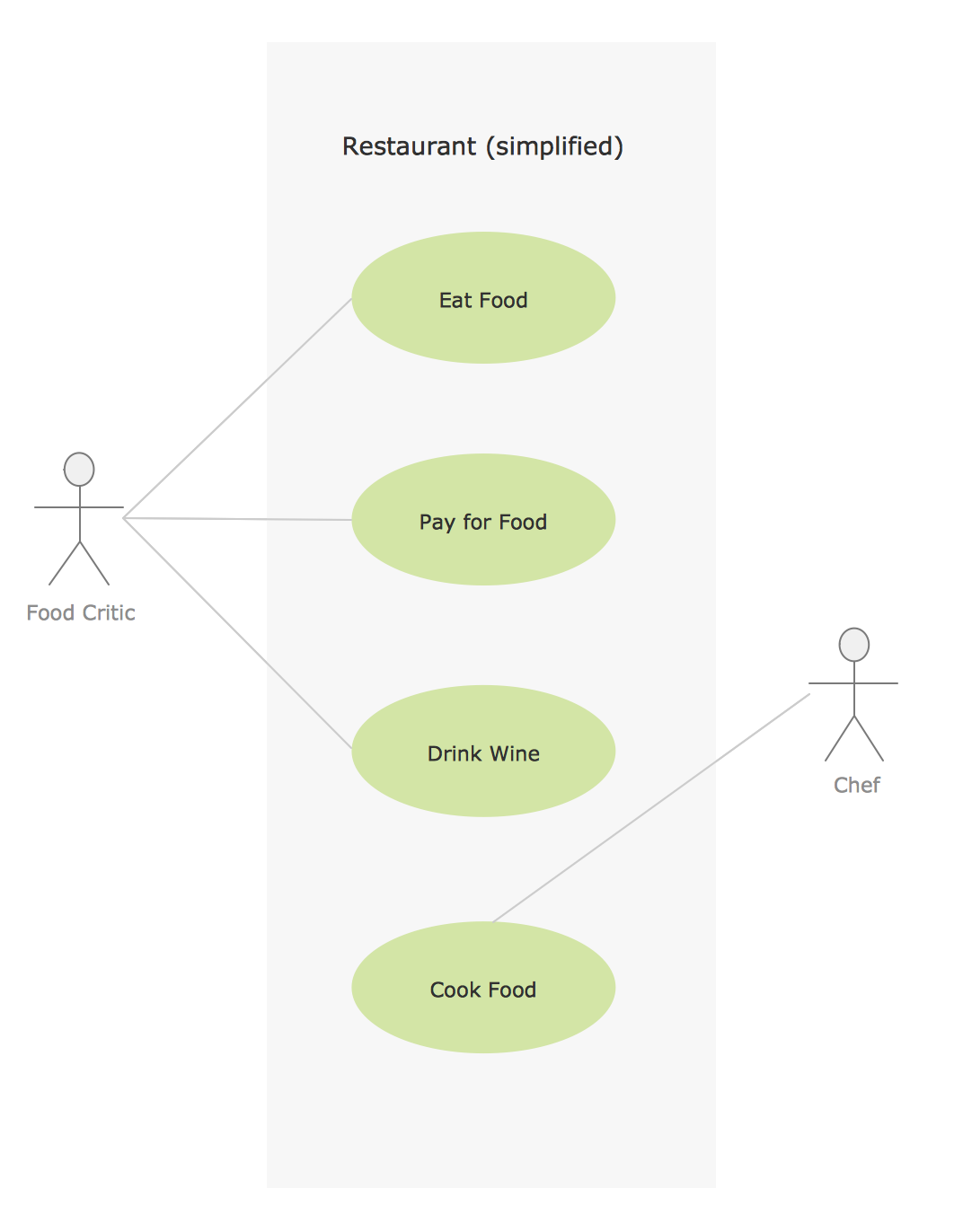
This sample was created in ConceptDraw DIAGRAM diagramming and vector drawing software using the UML Use Case Diagram library of the Rapid UML Solution from the Software Development area of ConceptDraw Solution Park.
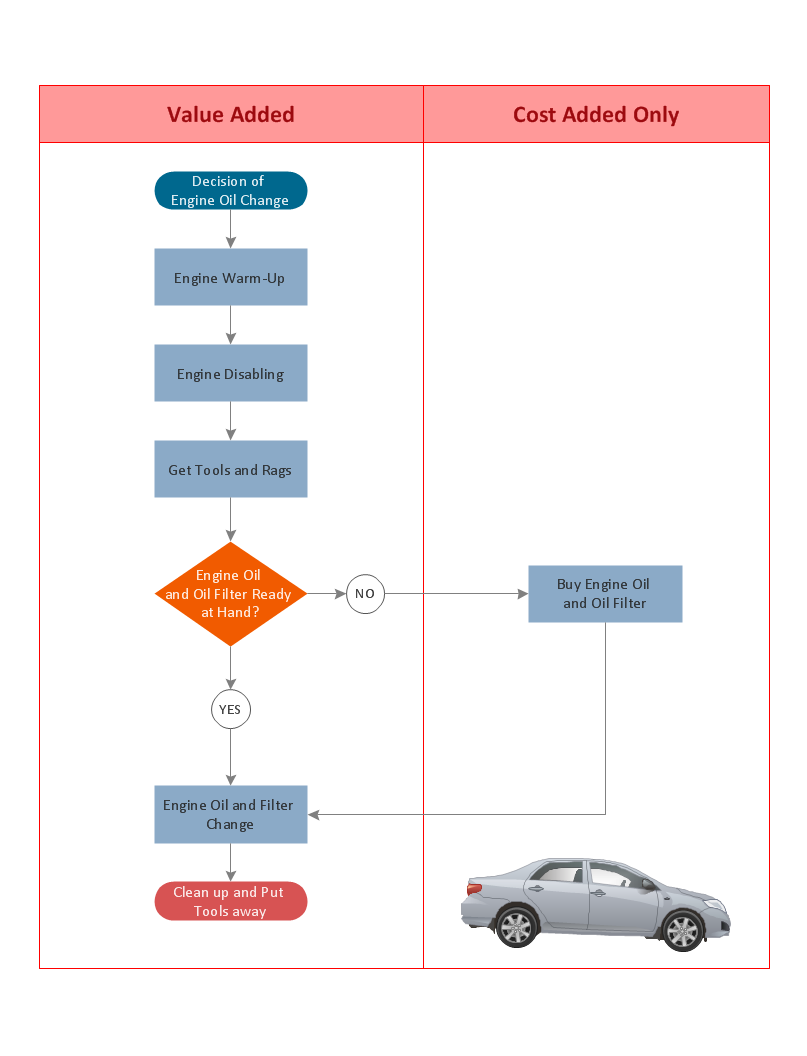
Start your business process mapping with conceptDraw DIAGRAM and its Arrows10 Technology. Creating a process map, also called a flowchart, is a major component of Six Sigma process management and improvement. Use Cross-Functional Flowchart drawing software for business process mapping (BPM).
Use a variety of drawing tools, smart connectors and shape libraries to create flowcharts of complex processes, procedures and information exchange. Define and document basic work and data flows, financial, production and quality management processes to increase efficiency of you business.
Picture: Cross Functional Flowchart for Business Process Mapping
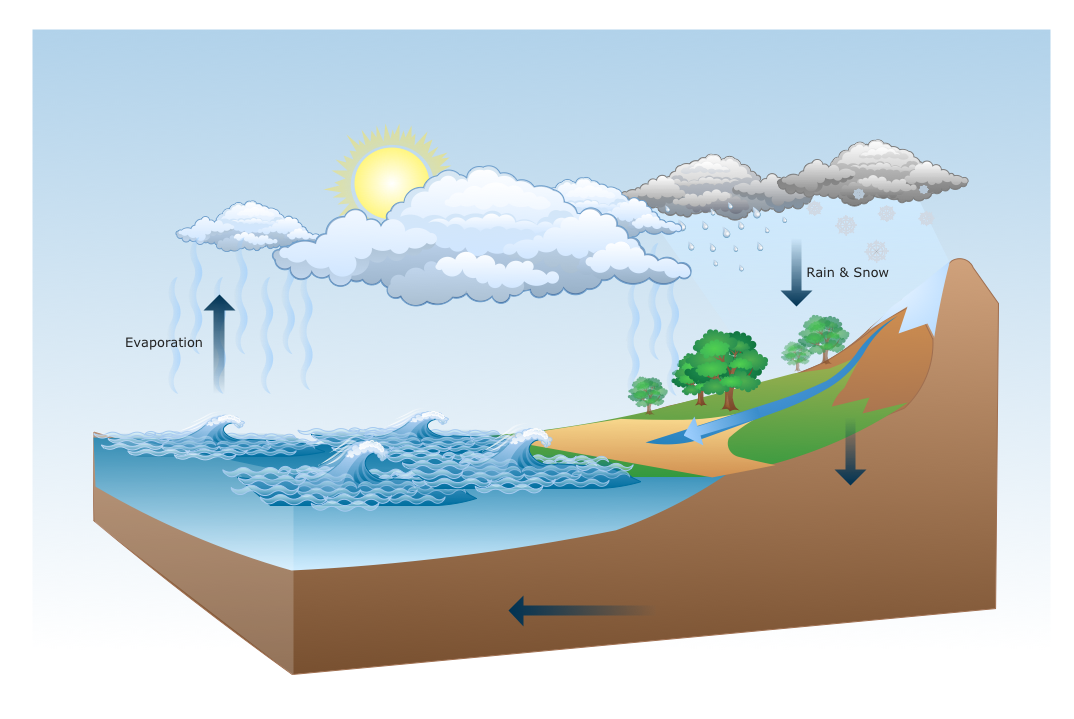
ConceptDraw DIAGRAM is a drawings software for creating Nature scenes. Nature solution from ConceptDraw Solution Park expands this software with a new library that contains 17 vector objects and samples illustration files.