Soccer (Football) Positions
HelpDesk
How to Make Summer Sports Field Diagrams
HelpDesk
How to Make Soccer Position Diagram
Soccer (Football) Offside
Soccer (Football) Formation
Offensive Strategy — Spread Offense Diagram
Basketball Defense Drills
Create Soccer (Football) Positions
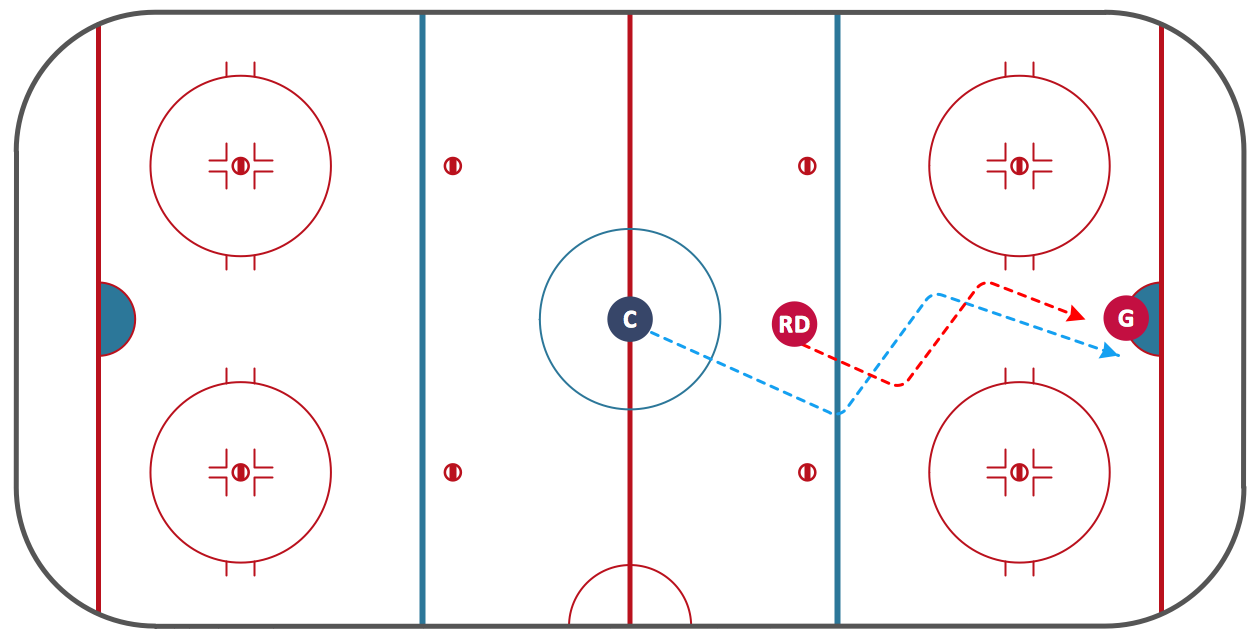
Ice Hockey Offside Diagram
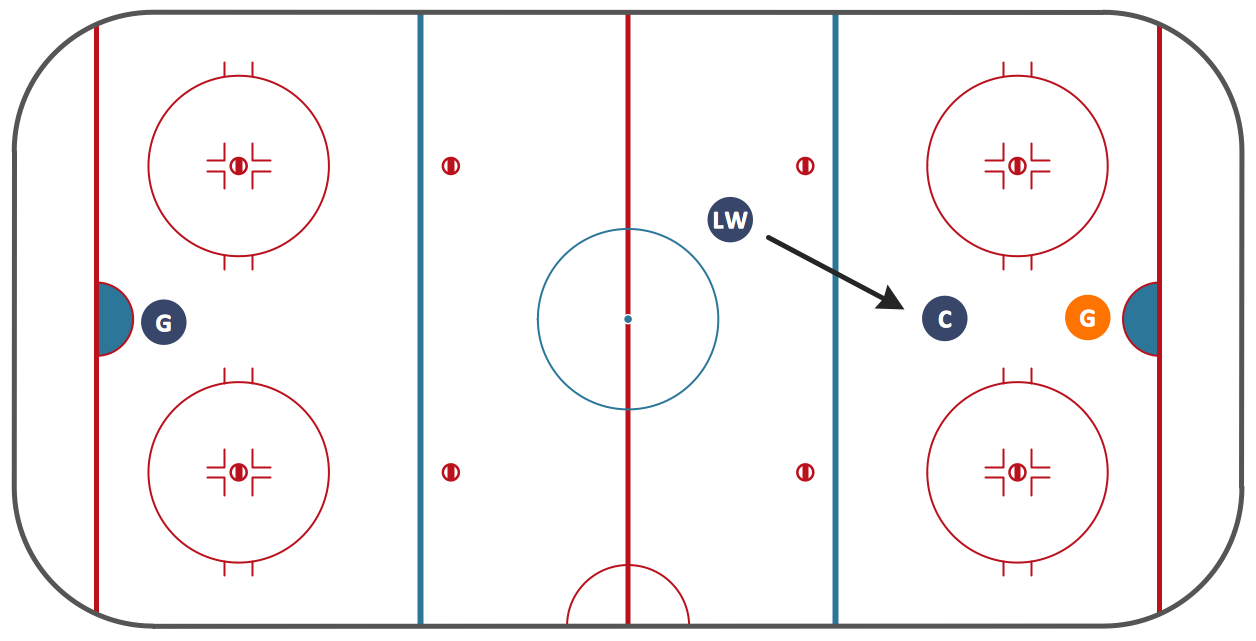
Ice Hockey Diagram – Deke Technique
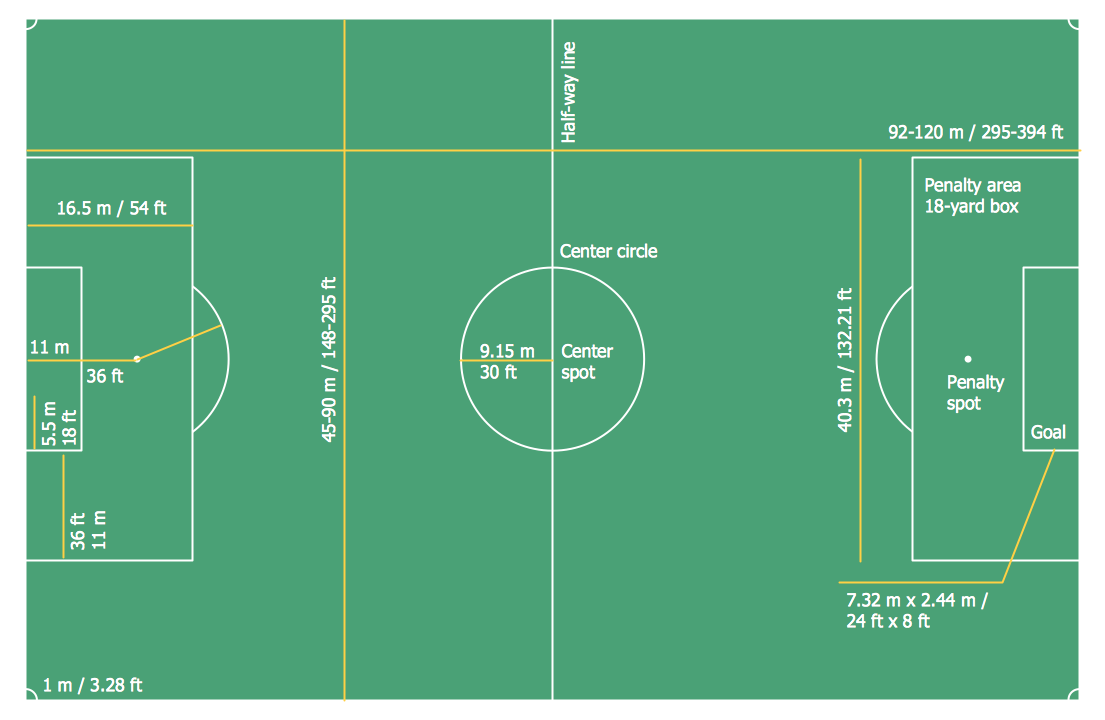
Soccer (Football) Dimensions
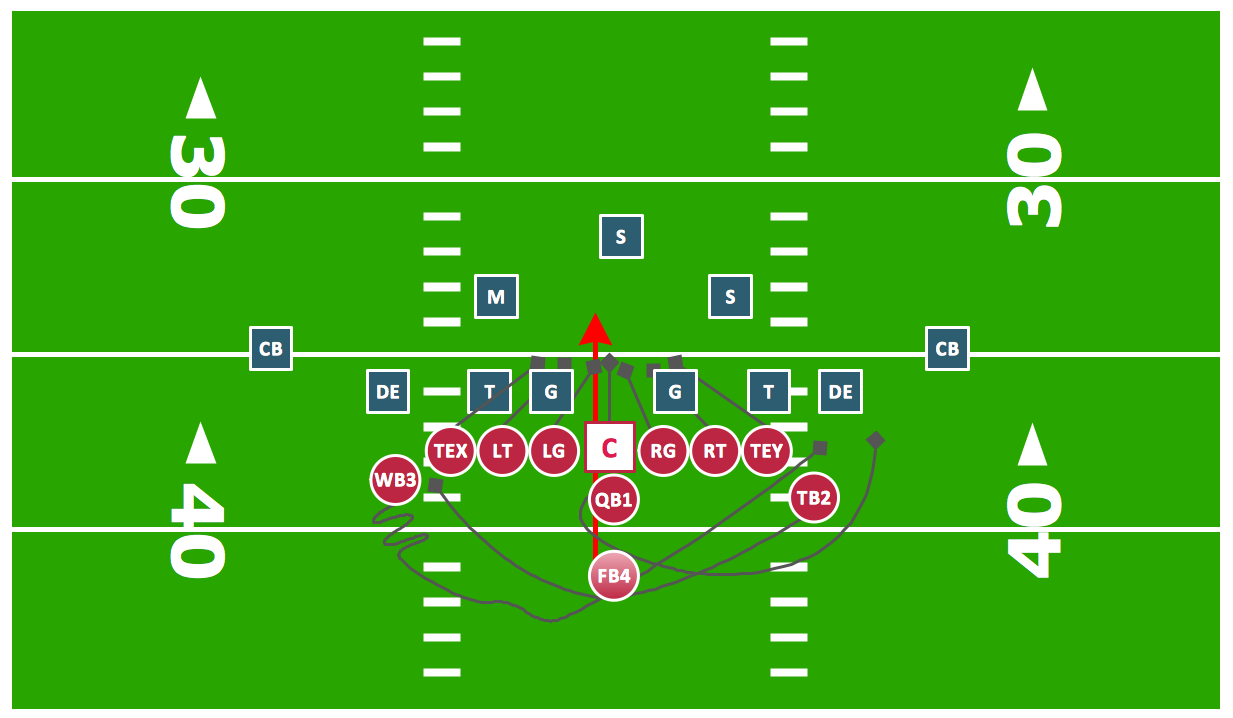
Offensive Play – Double Wing Wedge – Vector Graphic Diagram
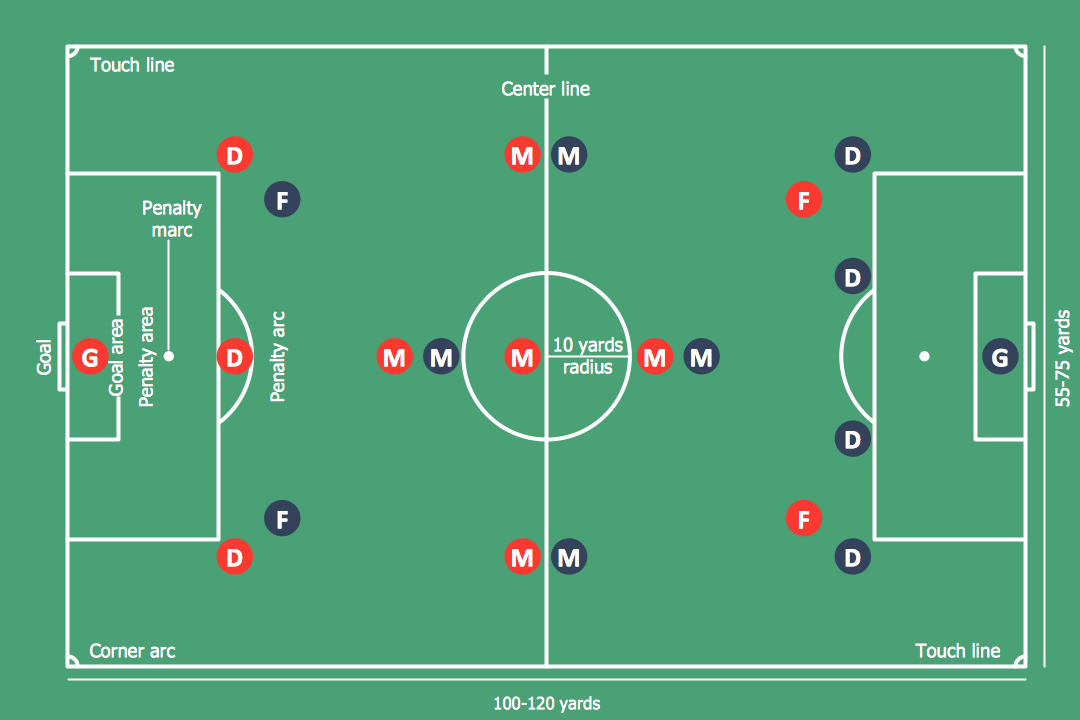
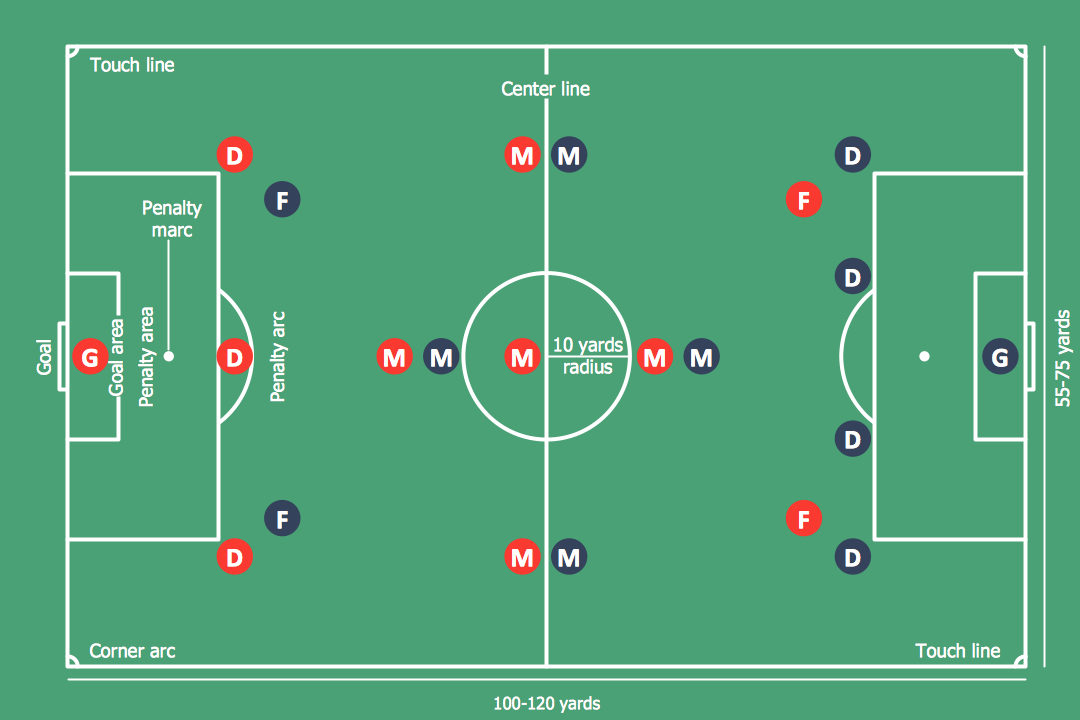
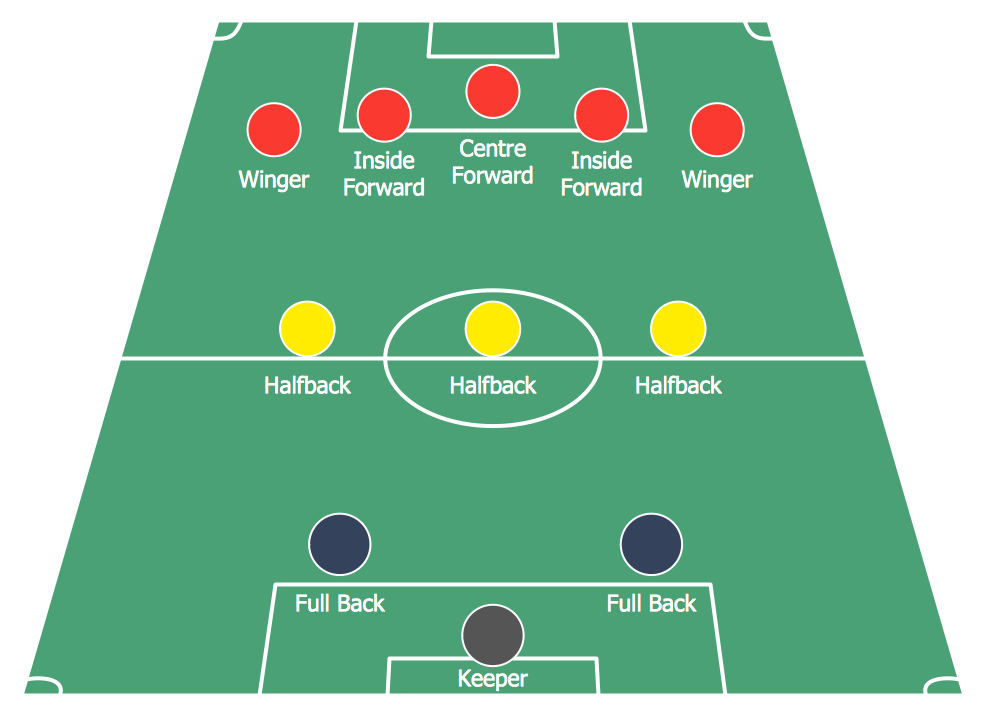
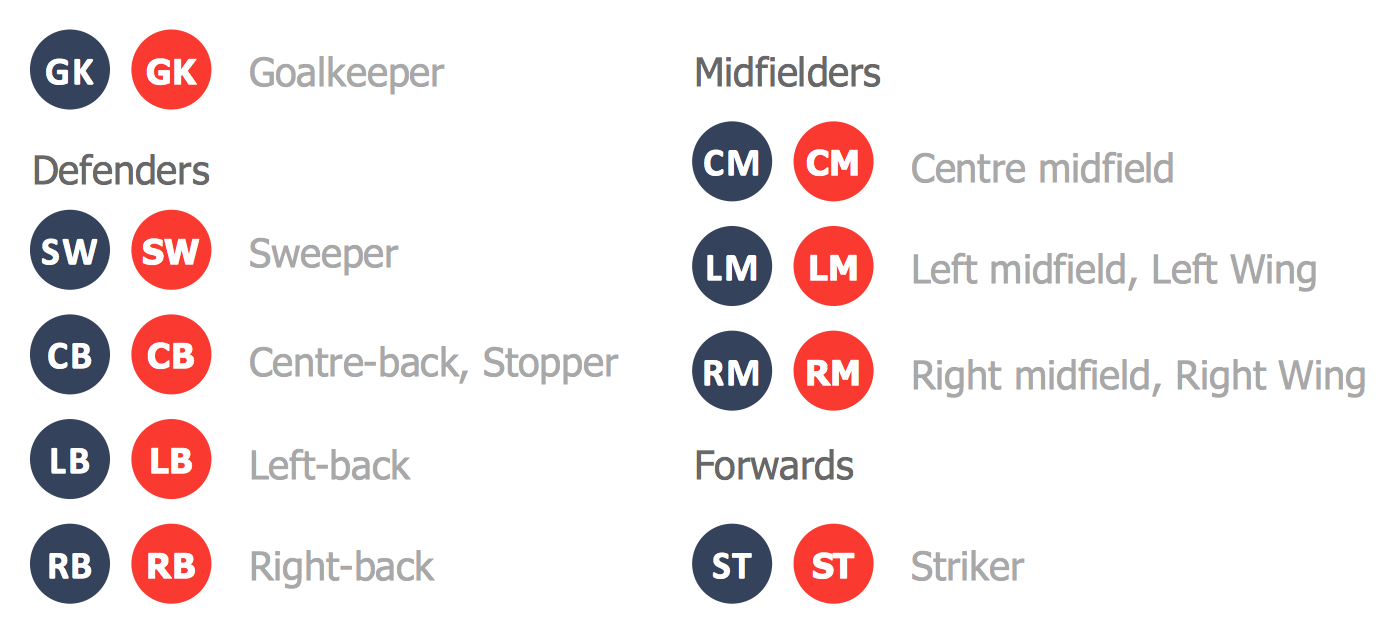
"In the sport of association football, each of the eleven players on a team is assigned to a particular position on the field of play. A team is made up of one goalkeeper and ten outfield players who fill various defensive, midfield and attacking positions depending on the formation deployed. These positions describe both the player's main role and their area of operation on the pitch. ...
Goalkeeper is the most defensive position in football. The goalkeeper's main job is to stop the other team from scoring by catching, palming or punching the ball from shots, headers and crosses. ...
Defenders play behind the midfielders and their primary responsibility is to provide support to the team and to prevent the opposition from scoring a goal. They usually remain in the half of the field that contains the goal they are defending. Taller defenders will move forward to the opposing team's penalty box when their team takes corner kicks or free kicks, where scoring with one's head is a possibility. ...
Midfielders (originally called half-backs) are players whose position of play is midway between the attacking forwards and the defenders. Their main duties are to maintain possession of the ball, taking the ball from defenders and feeding it to the strikers, as well as dispossessing opposing players. ...
Forwards (or strikers) are the players who are positioned nearest to the opposing team's goal. The primary responsibility of forwards is to score goals and to create scoring chances for other players." [Association football positions. Wikipedia]
The diagram example "Association football (soccer) positions" was created using the ConceptDraw PRO diagramming and vector drawing software extended with the Football solution from the Sport area of ConceptDraw Solution Park.
www.conceptdraw.com/ solution-park/ sport-soccer
Goalkeeper is the most defensive position in football. The goalkeeper's main job is to stop the other team from scoring by catching, palming or punching the ball from shots, headers and crosses. ...
Defenders play behind the midfielders and their primary responsibility is to provide support to the team and to prevent the opposition from scoring a goal. They usually remain in the half of the field that contains the goal they are defending. Taller defenders will move forward to the opposing team's penalty box when their team takes corner kicks or free kicks, where scoring with one's head is a possibility. ...
Midfielders (originally called half-backs) are players whose position of play is midway between the attacking forwards and the defenders. Their main duties are to maintain possession of the ball, taking the ball from defenders and feeding it to the strikers, as well as dispossessing opposing players. ...
Forwards (or strikers) are the players who are positioned nearest to the opposing team's goal. The primary responsibility of forwards is to score goals and to create scoring chances for other players." [Association football positions. Wikipedia]
The diagram example "Association football (soccer) positions" was created using the ConceptDraw PRO diagramming and vector drawing software extended with the Football solution from the Sport area of ConceptDraw Solution Park.
www.conceptdraw.com/ solution-park/ sport-soccer
Association football (soccer) positions diagram
-positions-diagram-association-football-(soccer)-positions.png--diagram-flowchart-example.png)
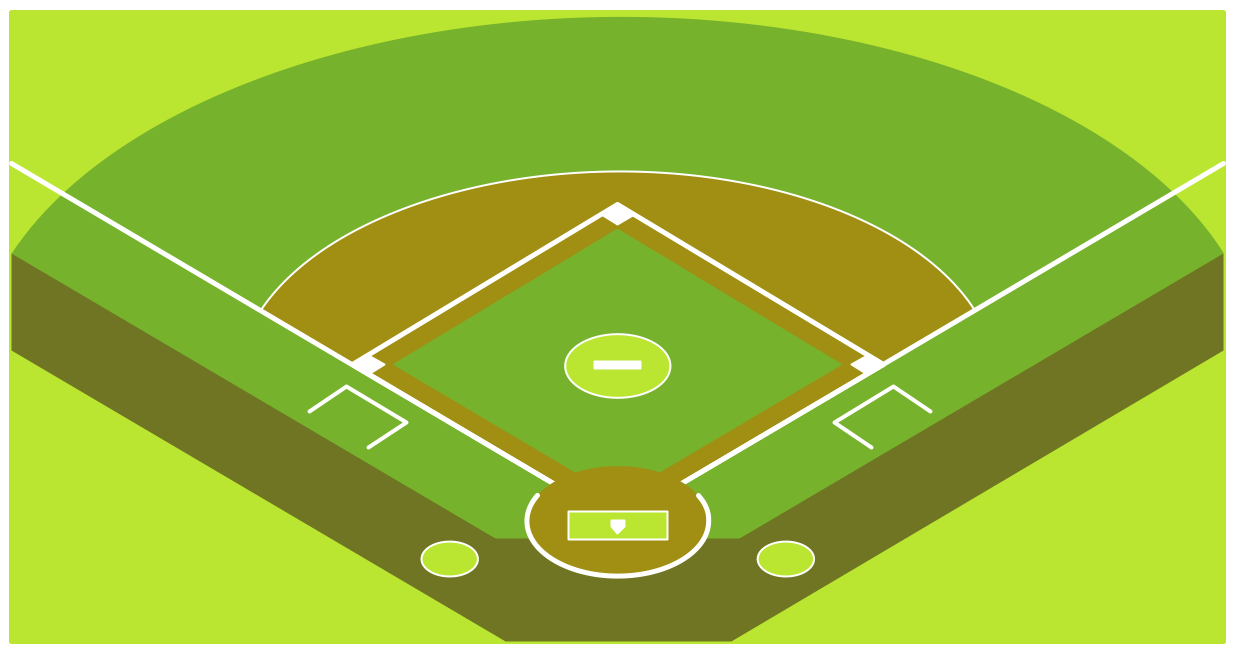
Baseball DiagramBaseball Field – Corner View – Template
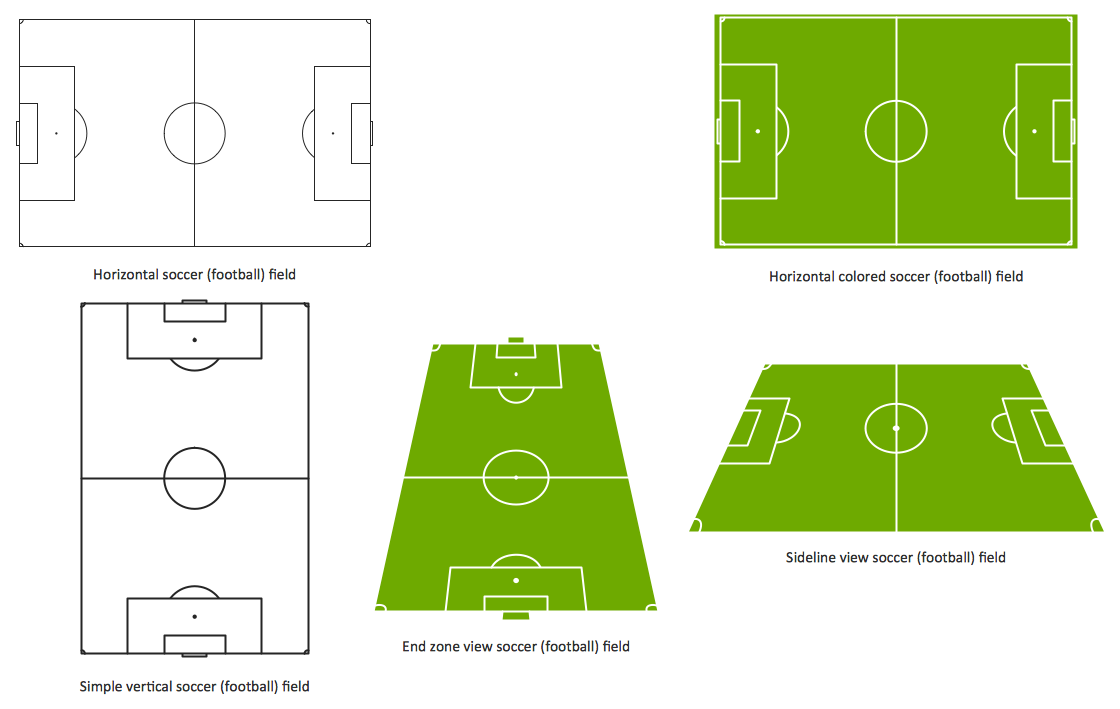
Design a Soccer (Football) Field
"In association football, the formation describes how the players in a team are positioned on the pitch. Different formations can be used depending on whether a team wishes to play more attacking or defensive football. ...
The 2–3–5 was originally known as the "Pyramid", with the numerical formation being referenced retrospectively. ...
For the first time, a balance between attacking and defending was reached. When defending, the two defenders (fullbacks), would watch out for the opponent's wingers (the outside players in the attacking line), while the midfielders (halfbacks) would watch for the other three forwards.
The centre halfback had a key role in both helping to organise the team's attack and marking the opponent's centre forward, supposedly one of their most dangerous players.
It was this formation which gave rise to the convention of shirt numbers." [Formation (association football). Wikipedia]
The diagram example "Association football (soccer) formation 2–3–5 (pyramid)" was created using the ConceptDraw PRO diagramming and vector drawing software extended with the Football solution from the Sport area of ConceptDraw Solution Park.
www.conceptdraw.com/ solution-park/ sport-soccer
The 2–3–5 was originally known as the "Pyramid", with the numerical formation being referenced retrospectively. ...
For the first time, a balance between attacking and defending was reached. When defending, the two defenders (fullbacks), would watch out for the opponent's wingers (the outside players in the attacking line), while the midfielders (halfbacks) would watch for the other three forwards.
The centre halfback had a key role in both helping to organise the team's attack and marking the opponent's centre forward, supposedly one of their most dangerous players.
It was this formation which gave rise to the convention of shirt numbers." [Formation (association football). Wikipedia]
The diagram example "Association football (soccer) formation 2–3–5 (pyramid)" was created using the ConceptDraw PRO diagramming and vector drawing software extended with the Football solution from the Sport area of ConceptDraw Solution Park.
www.conceptdraw.com/ solution-park/ sport-soccer
Association football (soccer) formation diagram
-formation-diagram-association-football-(soccer)-formation-2–3–5-(pyramid).png--diagram-flowchart-example.png)
"In association football, the formation describes how the players in a team are positioned on the pitch. Different formations can be used depending on whether a team wishes to play more attacking or defensive football. ...
The 4–3–3 was a development of the 4–2–4, and was played by the Brazilian national team in the 1962 World Cup. The extra player in midfield allows a stronger defence, and the midfield could be staggered for different effects. The three midfielders normally play closely together to protect the defence, and move laterally across the field as a coordinated unit. The three forwards split across the field to spread the attack, and may be expected to mark the opposition full-backs as opposed to doubling back to assist their own full-backs, as do the wide midfielders in a 4–4–2. When used from the start of a game, this formation is widely regarded as encouraging expansive play, and should not be confused with the practice of modifying a 4–4–2 by bringing on an extra forward to replace a midfield player when behind in the latter stages of a game. This formation is suited for a short passing game and useful for ball retention.
A staggered 4–3–3 involving a defensive midfielder (usually numbered four or six) and two attacking midfielders (numbered eight and ten) was commonplace in Italy, Argentina, and Uruguay during the 1960s and 1970s. The Italian variety of 4–3–3 was simply a modification of WM, by converting one of the two wing-halves to a libero (sweeper), whereas the Argentine and Uruguayan formations were derived from 2–3–5 and retained the notional attacking centre-half. The national team which made this famous was the Dutch team of the 1974 and 1978 World Cups, even though the team won neither." [Formation (association football). Wikipedia]
The diagram example "Association football (soccer) formation 4-3-3" was created using the ConceptDraw PRO diagramming and vector drawing software extended with the Football solution from the Sport area of ConceptDraw Solution Park.
www.conceptdraw.com/ solution-park/ sport-soccer
The 4–3–3 was a development of the 4–2–4, and was played by the Brazilian national team in the 1962 World Cup. The extra player in midfield allows a stronger defence, and the midfield could be staggered for different effects. The three midfielders normally play closely together to protect the defence, and move laterally across the field as a coordinated unit. The three forwards split across the field to spread the attack, and may be expected to mark the opposition full-backs as opposed to doubling back to assist their own full-backs, as do the wide midfielders in a 4–4–2. When used from the start of a game, this formation is widely regarded as encouraging expansive play, and should not be confused with the practice of modifying a 4–4–2 by bringing on an extra forward to replace a midfield player when behind in the latter stages of a game. This formation is suited for a short passing game and useful for ball retention.
A staggered 4–3–3 involving a defensive midfielder (usually numbered four or six) and two attacking midfielders (numbered eight and ten) was commonplace in Italy, Argentina, and Uruguay during the 1960s and 1970s. The Italian variety of 4–3–3 was simply a modification of WM, by converting one of the two wing-halves to a libero (sweeper), whereas the Argentine and Uruguayan formations were derived from 2–3–5 and retained the notional attacking centre-half. The national team which made this famous was the Dutch team of the 1974 and 1978 World Cups, even though the team won neither." [Formation (association football). Wikipedia]
The diagram example "Association football (soccer) formation 4-3-3" was created using the ConceptDraw PRO diagramming and vector drawing software extended with the Football solution from the Sport area of ConceptDraw Solution Park.
www.conceptdraw.com/ solution-park/ sport-soccer
Association football (soccer) formation diagram
-formation-diagram-association-football-(soccer)-formation-4-3-3.png--diagram-flowchart-example.png)
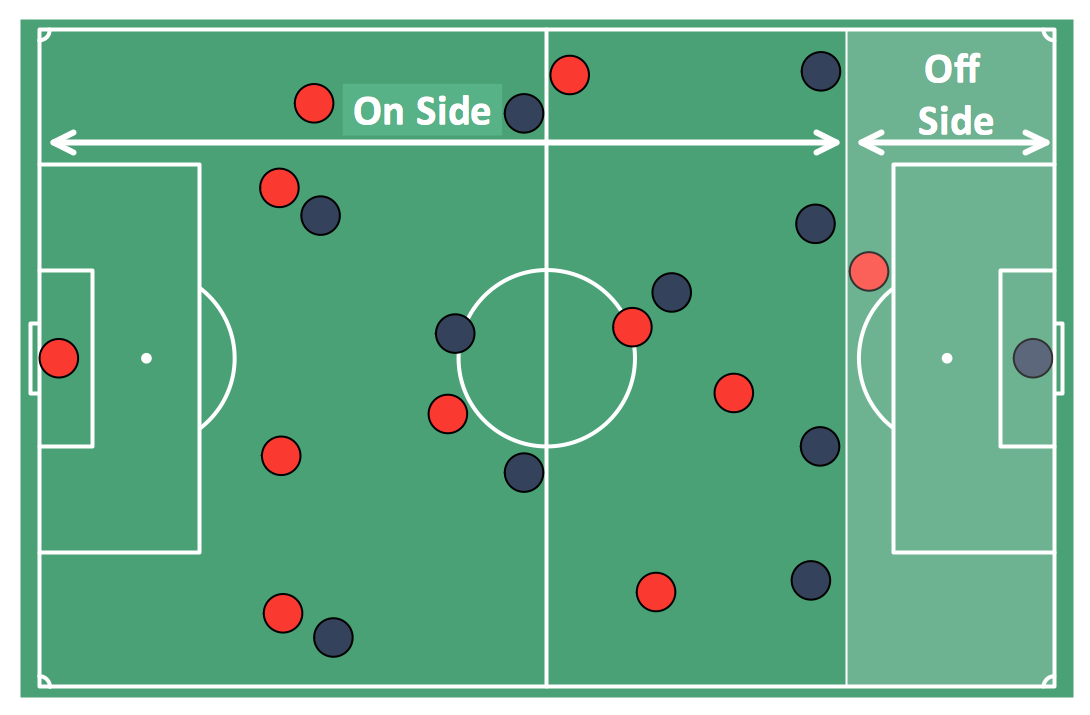
"Offside (sometimes known as offsides) is a law in association football which states that if a player is in an offside position when the ball is touched or played by a team-mate, the player may not become actively involved in the play. A player is in an offside position when closer to the opponent's goal line than both the ball and the second-to-last defender (which is usually the last outfield player), and also in the opponent's half of the pitch. "Offside position" is a matter of fact, whereas committing an "offside offence" occurs when a player is "actively involved" and is subject to the interpretation of the referee. Goals scored after committing an offside offence are nullified if caught by the referee." [Offside (association football). Wikipedia]
The diagram example "Association football (soccer) offside" was created using the ConceptDraw PRO diagramming and vector drawing software extended with the Football solution from the Sport area of ConceptDraw Solution Park.
www.conceptdraw.com/ solution-park/ sport-soccer
The diagram example "Association football (soccer) offside" was created using the ConceptDraw PRO diagramming and vector drawing software extended with the Football solution from the Sport area of ConceptDraw Solution Park.
www.conceptdraw.com/ solution-park/ sport-soccer
Association football (soccer) diagram
-diagram-association-football-(soccer)-offside.png--diagram-flowchart-example.png)
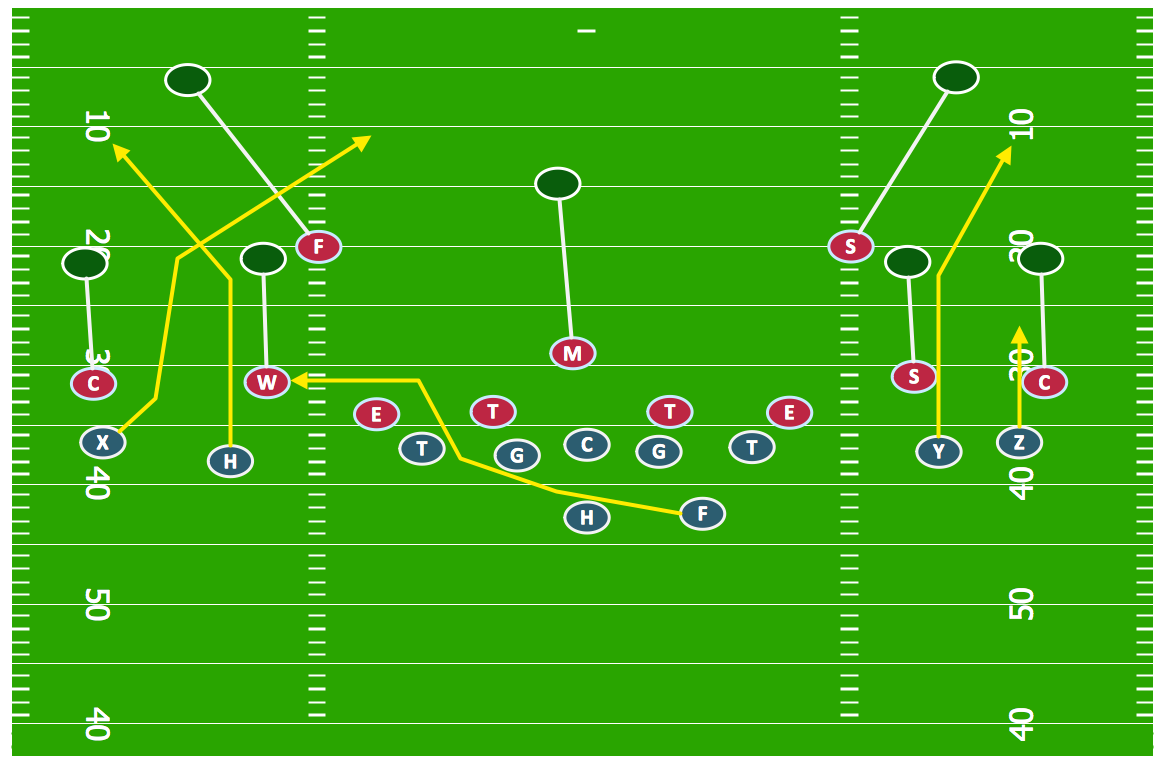
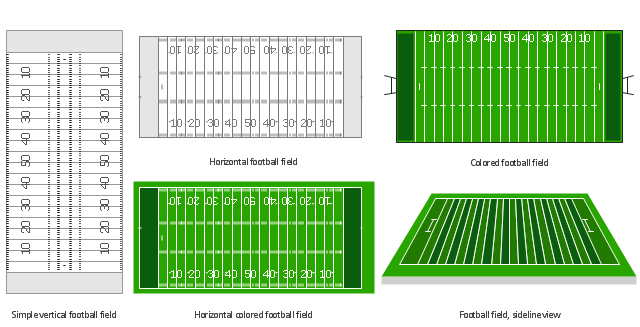
The vector stencils library "Football fields" contains 5 shapes of American football fields for drawing sport diagrams.
"Football field or football pitch may refer to the playing areas of several codes of football:
(1) Association football pitch, a rectangular field, usually 105 m x 68 m or 7140 m².
(2) American football field, a rectangular field, 120.0 yd x 53.3 yd or 6400 yd².
(3) Australian rules football playing field, a large oval-shaped field, usually 150 m long goal to goal and 135 m wide wing to wing.
(4) Canadian football field, a rectangular field, 150 yd x 65 yd or 9750 yd².
(5) Gaelic football playing field, a rectangular field, 130–145 m long and 80–90 m wide.
(6) Rugby league playing field, a rectangular field, 112–122 m long and 68 m wide." [Football field. Wikipedia]
The shapes example "Design elements - Football fields" was created using the ConceptDraw PRO diagramming and vector drawing software extended with the Football solution from the Sport area of ConceptDraw Solution Park.
"Football field or football pitch may refer to the playing areas of several codes of football:
(1) Association football pitch, a rectangular field, usually 105 m x 68 m or 7140 m².
(2) American football field, a rectangular field, 120.0 yd x 53.3 yd or 6400 yd².
(3) Australian rules football playing field, a large oval-shaped field, usually 150 m long goal to goal and 135 m wide wing to wing.
(4) Canadian football field, a rectangular field, 150 yd x 65 yd or 9750 yd².
(5) Gaelic football playing field, a rectangular field, 130–145 m long and 80–90 m wide.
(6) Rugby league playing field, a rectangular field, 112–122 m long and 68 m wide." [Football field. Wikipedia]
The shapes example "Design elements - Football fields" was created using the ConceptDraw PRO diagramming and vector drawing software extended with the Football solution from the Sport area of ConceptDraw Solution Park.
American football field shapes
 Soccer
The Soccer solution is ideal for using for all the ConceptDraw DIAGRAM users in order to make professionally-looking soccer-related drawings to use in documents, presentations and on the professional websites illustrating them with the scalable vector sports diagrams.
- Soccer ( Football ) Formation | Soccer ( Football ) Positions | Soccer ...
- Soccer ( Football ) Positions | Design elements - Football fields ...
- Soccer ( Football ) Formation | Football Game Information With Diagram
- Defensive Formation – 4-3 Defense Diagram | Football | Design ...
- Soccer ( Football ) Formation | Diagram Of Standard Football Pitch
- Design elements | 11 Players Diagram Of Football Positions
- How to Make Soccer Position Diagram | Soccer Game Player Positions
- Design elements - Football positions (for perspective view) | Chess ...
- Soccer ( Football ) Diagram Software | Football Player Position Pics
- Soccer ( Football ) Positions | Soccer ( Football ) Offside | Football ...


