Tables’ Beauty
Behind any graphs, charts and even flowcharts there is data, big data, usually stored in tables.
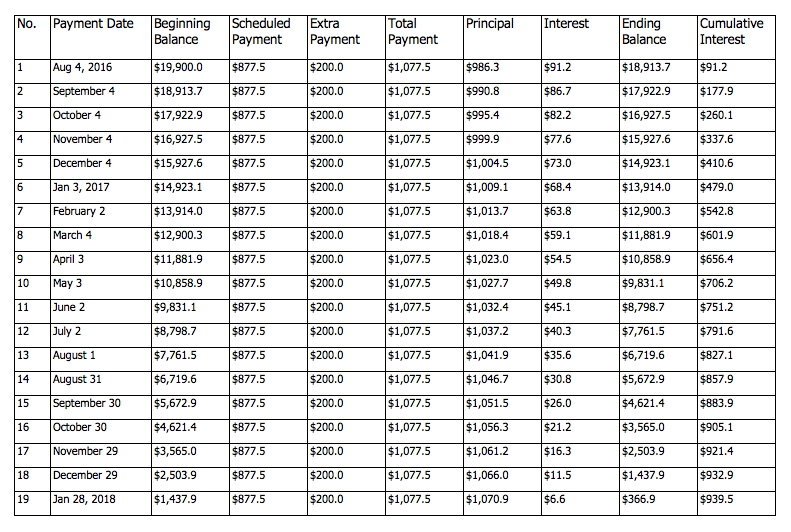
To keep data in tables is useful, but tables are not convenient for presentations or communication. All graphs are intended to make the presentation of data clearly and simply. But are tables always that bad?
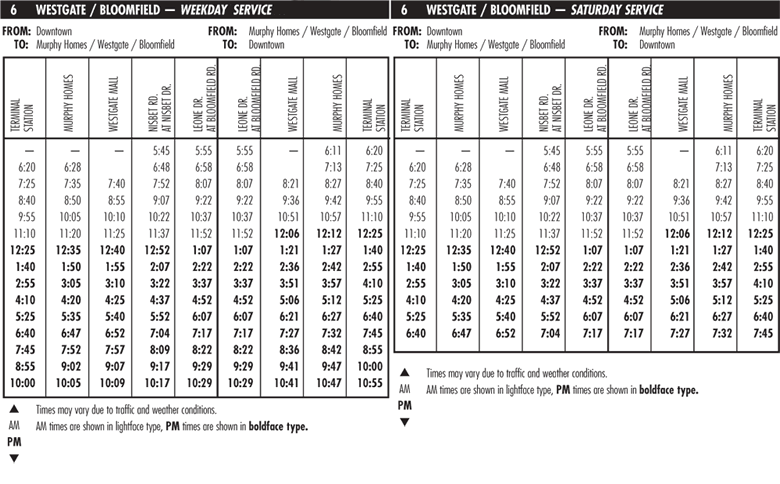
In many cases, working with tables is familiar. We all use public transport schedules on a regular basis and understand it well.
Report Cards in schools and universities do their jobs perfectly adequately in a table format.
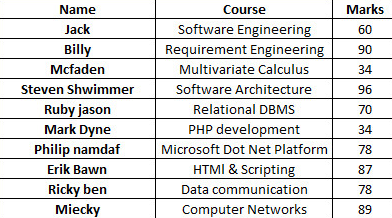
Wouldn’t you think that finding your mark on a chart would be more difficult?
Weather forecast is also easy to read in a table format.
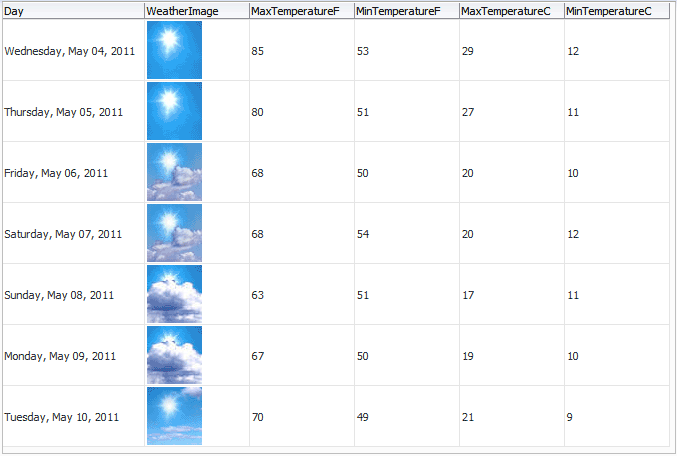
What’s wrong with tables? Why do we try to avoid using them? If we don’t know the subject well, we come face-to-face with our problems immediately. It takes time to understand what each column means, which units are used and why? Once we have overcome the first steps, we are left with the question: what does it all mean? When it comes for weather, it’s clear that +30 is hot and +15 is cool. But if it’s a table of expenses, to note where we spent too much is not such an easy task.
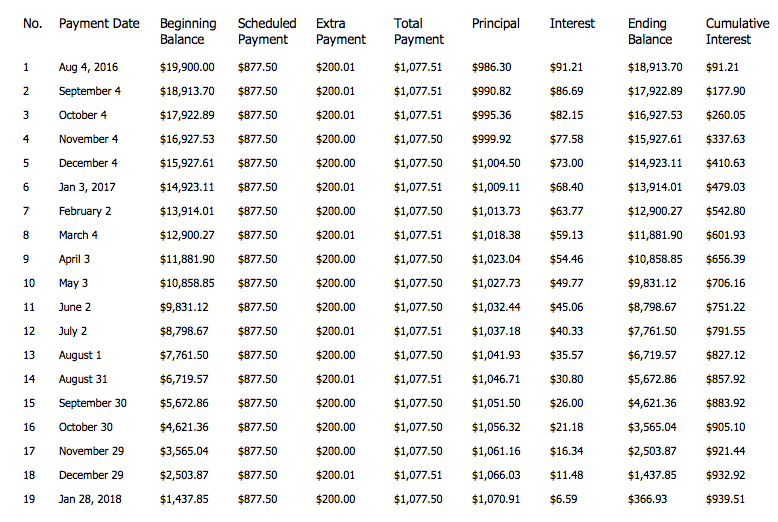
But if we will put the table in order, it is much more informative and helpful than any chart. Let’s go back to Loan Amortization Schedule table.
Let’s polish our table. Any line-crossings are visually-complex elements. Even one cross can distract, and when there are dozens of them, we just can’t see anything else. Let’s get rid of the table lines:
To read the data quickly, we make some space between the columns:
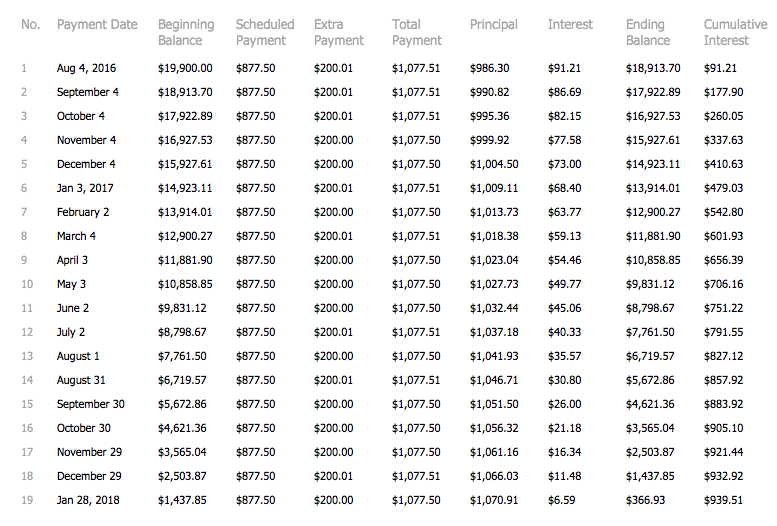
With all this, we have limited the visibility of the least important information in our chart. We address to it seldom, so there is no need to make it prominently visible. This concludes the first steps in formatting a table.
The entire timeline is a bit less than two years. One typical mistake when using dates is that it is easy to include excessive information. Don’t indicate the year in each date. In many cases, showing just the month and day is enough.
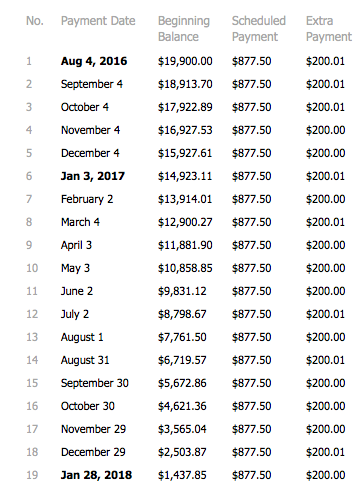
All the other columns of tables indicate money.
Moreover, a specific currency: Dollars. So, there is no need to add the dollar sign at each table cell.
It is better to align sums by the right side to allow for easy numerical comparison:
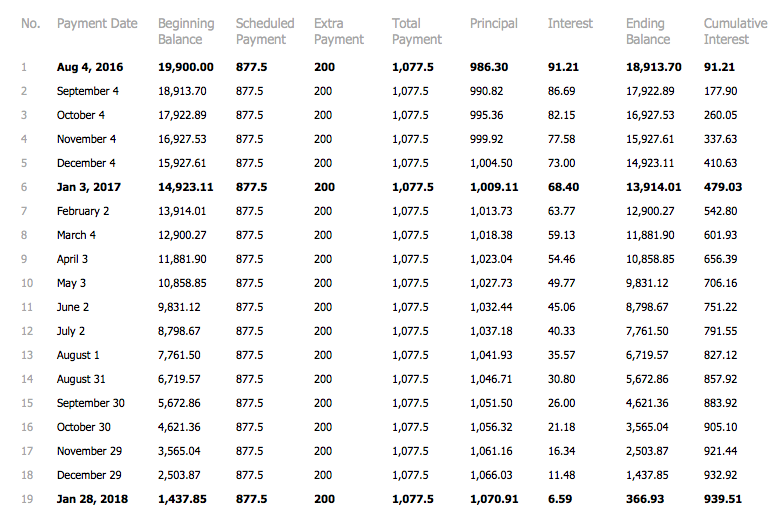
Last touch — mark the sections with different colors numbers, highlighting the most relevant information in your chart:
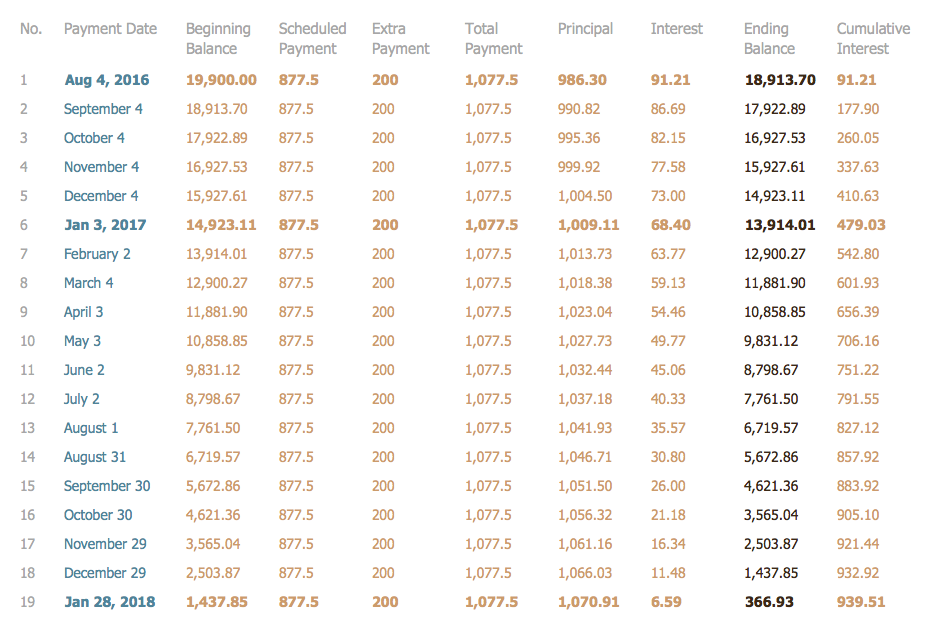
Thus, we have all of our information in a legible easy-to-read format. An important difference between tables and schedules is their credibility. That’s why we have a greater confidence in their accuracy. Any column can be double-checked, because we have ALL the data in front of us.
Yes, graphics and charts are more eye-catching, but often they don’t have nearly as much real information as a chart of the raw data.
NINE RELATED HOW TO's:
Learn what a workflow diagram is, how it works, when to use it, and how to create one. See examples, handoffs, approval flows, and workflow diagram best practices.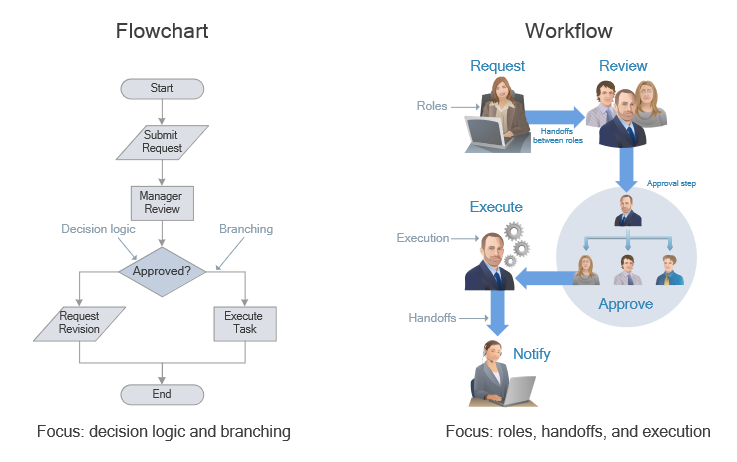
Picture: Workflow Diagram: Definition, Examples, and How to Create
Related Solution:
ConceptDraw DIAGRAM is a drawings software for creating Nature scenes. Nature solution from ConceptDraw Solution Park expands this software with a new library that contains 17 vector objects and samples illustration files.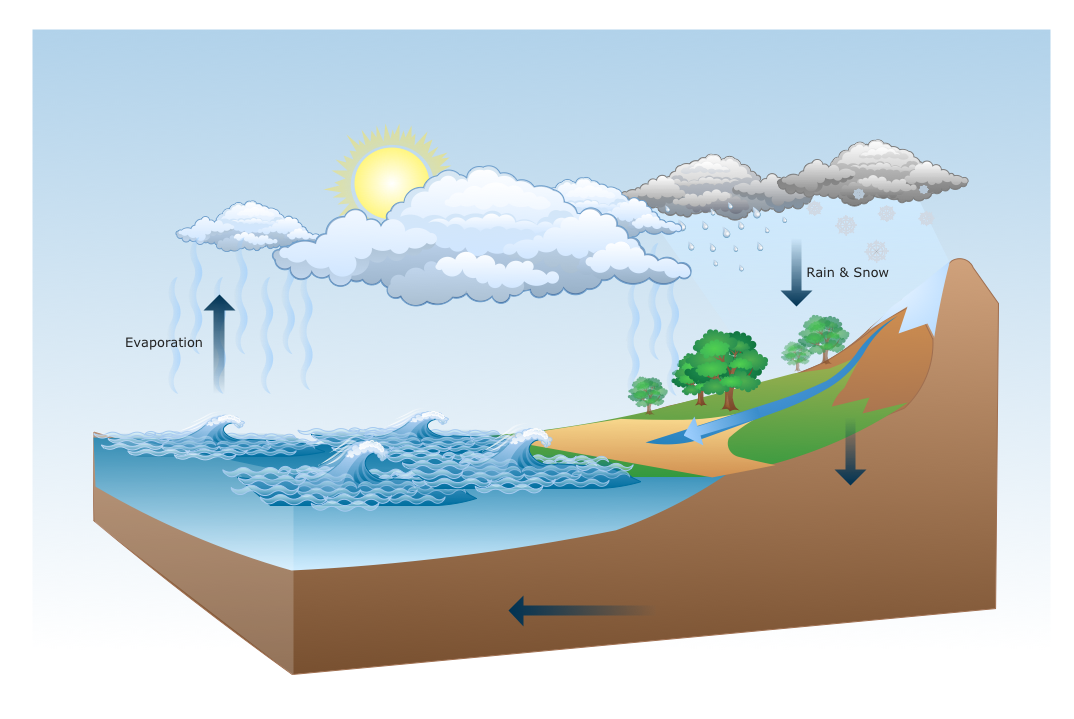
Picture: Drawing a Nature Scene
While creating flowcharts and process flow diagrams, you should use special objects to define different statements, so anyone aware of flowcharts can get your scheme right. There is a short and an extended list of basic flowchart symbols and their meaning. Basic flowchart symbols include terminator objects, rectangles for describing steps of a process, diamonds representing appearing conditions and questions and parallelograms to show incoming data.
This diagram gives a general review of the standard symbols that are used when creating flowcharts and process flow diagrams. The practice of using a set of standard flowchart symbols was admitted in order to make flowcharts and other process flow diagrams created by any person properly understandable by other people. The flowchart symbols depict different kinds of actions and phases in a process. The sequence of the actions, and the relationships between them are shown by special lines and arrows. There are a large number of flowchart symbols. Which of them can be used in the particular diagram depends on its type. For instance, some symbols used in data flow diagrams usually are not used in the process flowcharts. Business process system use exactly these flowchart symbols.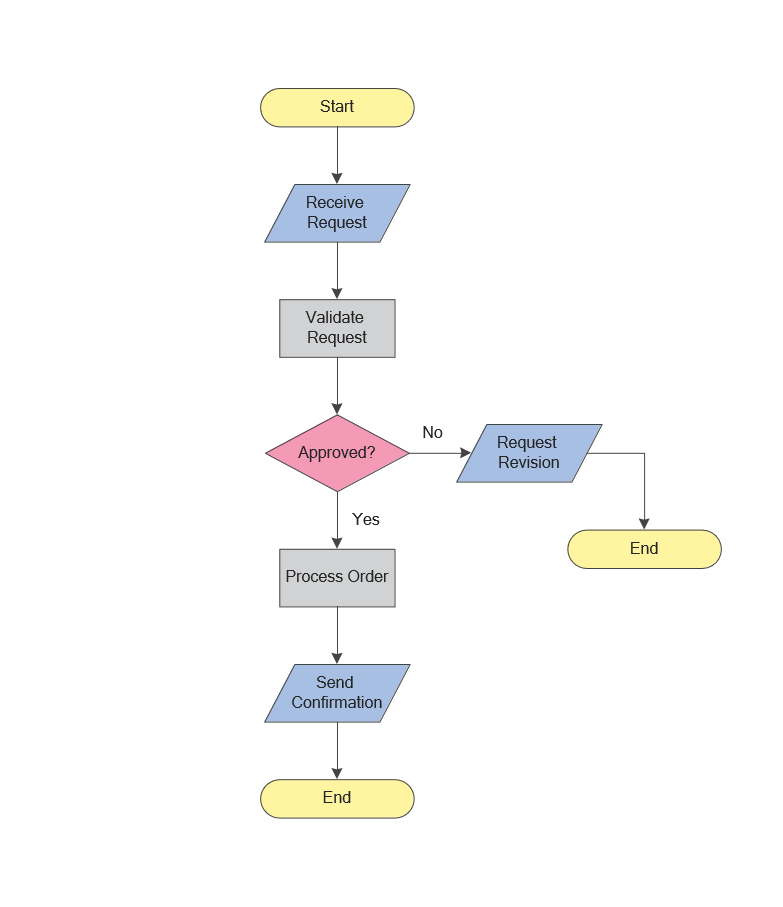
Picture: Flowchart Symbols: Meaning and Examples
Related Solution:
How to design a Bubble Chart? It’s very easy! All that you need is a powerful software. Never before creation of a Bubble Chart wasn’t so easy as now with tools of Business Diagrams Solution from the Management Area for ConceptDraw Solution Park.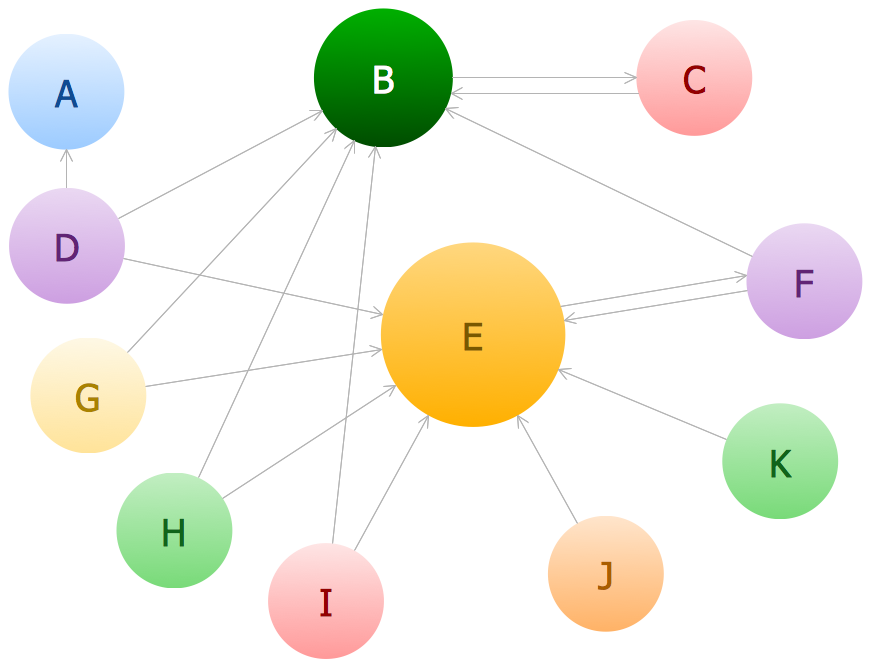
Picture: Bubble Chart
Related Solution:
Venn Diagrams visualize all possible logical intersections between several sets and are widely used in mathematics, logic, statistics, marketing, sociology, philosophy, etc.
Using the ConceptDraw DIAGRAM you can create your own professional looking Venn Diagrams quick and easy.
Picture: Venn Diagram Template for Word
Related Solution:
ConceptDraw DIAGRAM extended with Mathematics solution from the Science and Education area is a powerful diagramming and vector drawing software that offers all needed tools for mathematical diagrams designing.
Mathematics solution provides 3 libraries with predesigned vector mathematics symbols and figures:
Solid Geometry Library, Plane Geometry Library and Trigonometric Functions Library.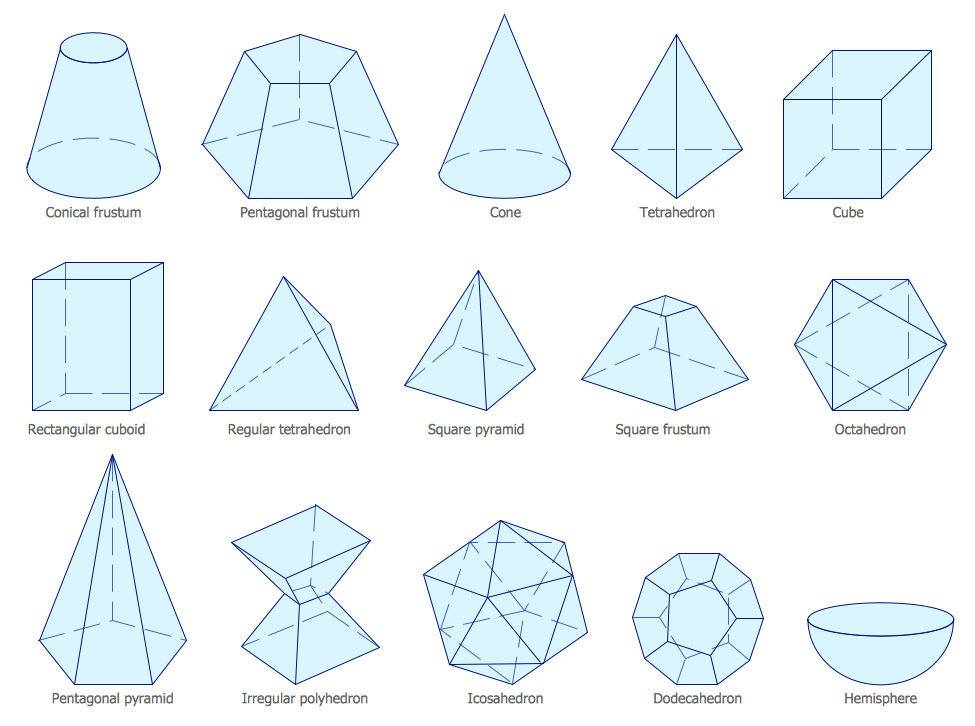
Picture: Mathematics Symbols
Related Solution:
All about prototyping. GUI Prototyping with ConceptDraw. Download prototyping software.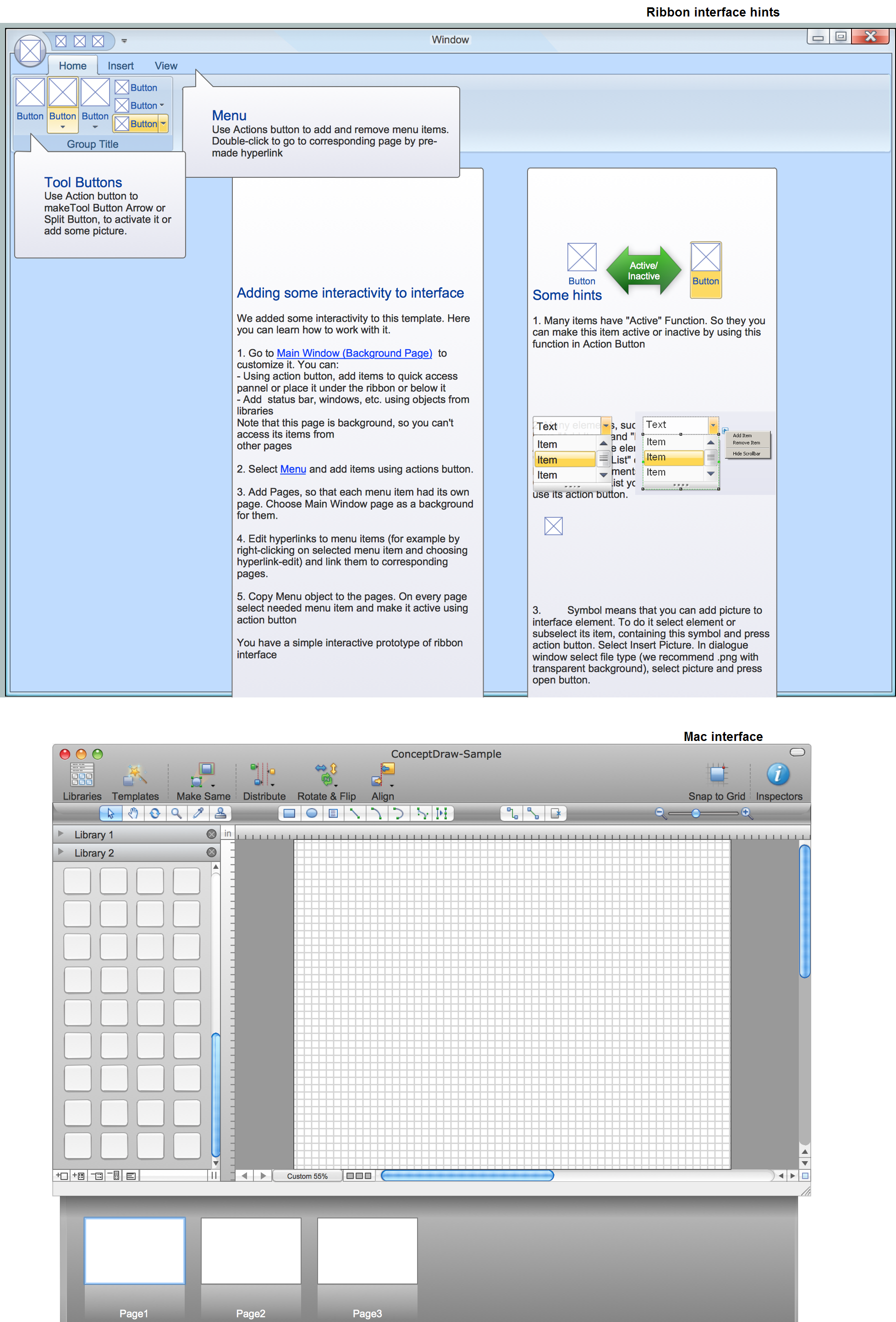
Picture: GUI Prototyping with ConceptDraw DIAGRAM
Data base diagrams describes inter-related data and tables. It describes roles and relationships, internal and external dependencies, data exchange conventions and structures of knowledge domain.
ConceptDraw Software provides number of data-base chart libraries including major 49 vector symbols. Use these DFD flowchart symbol libraries to design data-base structure and models, use it to design data base process-oriented models, or simple data-oriented models. The are special drawing tools for making data flowcharts, data process diagrams, structured analysis diagrams, and information flow diagrams.
Picture: Database Flowchart Symbols
Related Solution:
There are many tools to manage a process or to illustrate an algorithm or a workflow. Flowcharting is one of those tools. However, it may be difficult to show complex processes that require multiple attributes or several people in a simple flowchart, so a cross-functional flowchart would be a solution for that situation. To create such flowchart, group processes and steps to labeled rows or columns, and divide those groups with horizontal or vertical parallel lines. It is worth mentioning that there are different types of cross-functional flowcharts, like opportunity or deployment flowchart.
This diagram shows a cross-functional flowchart that was made for a trading process. It contains 14 processes, distributed through 5 lines depicting the participants who interact with the process. Also there are connectors that show the data flow of information between processes. The cross-functional flowchart displays a detailed model of the trading process, as well as all participants in the process and how they interact with each other. The lines in the flowchart indicates the position, department and role of the trading process participants.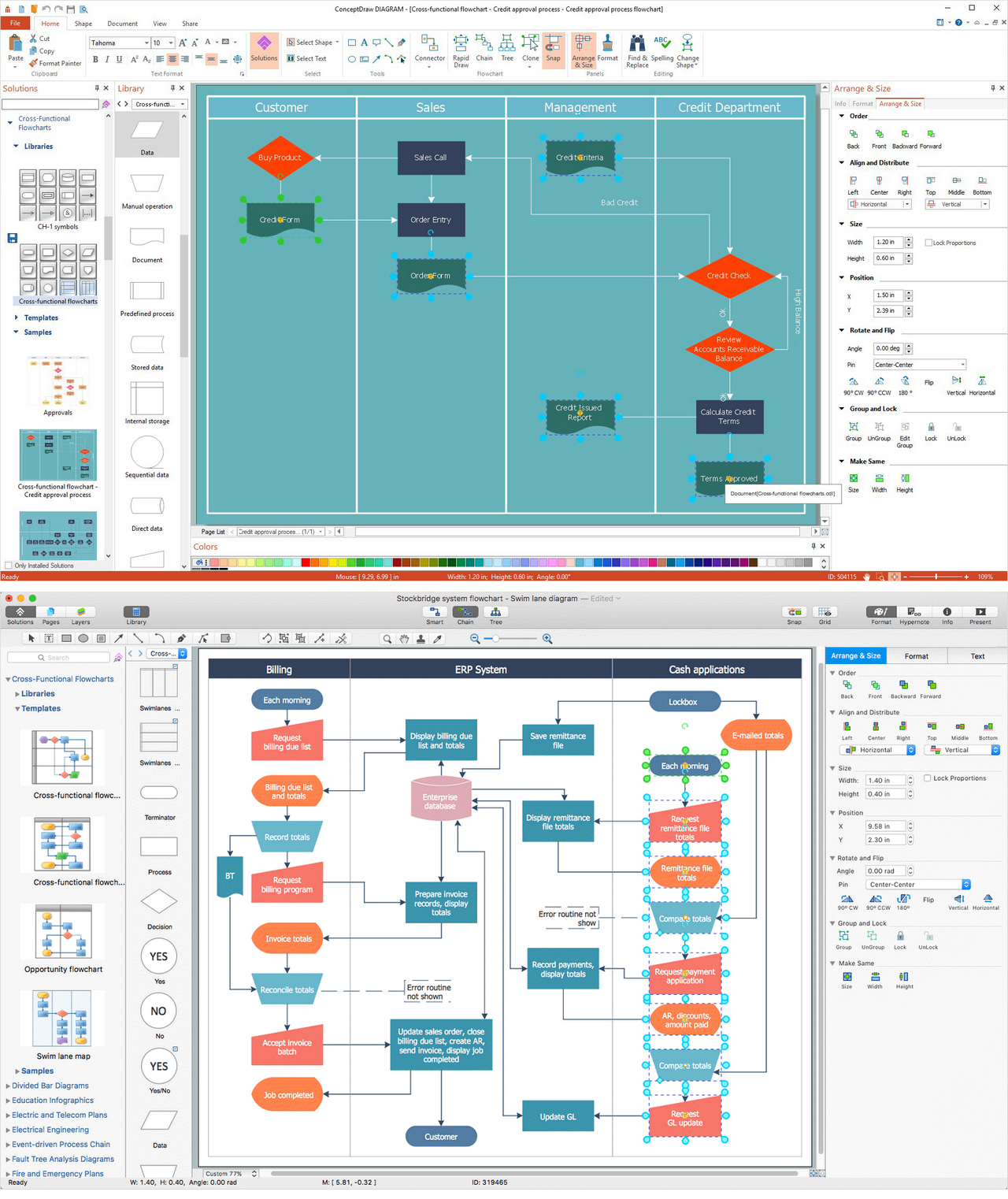
Picture: Cross-Functional Flowchart
Related Solution:







