Integration Definition
Integration DEFinition (IDEF) diagrams are the drawings of the IDEF systems, such as the IDEF0 ones that can be made with the help of the IDEF Business Process Diagrams solution from the ConceptDraw STORE application in the ConceptDraw DIAGRAM diagramming and drawing software.
The term of the “IDEF” was renamed as Integration DEFinition in 1999. It refers to a family of the modeling languages that are widely used in the field of software and systems engineering. Such drawings are known for covering a wide range of uses, from functional modeling to simulation, data, object-oriented analysis and/or design as well as the knowledge acquisition.
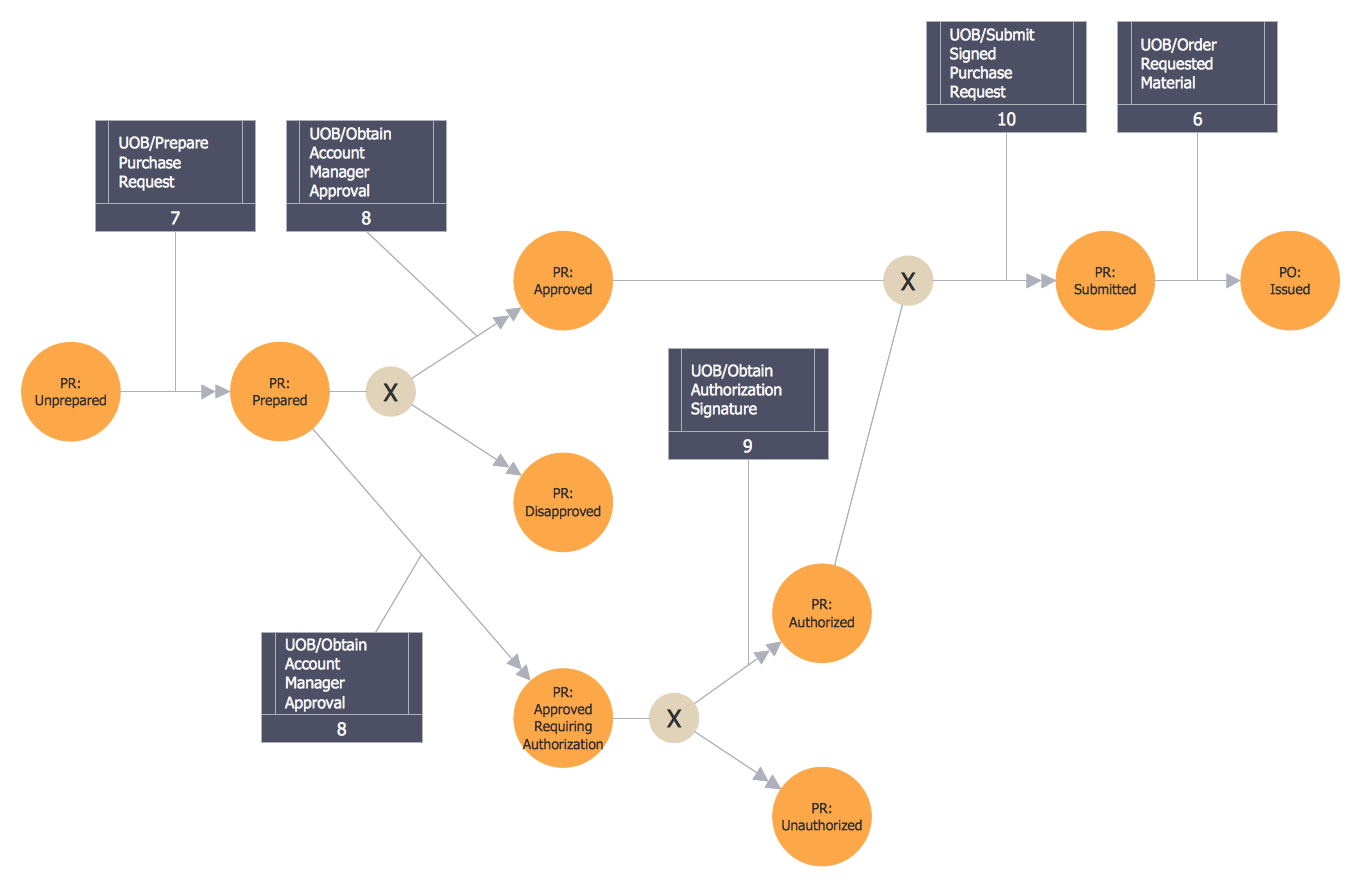
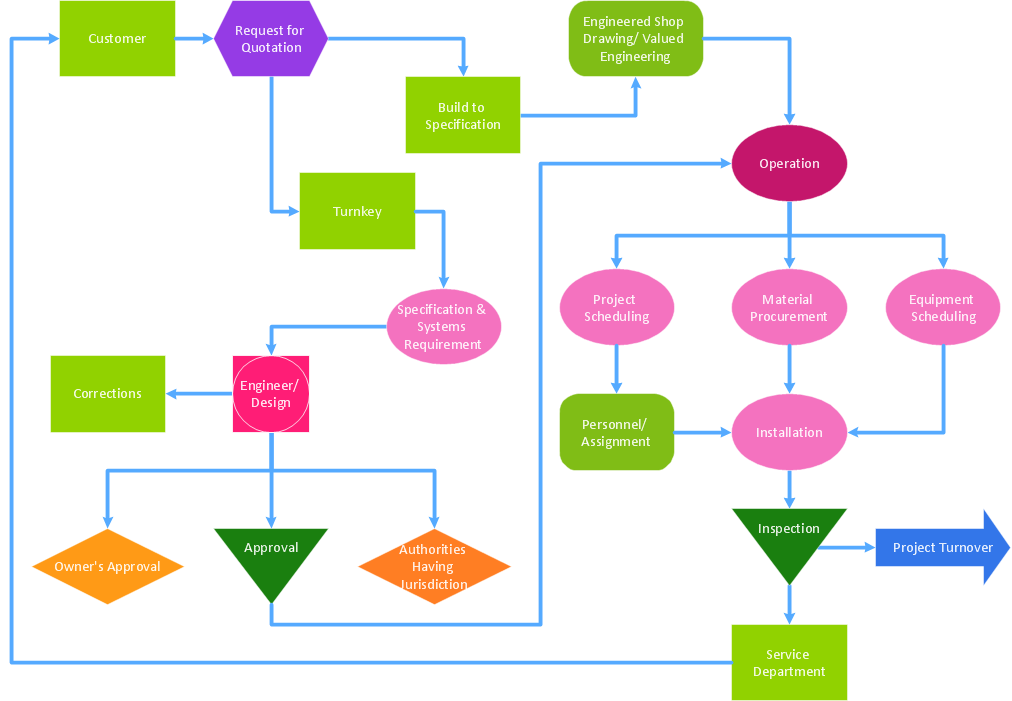
Example 1. Integration Definition - Completed Transition Schematic
The mentioned "definition languages" were originally developed under funding from U.S. Air Force. They are still most commonly used by the U.S. Air Force and another military. The United States Department of Defense agencies is known to be using such languages as well.
The most recognized and well as most commonly used components of the IDEF family are IDEF0. IDEF0 is a functional modeling language building on SADT which is also known to be a part of the IDEF family of different modeling languages. The last one is widely used in the field of software engineering, being built on the functional modeling language SADT. SADT is an acronym for the Structured Analysis and Design Technique.
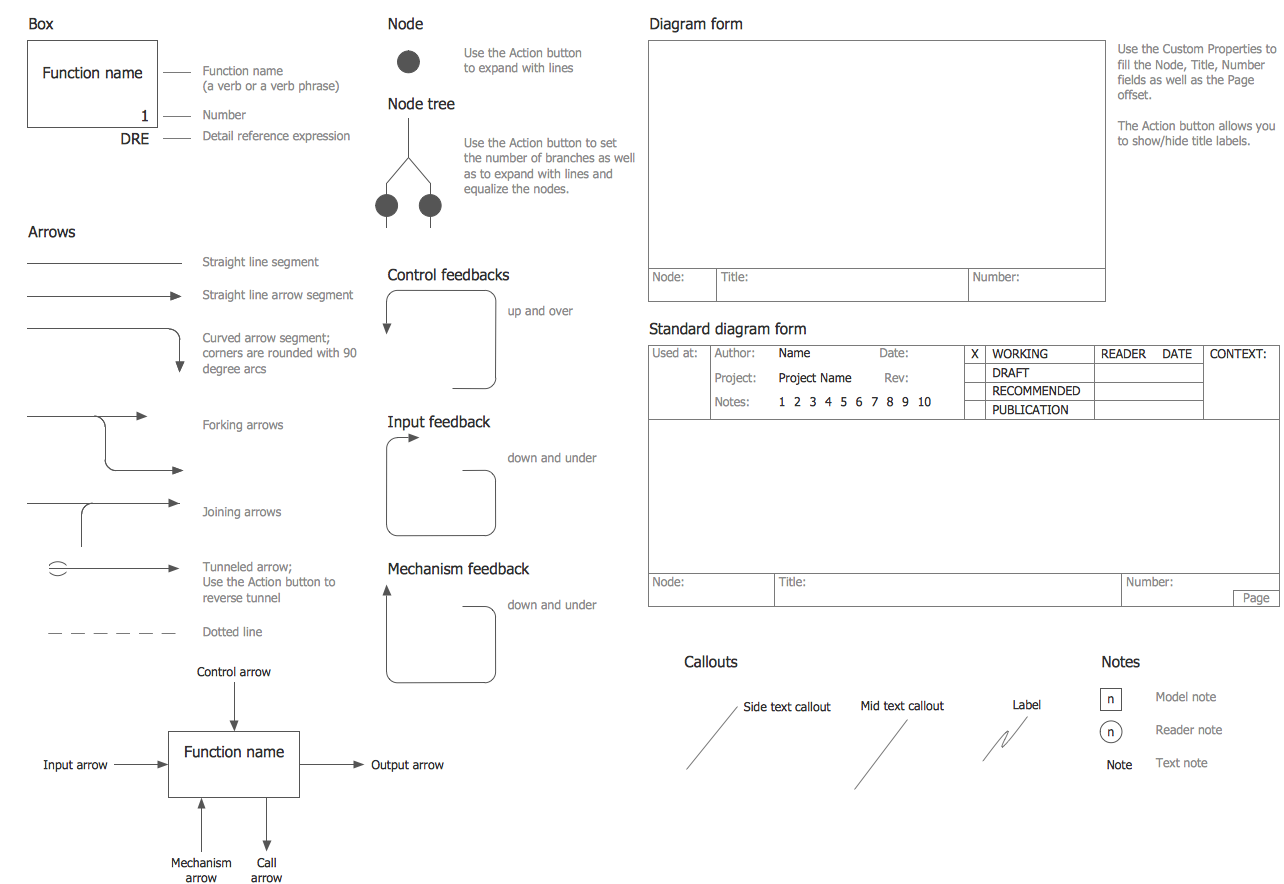
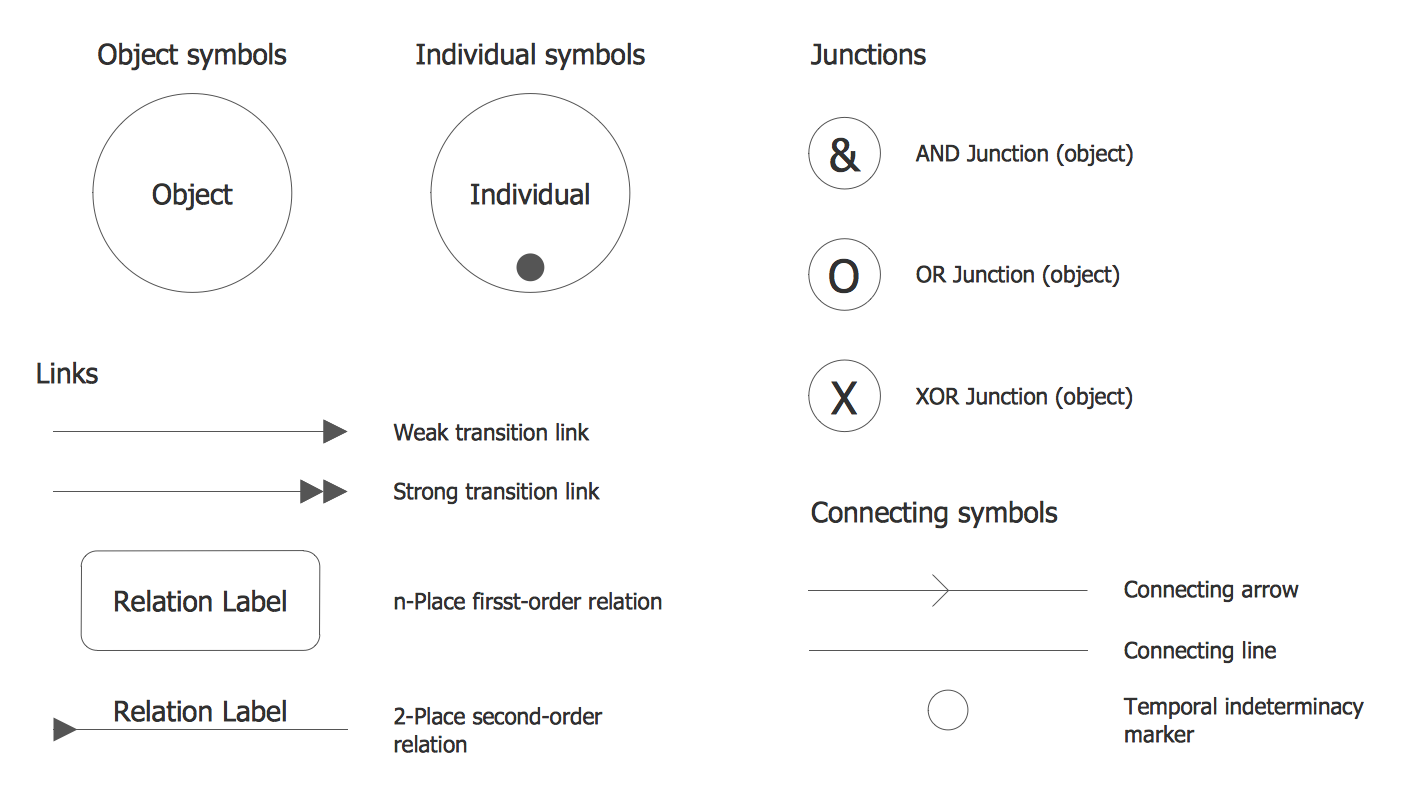
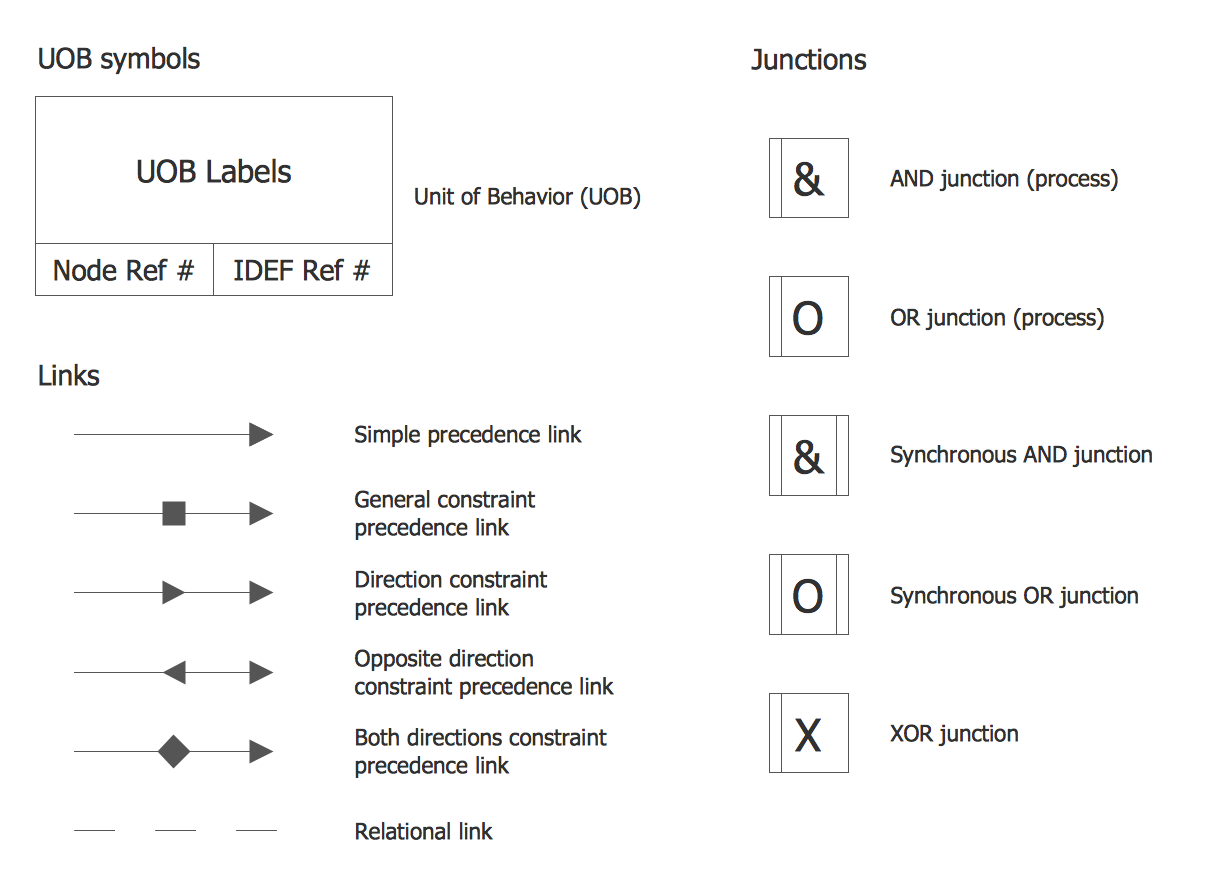
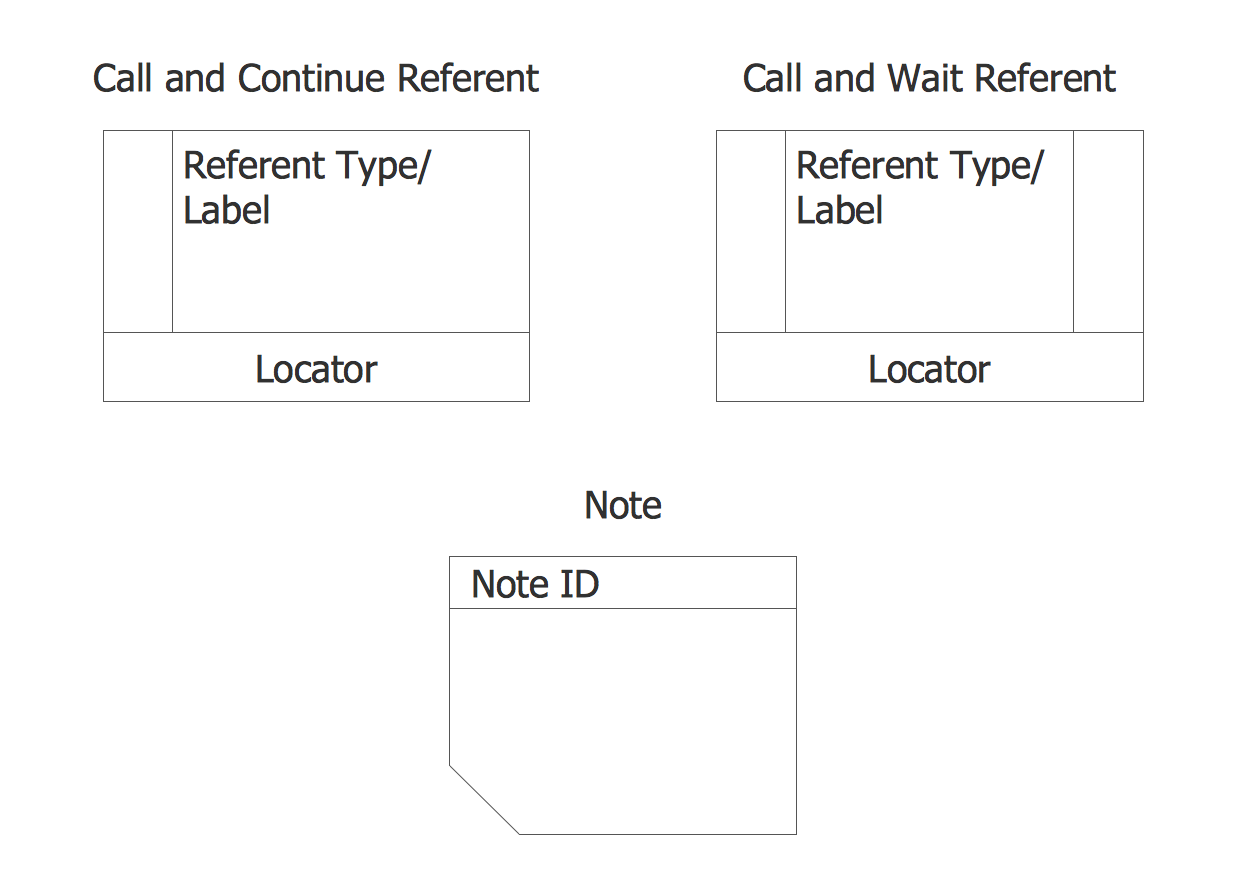
The IDEF0 Functional Modeling method is known to be designed for being able to model all the needed actions, activities and decisions of both the organizations and the systems, if needed. IDEF0 was derived from the already well-established graphic modeling language Structured Analysis and Design Technique that was already mentioned before and that was developed by both SofTech, Inc. and Douglas T. Ross.
IDEF0 in its original form is known to be including both an appropriate definition of some graphical modeling language and a description of some particular comprehensive methodology that is used for developing the models. The US Air Force was involved in commissioning the Structured Analysis and Design Technique developers for developing a function model method that can be used for both analyzing and communicating the functional perspective of some system.
IDEF0 can be expected to assist in organizing some system analysis. It can be also used for promoting the effective communications between the analyst and the customer through some simplified graphical devices. IDEF0 can be used for showing the needed data flow, the functional flow of some lifecycle processes as well as some appropriate system control every time the Functional flow block diagram is used for representing the functional flow of some product.
IDEF0 is known to be capable of representing lots of manufacturing, business and other types of enterprise operations graphically. It can be done to any level of detail. Providing the rigorous as well as the precise description and promoting the consistency of both interpretation and usage, integration definition IDEF0 is a well-tested as well as a proven language that has been used for many years by both private industry and government.
Any IDEF0 can be generated by a wide range of the computer graphics tools. There are very many commercial products that are known to be specifically supporting the analysis and development of the integration definition models and diagrams, such as the IDEF0 ones.
While one of the best tools for creating the IDEF0 diagrams is known to be the ConceptDraw DIAGRAM diagramming and drawing software, ConceptDraw STORE application seems to be the best one for simplifying any work of creation the IDEF models by providing the stencil libraries with the design elements as well as the pre-made examples that are all available for being edited, if needed.
The Integration Definition for Information Modeling (IDEF1x) is an associated technique that can be used to supplement IDEF0 for data-intensive systems. The IDEF0 standard, same as the IDEF1x standard (FIPS 184) and the Federal Information Processing Standards Publication 183 (FIPS 183), is known to be maintained by the National Institute of Standards and Technology. 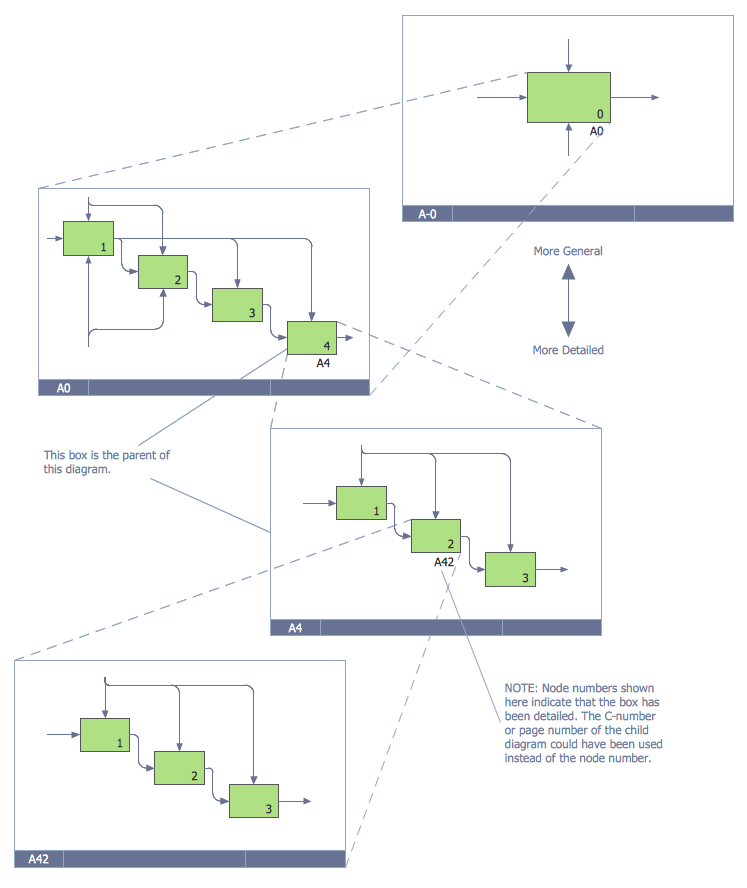
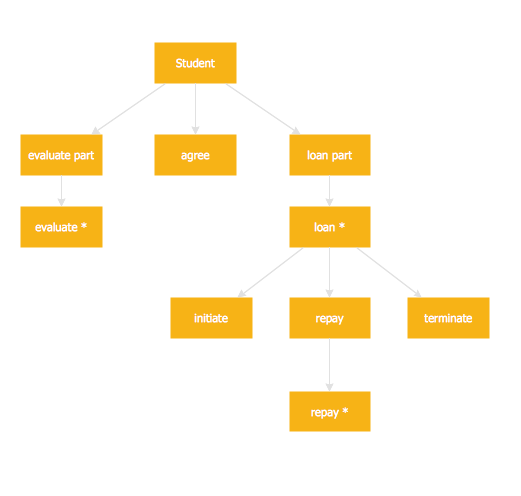
Example 2. IDEF0 Diagram — Decomposition Structure
IIDEF0 may be also used for modelling a lot of non-automated as well as automated systems. It may be used for new systems as well, but first of all the requirements have to be defined and the functions have to be specified. After, designing an implementation that meets all the needed requirements can be done as well as the performance of the functions.
For the already existing systems, IDEF0 can be used in order to analyze the functions that these systems perform. Recording the mechanisms by which these are done can be also performed. After the IDEF0 is applied to some particular system, a model may be a result. Such model may consist a hierarchical series of text, diagrams, glossary cross-referenced to each other. There are two main modelling components: functions and the objects. First ones are known to be represented on a diagram with the help of the boxes and the second ones — with the arrows.
Each of the activities may be described by a verb-based label that is placed in a box within the IDEF0 diagram. All the inputs are shown as arrows that are entering the left side of the activity box while outputs can be seen as the already existing arrows on the right side of the box. All the controls can be displayed in a form of the arrows that are entering the top of the box and the mechanisms that are all displayed in the form of the arrows which are all entering from the bottom of the box.
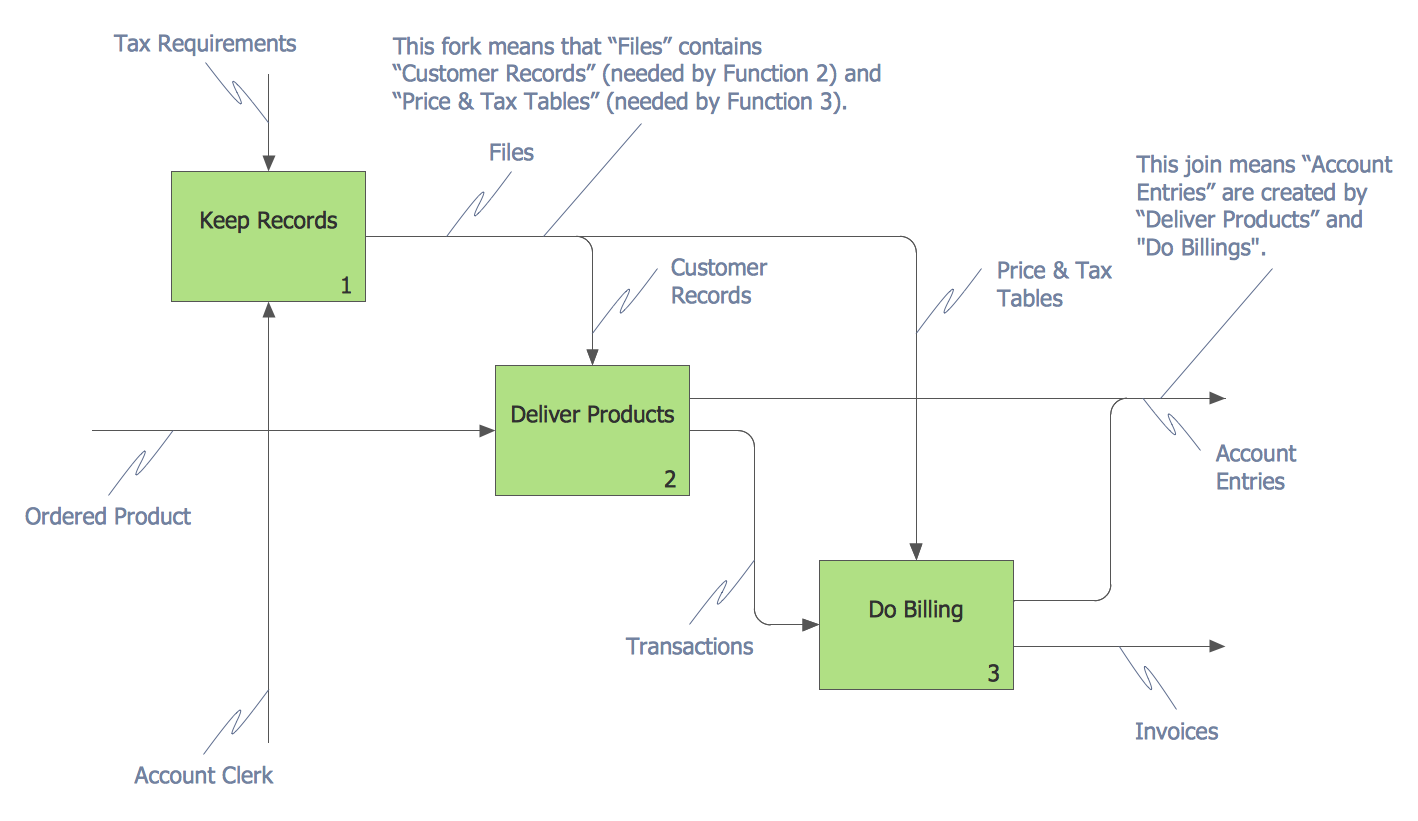
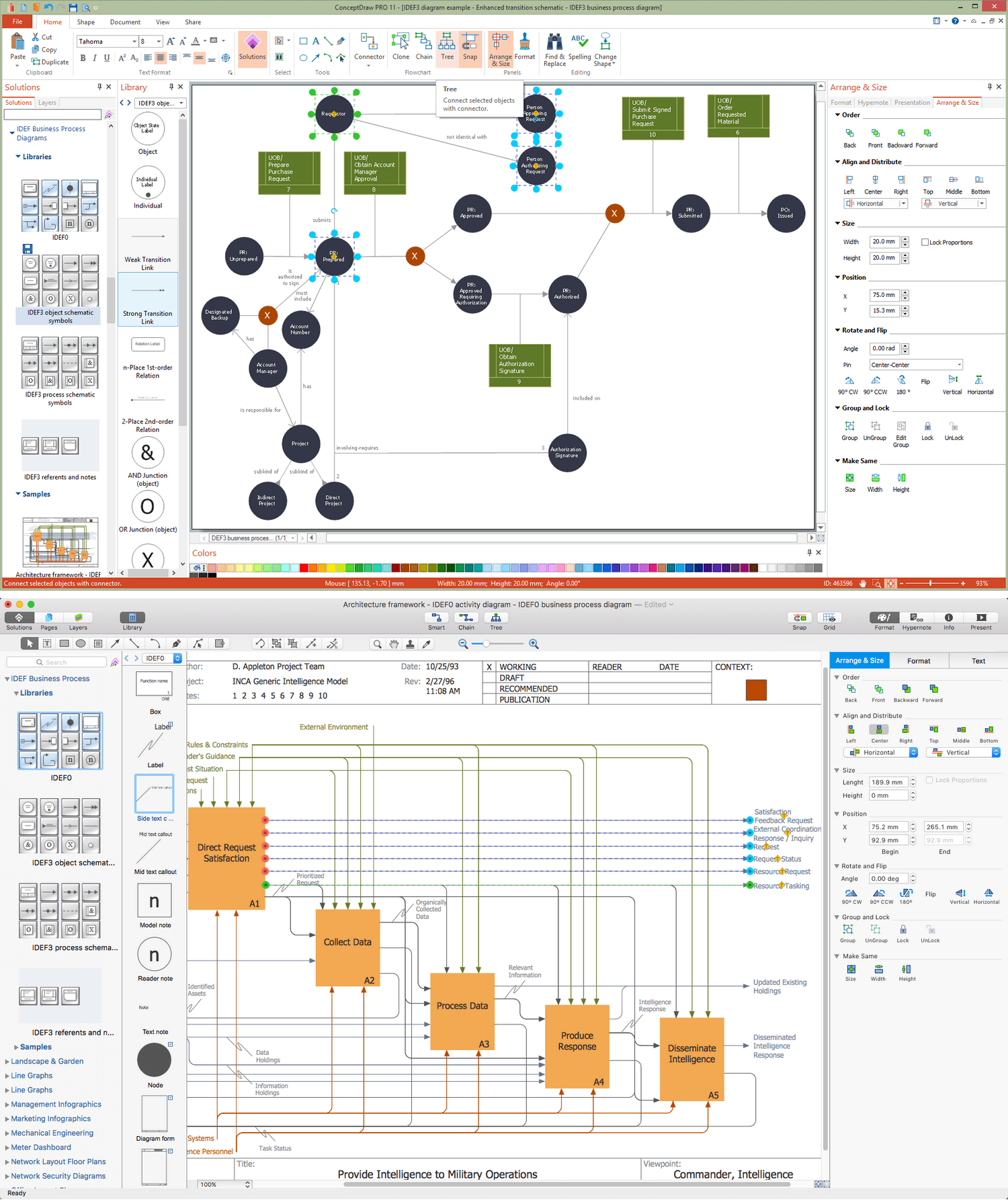
Example 3. IDEF0 Diagram — Inter Box Connections
Taking into consideration all the previous descriptions, any integration definition diagram can be easily created in the ConceptDraw DIAGRAM diagramming and drawing software either with the aid of the IDEF Business Process Diagrams solution or without it.