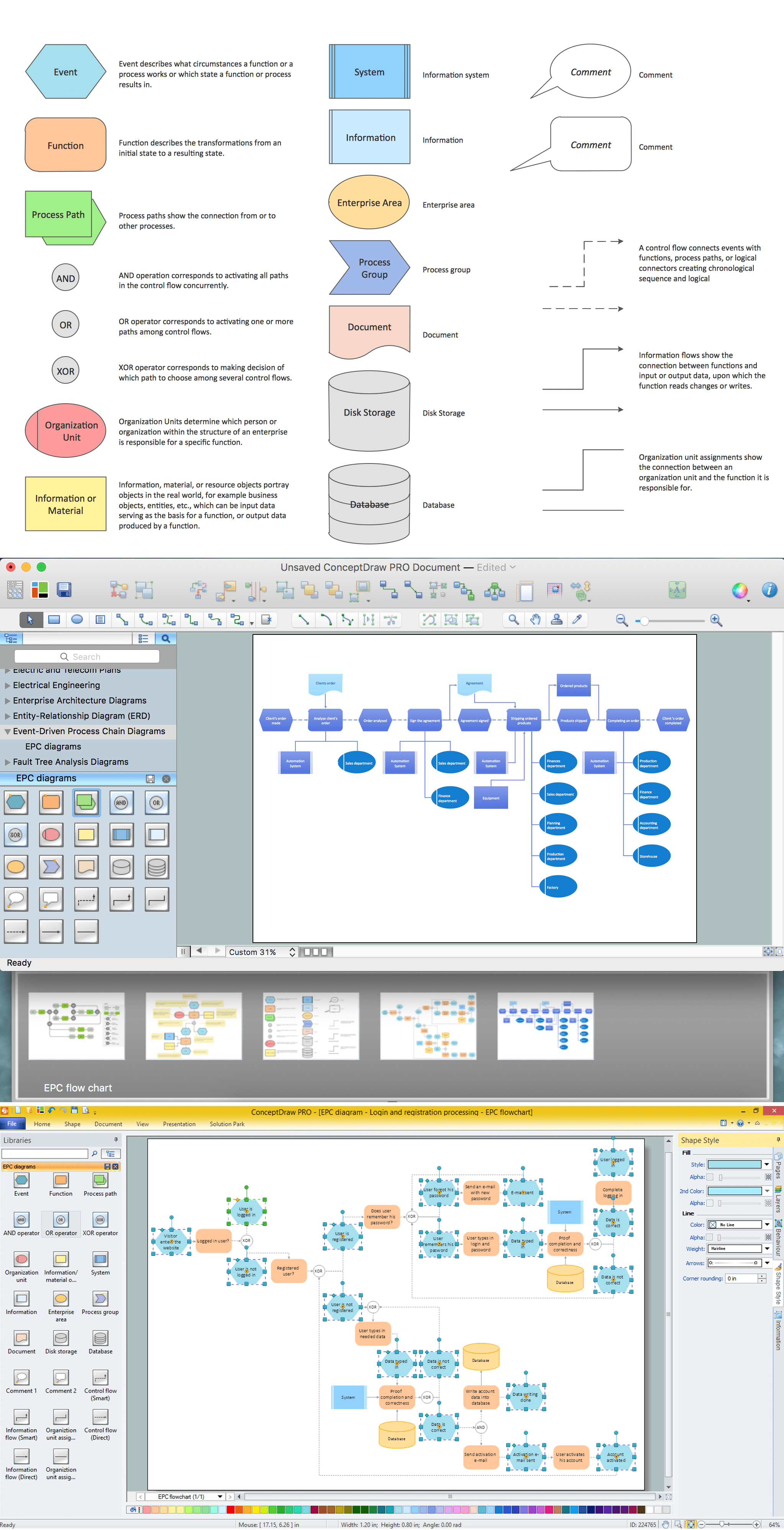
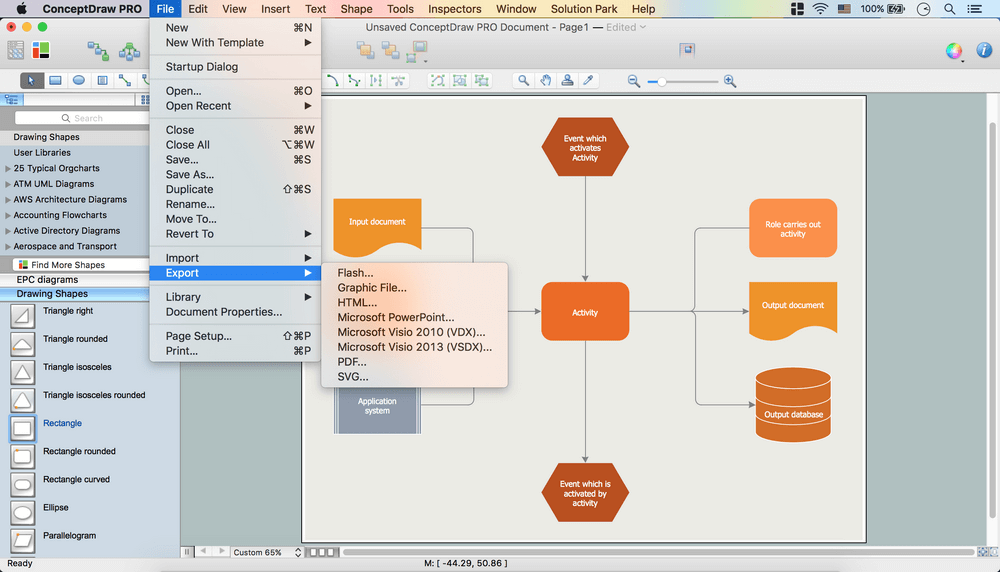
Pic.1 Event Driven Process Chain (EPC) Diagram
The Event-driven Process Chain Diagrams solution extends ConceptDraw DIAGRAM software with EPC templates, samples, and vector shape library for the drawing of EPC diagrams.
How to Draw EPC Diagram
The Event-driven Chain Diagrams solution assists in the planning of resources and improves business processes using EPC flowcharts.
Follow these steps to be successful in creating EPC diagram.
- Launch ConceptDraw DIAGRAM
- Set page orientation: File menu – Page Setup – Horizontal Orientation – Ok.
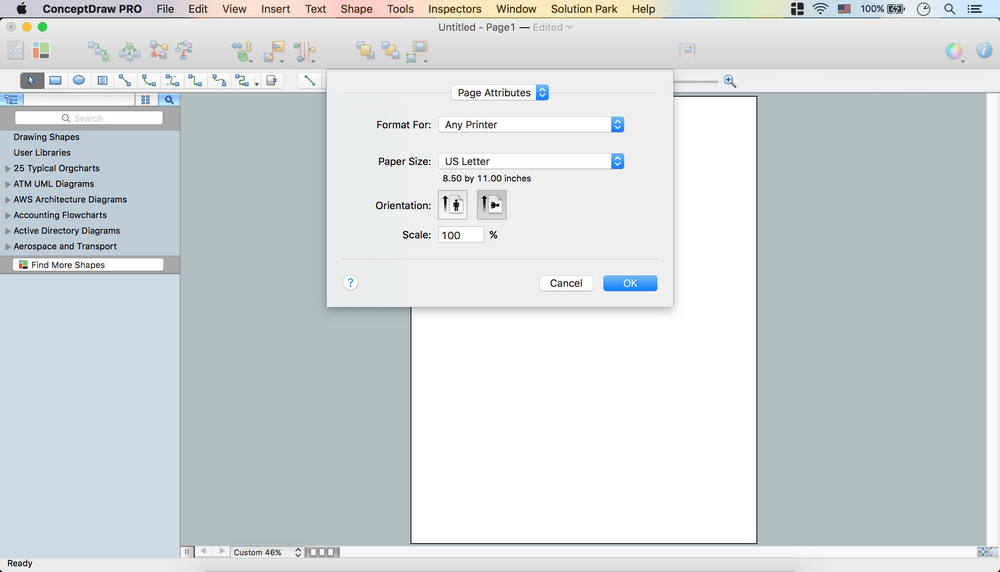
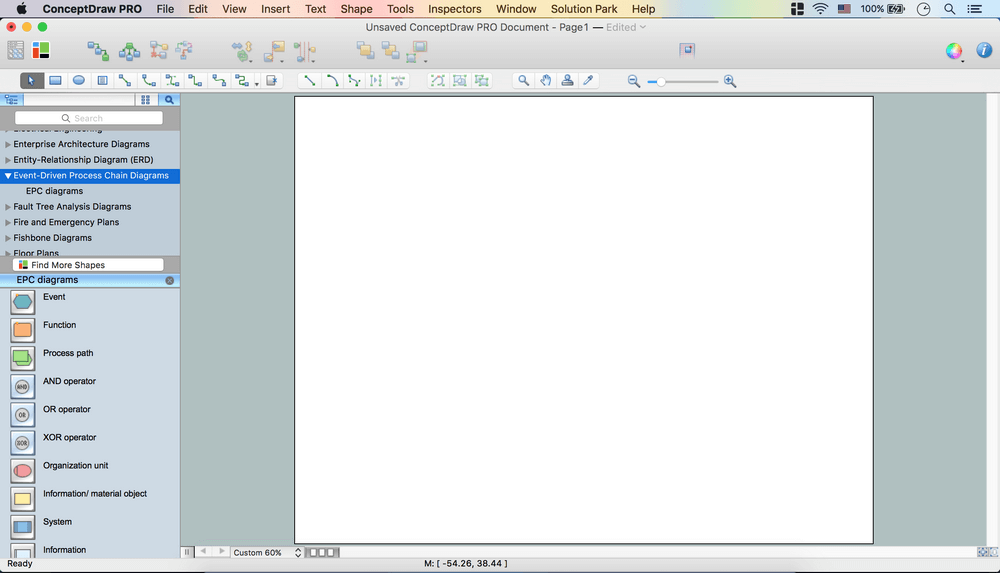
- Open Event-Driven Process Chain Diagrams (EPC) library from the Libraries panel.
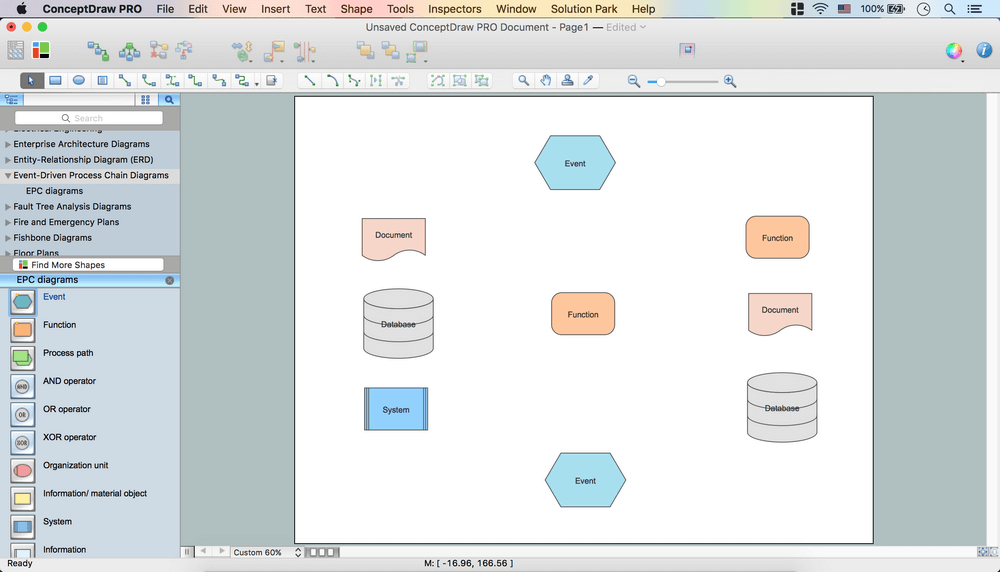
- From the library take necessary objects. Place them on the page.
- Using Control dots adjust size of the objects.
- Add text to objects. Just click the object – Type.
Note: Use yellow diamond to move text inside the object.
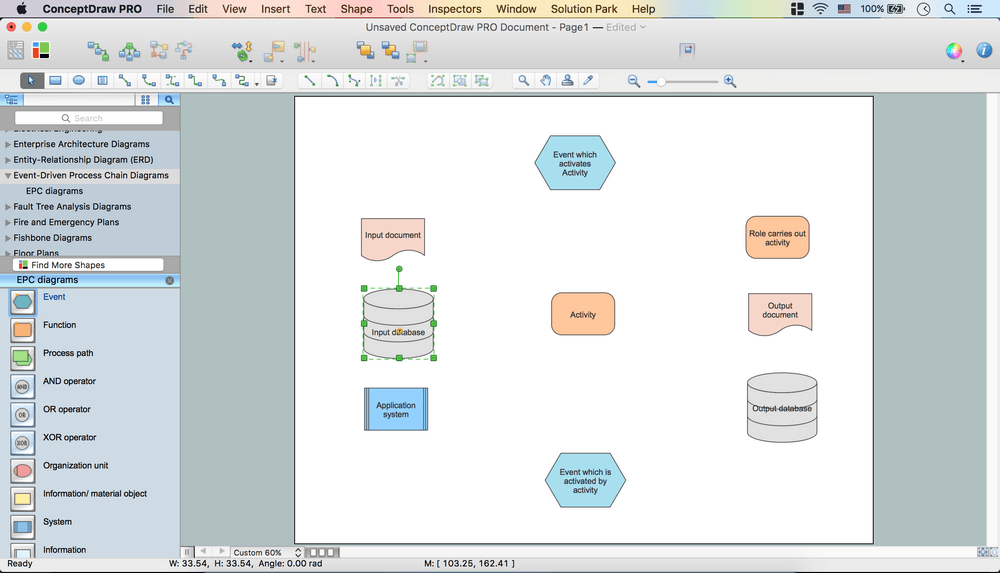
- Select all objects (Cmd+A) – Open Inspectors – Text tab.
- Set Font, Font size, Color.
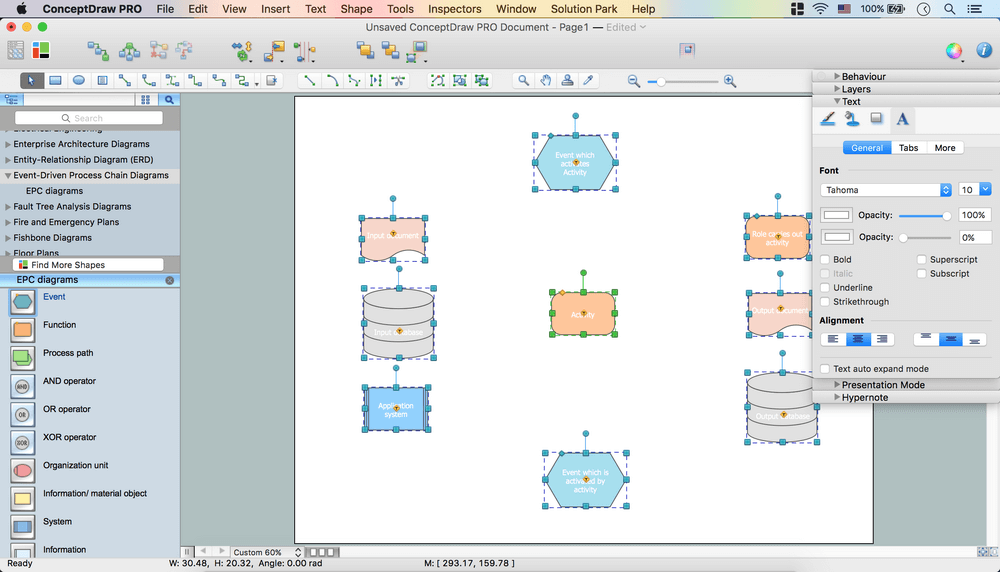
- Holding down Shift button deselect Database and System objects.
- Open Inspectors – Line tab - Deselect Stroke.
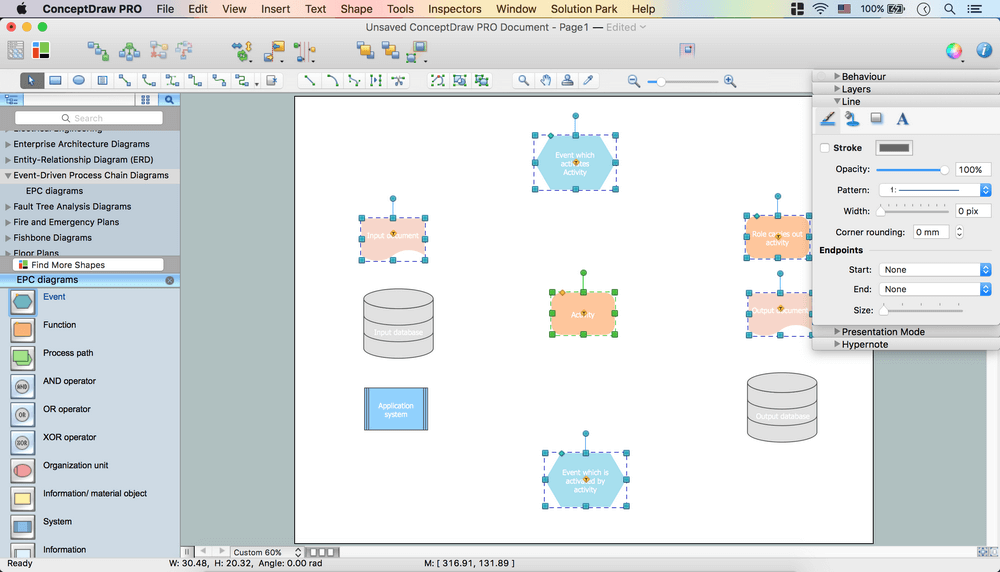
- Select Database and System objects.
- Open Inspectors – Line tab –Change color.
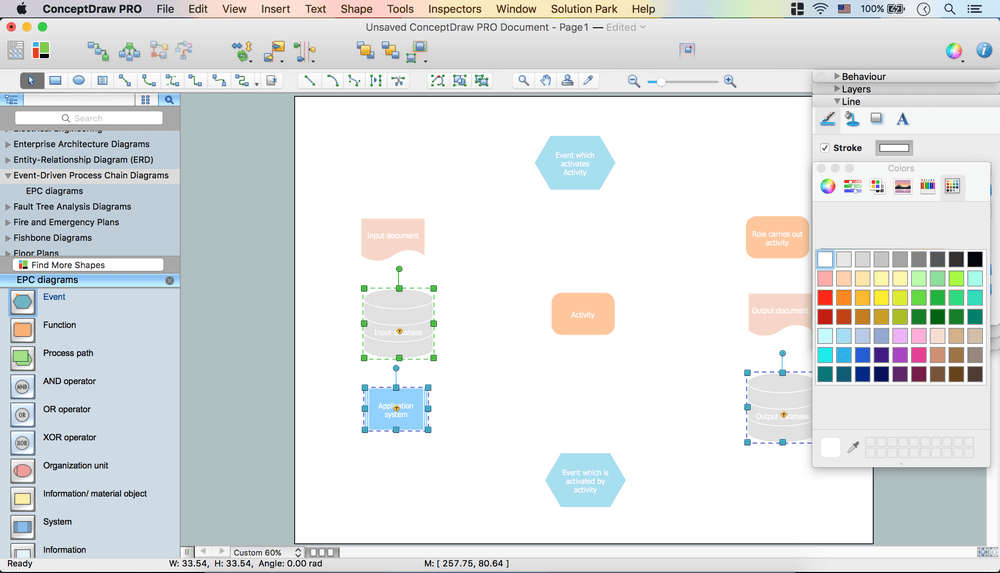
- Open Inspectors – Fill tab – Change color of the objects.
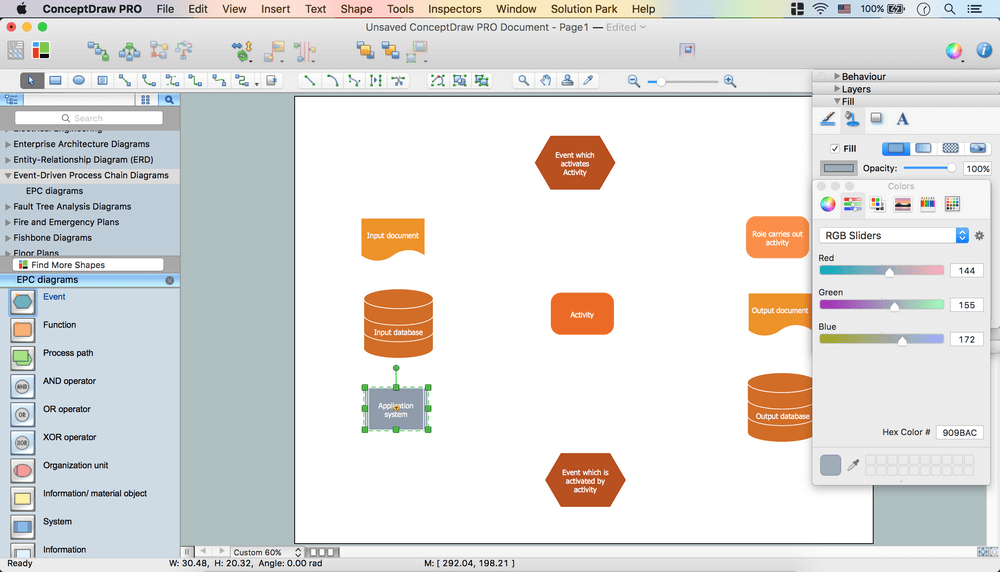
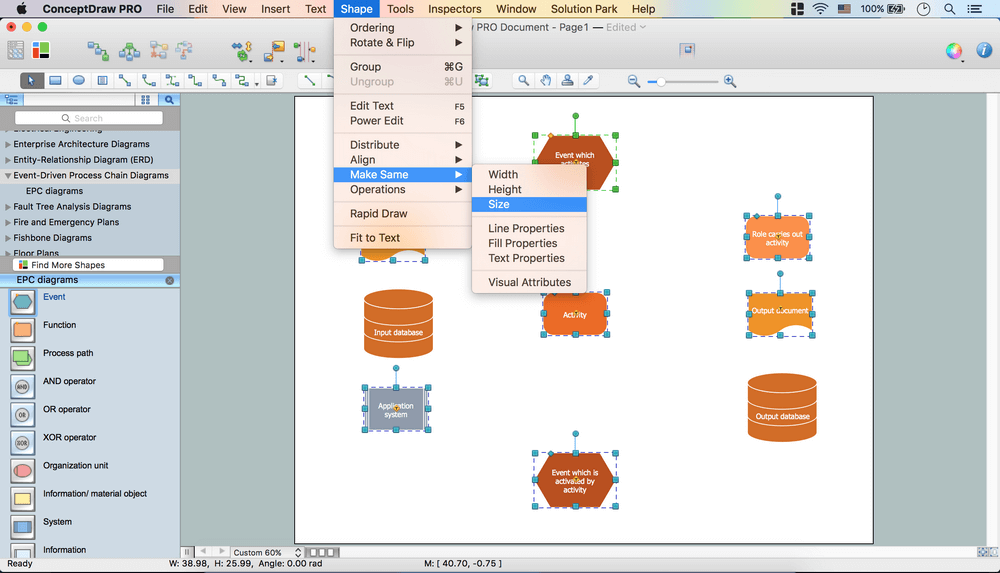
- Select all objects excluding Database objects.
- Shape menu – Make same – Size.
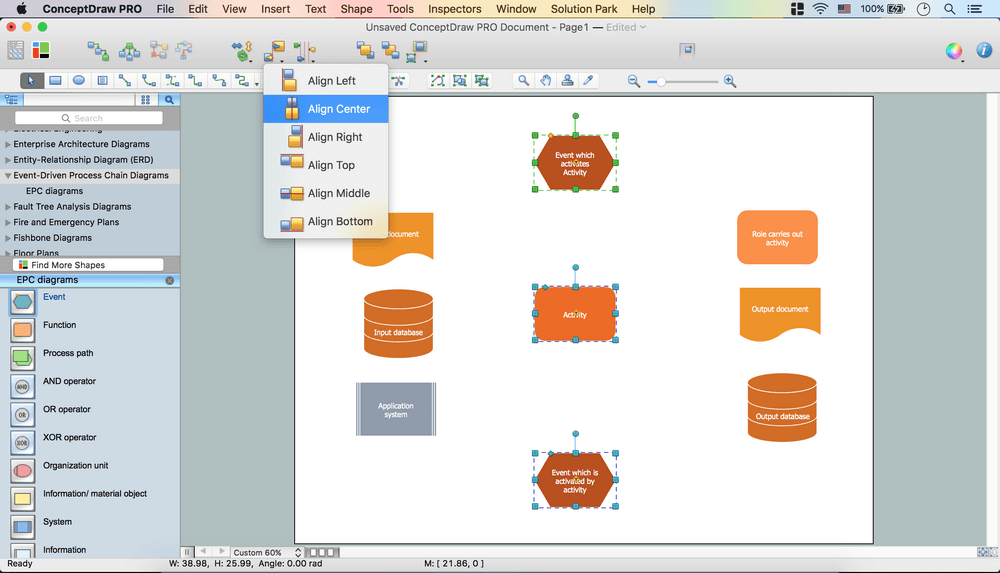
- Use Align and Distribute options from the Toolbar to arrange the objects.
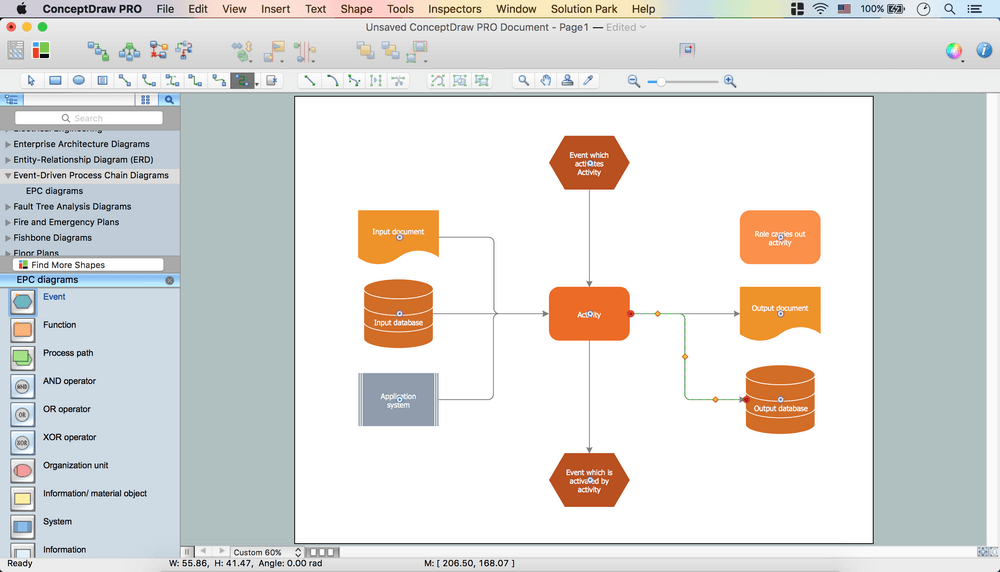
- Using Direct and Rounded Conncectors from the Toolbar connect objects in needed direction.
Note: Using Yellow diamonds you may arrange Rounded Connectors.
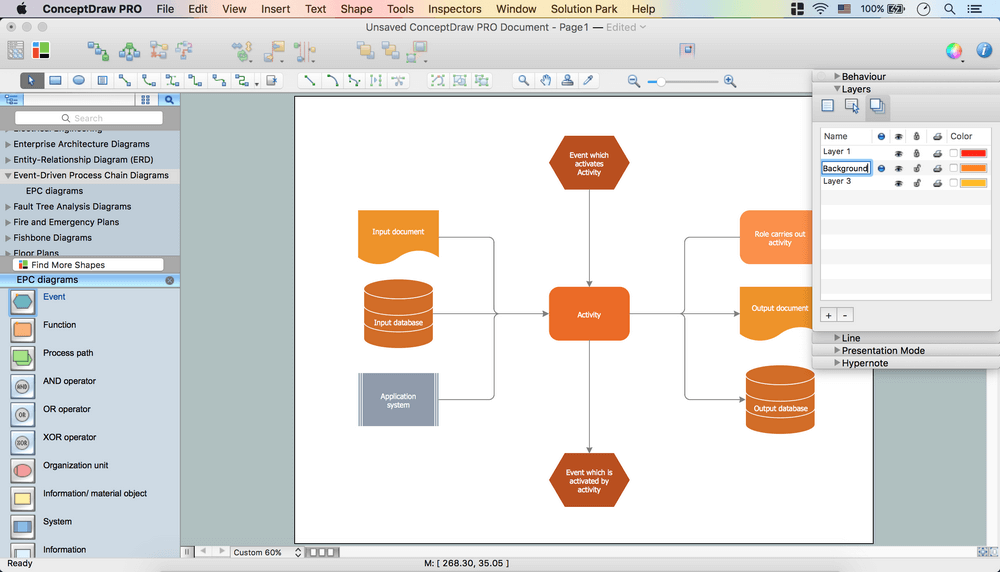
- Inspectors – Layers tab - Select another layer for Background. Lock previous layer.
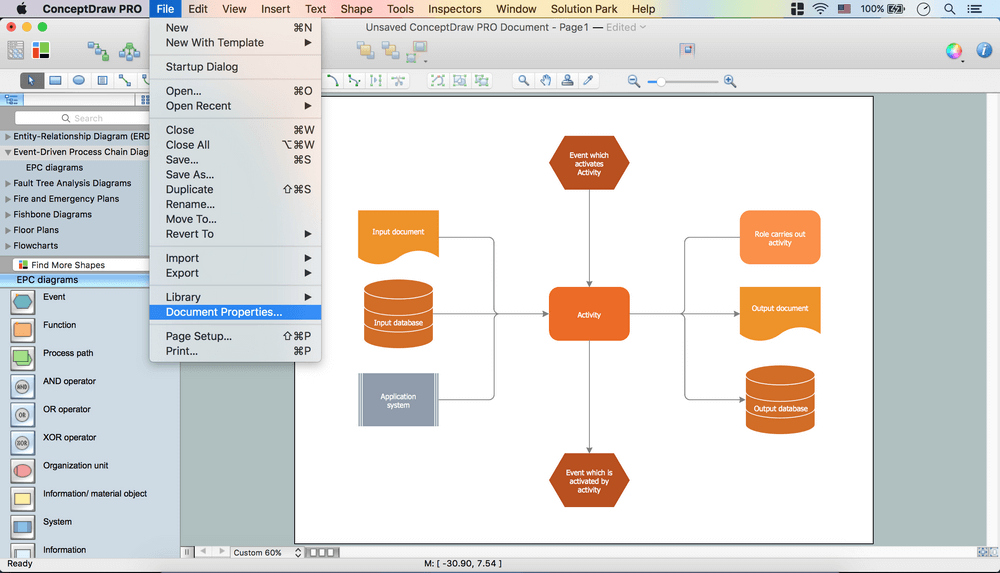
- File menu –Document Properties – Page Size – Adjust to Drawing Contents –Ok.
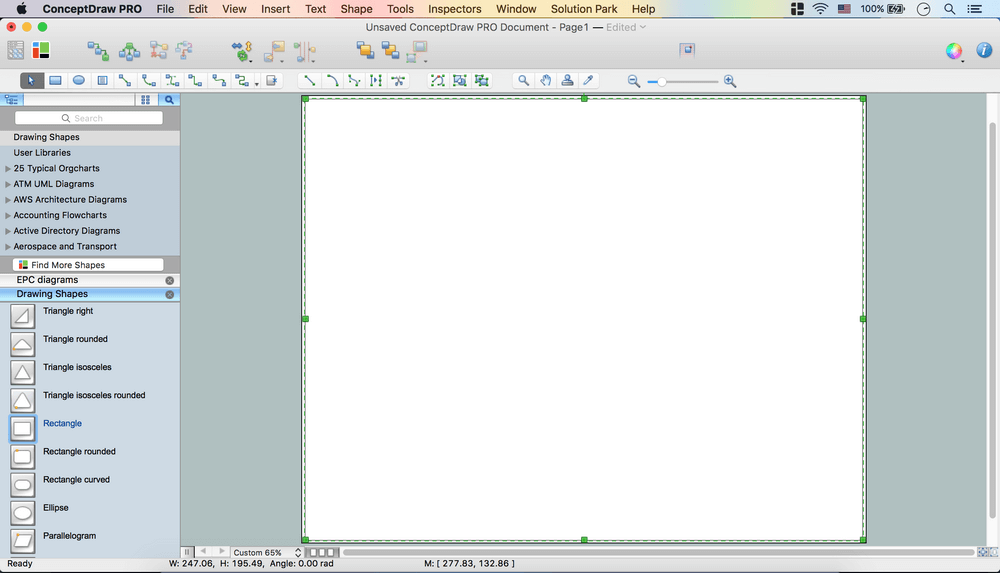
- Open Drawing Shapes library from Libraries panel. Take Rectangle object. Place it on the page.
- Using Control dots make size same as a Page size.
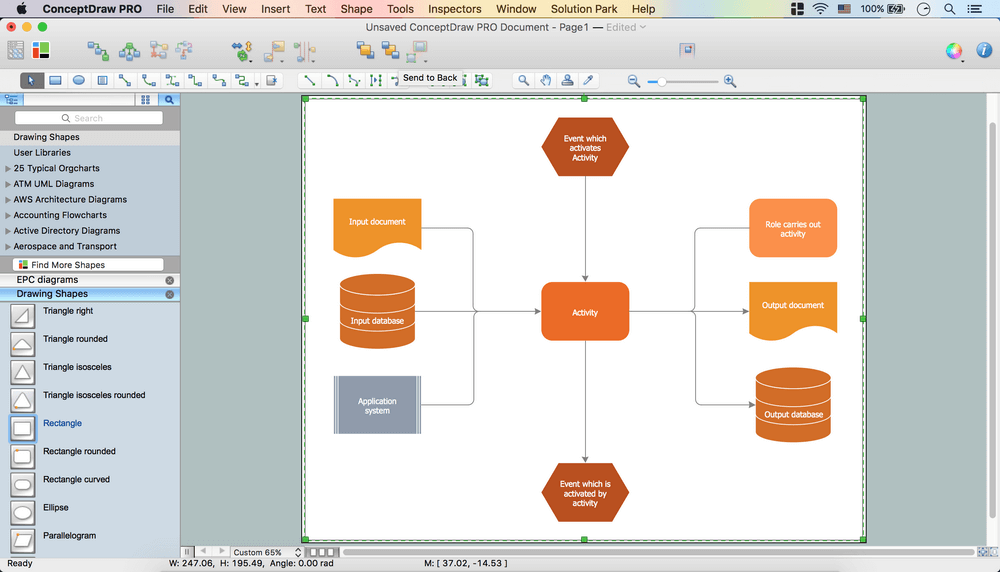
- Send it to Back using the option from the Toolbar.
- Open Inspectors – Line tab – Deselect Stroke.
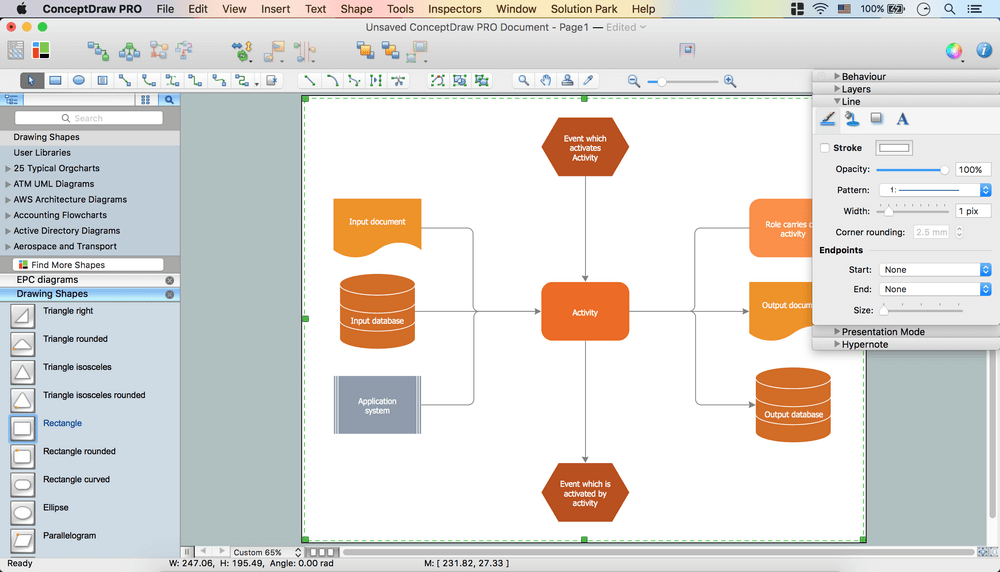
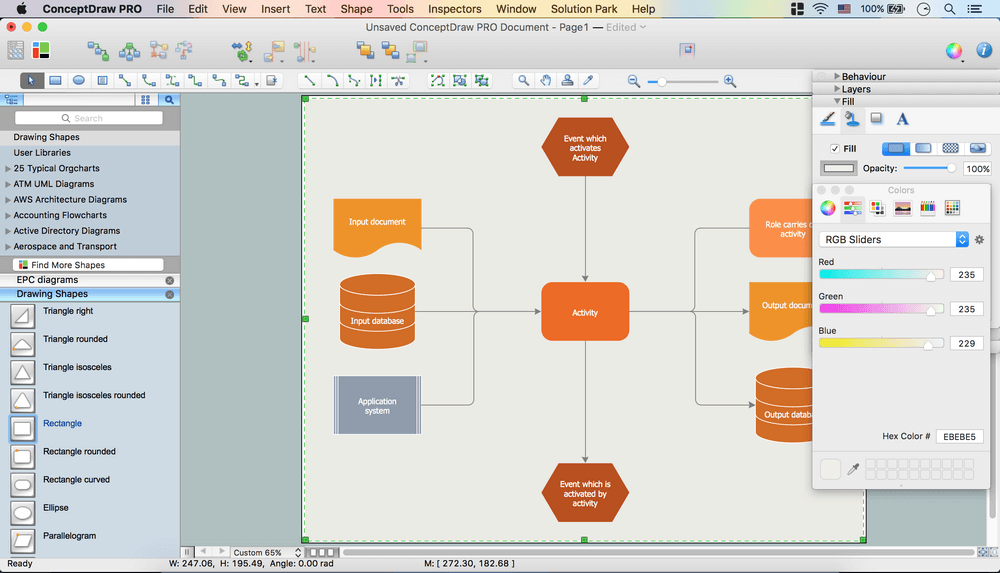
- Open Inspectors – Fill tab – Change color.
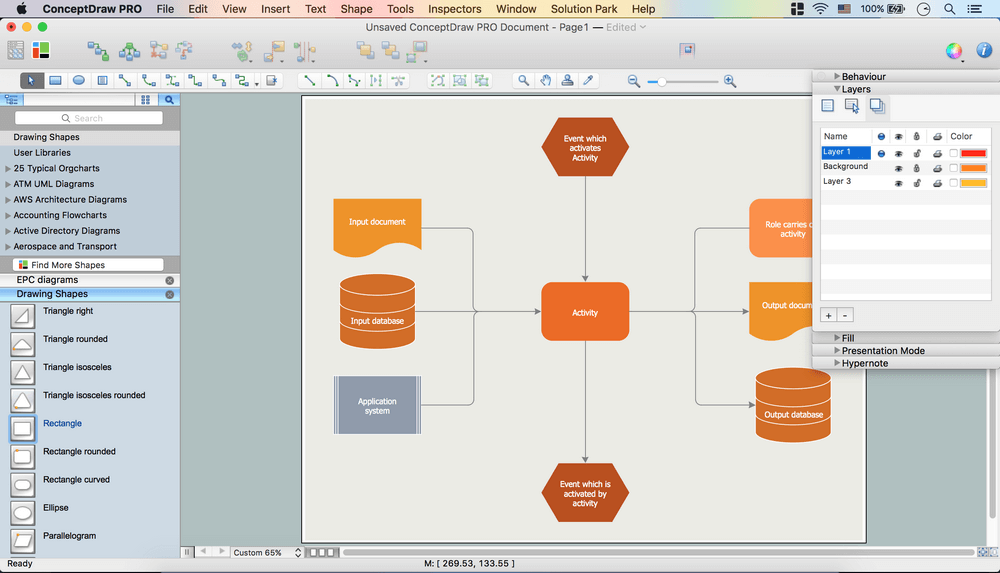
- Inspectors - Layers tab – Go back to Layer 1 - Lock Background layer.
- Now your Drawing is ready.
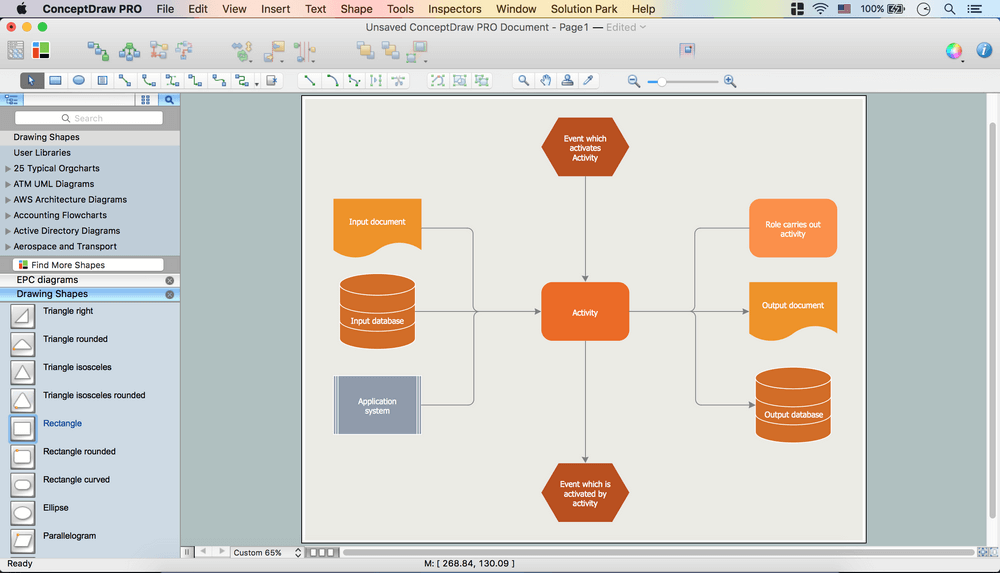
- You may save it or export to different formats via File Menu.
TEN RELATED HOW TO's:
Database design is an important part of any project, as databases become more and more complex nowadays. To make the model more representative, entity relationship diagrams are widely used in software engineering area. These diagrams show sets of entities as rectangles connected via lines labeled with their cardinalities.
This an example of the ER-diagram developed to store information regarding some online role-playing game. It includes three main elements of ER diagram: entities, relationships and attributes. The entities, attributes and relationships on this ER-diagram is depicted according to the Chen's notation. Chen's notation for Entity Relationship diagrams admits using of rectangles to depict entities, ovals for attributes and ,at least, diamonds to show relationships. ConceptDraw Entity-Relationship Diagrams solution was applied as ERD software to create this diagram.
Picture: ConceptDraw DIAGRAM ER Diagram Tool
Related Solution:
What is a EPC diagram and how design it quick and easy? The Event-driven Process Chain (EPC) is a type of flowchart which is widely used for modeling and analyzing the business processes. It's incredibly convenient to use the EPC Solutions for designing professional looking EPC diagrams. ConceptDraw DIAGRAM diagramming and vector drawing software offers the Event-driven Process Chain Diagrams EPC solution from the Business Processes Area.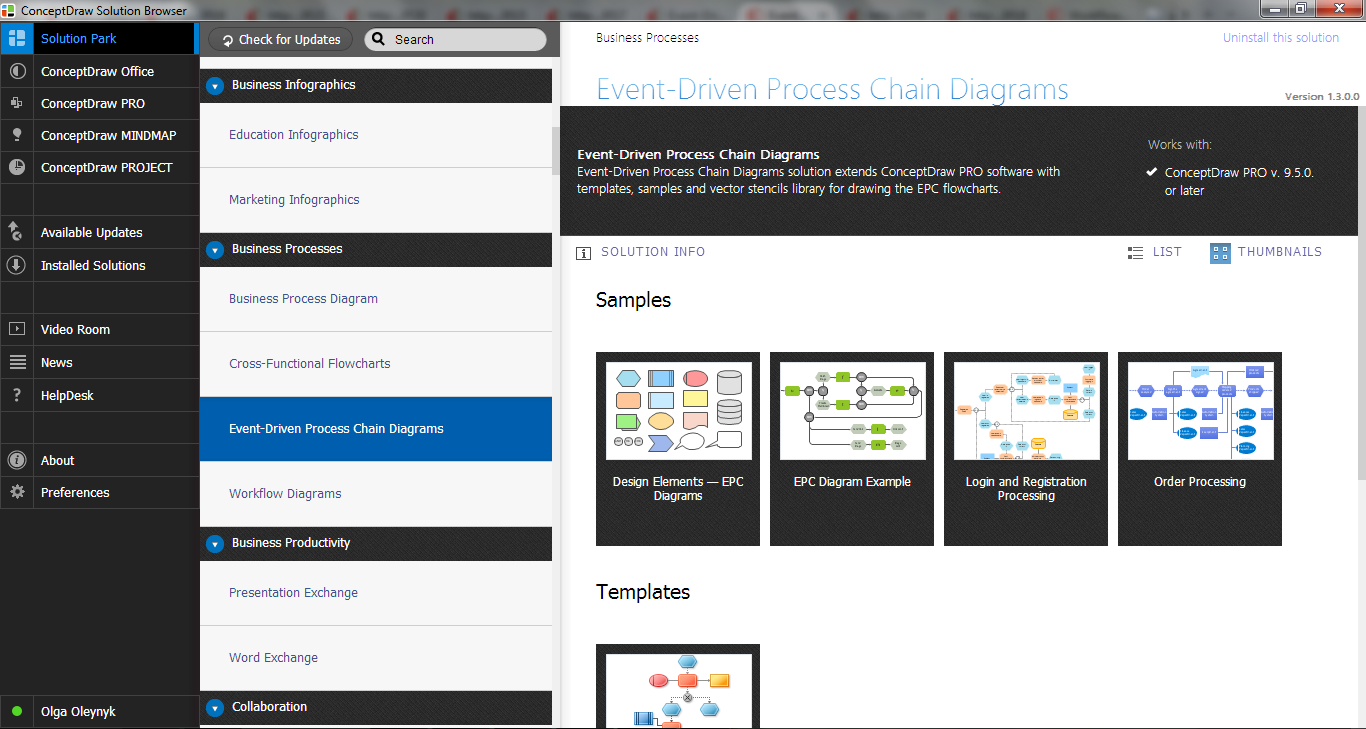
Picture: EPC Solutions
Related Solution:
Still doubting about the number of tables in your cafe? You should create a cafe floor plan that will answer all your questions and reflect all the details of your cafe interior. Get started in several minutes and unlock your creativity with dozens of ConceptDraw DIAGRAM templates and examples!
Dealing with interiors plans for HoReCa business, for example, developing a plan for cafe you will meet with both creative and architectural challenges. First of all , the layout of cafe should be beautiful and convenient for visitors. Being developed sagely a plan of your cafe leads to successful sales and good benefits. Designing a cafe floor plan includes various elements that can be picked out using ConceptDraw Cafe and Restaurant Floor Plan solution. The vector objects library supplied with Cafe and Restaurant solution provides a number of graphic objects for displaying different layouts and styles of catering establishments.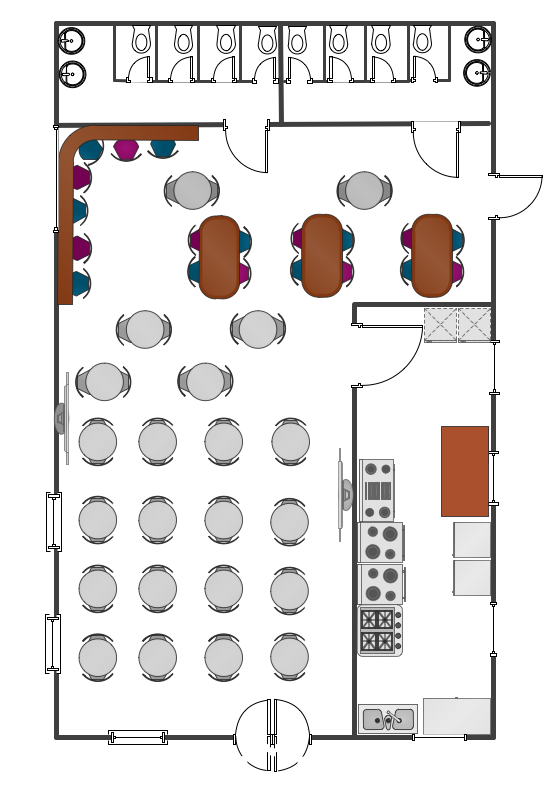
Picture: Cafe Floor Plan. Cafe Floor Plan Examples
Related Solution:
Complete set of bar chart examples is produced using ConceptDraw software. Surfing bar chart examples you can find an example that is the best for your case.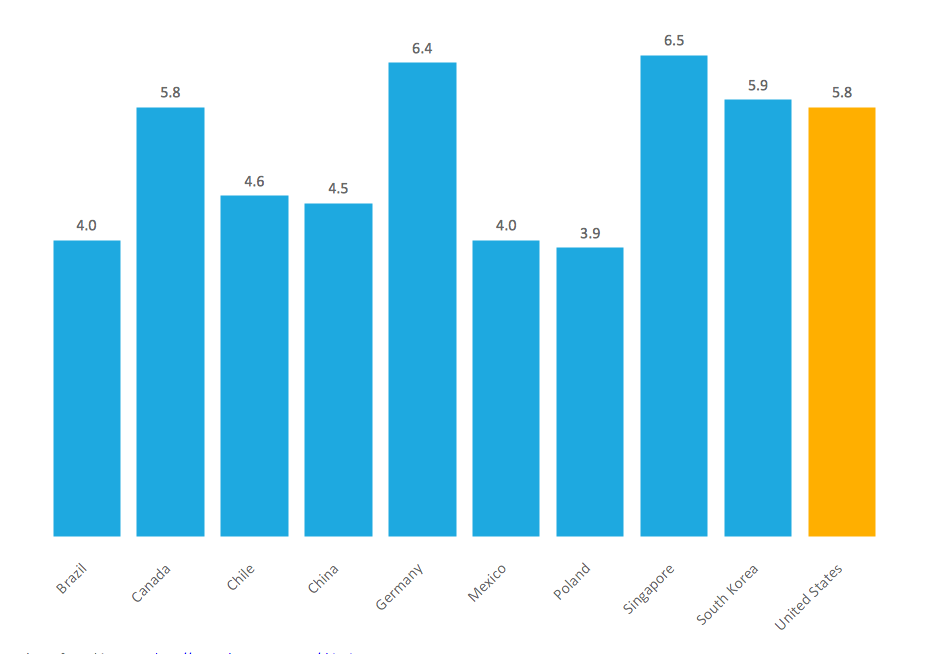
Picture: Bar Chart Examples
Related Solution:
Sometimes it's difficult to find a path in work processes or to understand the requirements, especially when you are a newcomer. To get your thoughts straight, create a workflow diagram, and put everything on it. This will not only help you to get into the workflow, but also show it’s weaknesses.
This illustration captures the workflow process of payment an invoice for the electricity consumed by certain enterprise. It was drawn in ConceptDraw DIAGRAM using its solution for Workflow Diagrams. Making a workflow charts means that you need to depict consistently all processes engaged to the workflow process. Then, you should connect them with symbols meaning study and analysis. Next, add symbols of decisions. A work flow diagram made precisely and correctly can help to clarify your work flow to any person.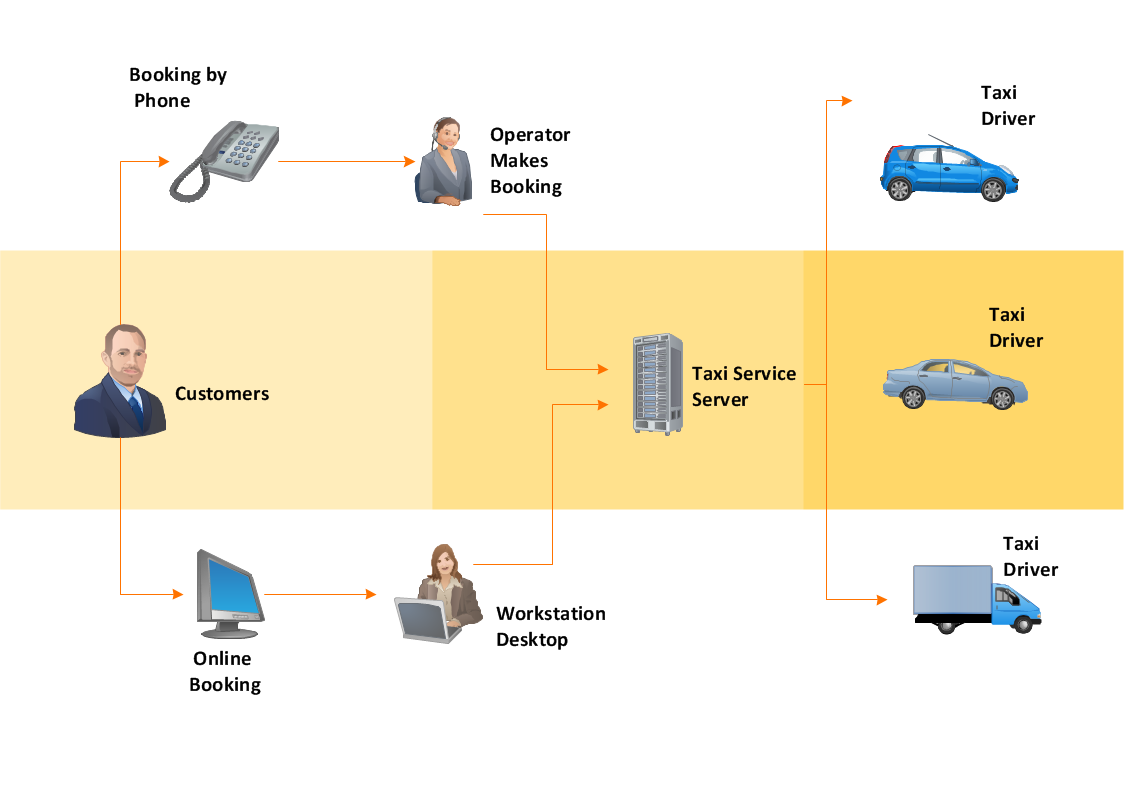
Picture: Workflow Diagram
Related Solution:
ConceptDraw DIAGRAM diagramming and vector drawing software enhanced with Fishbone Diagrams solution from the Management area of ConceptDraw Solution Park gives the ability to draw Fishbone diagram, which identifies many possible causes for an effect for problem solving. Fishbone Diagram procedure of creation includes the set of steps easy for execution in ConceptDraw DIAGRAM.
Picture: Fishbone Diagram Procedure
Related Solution:
Users can start drawing their own flowchart diagrams in fast and simple way with ConceptDraw software.
ConceptDraw DIAGRAM is the only professional diagramming software that works on both Windows and Macintosh platforms. All its documents and libraries are 100% compatible and can be exchanged hassle-free between the platforms.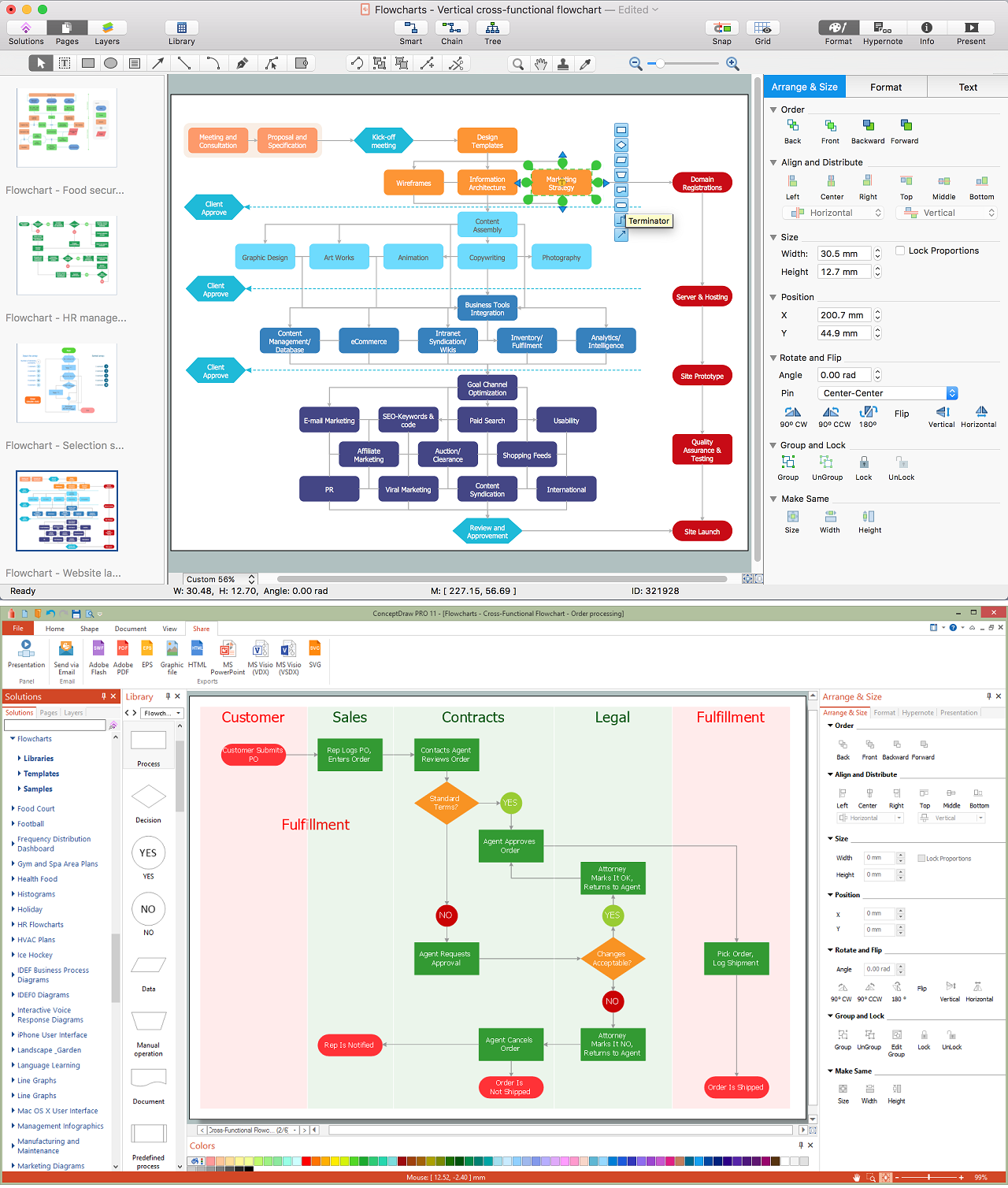
Picture: Create a Flow Chart
Related Solution:
ConceptDraw DIAGRAM is a flowchart design software. There are large collections of professional flowchart symbols for process flow diagrams, standard flowchart symbols and colored basic flowchart symbols. Built-in examples and video lessons allow users to get started immediately and do drawing of virtually any type of flowchart or process flow diagrams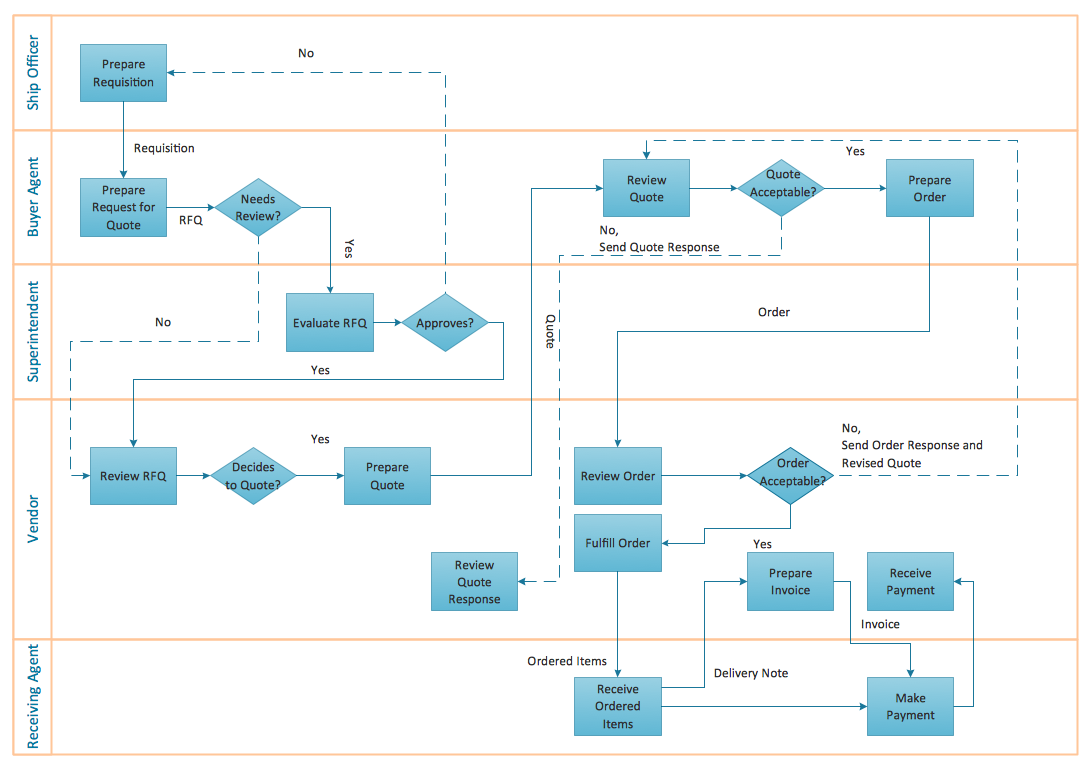
Picture: Flow Chart Creator
Related Solution:
The excellent possibility to create attractive Cross Functional Flowcharts for step-by-step visualization the operations of a business process flow of any degree of detailing is offered by ConceptDraw’s Cross-Functional Flowcharts solution. The extensive selection of commonly used vector cross functional flowchart symbols allow you to demonstrate the document flow in organization, to represent each team member’s responsibilities and how processes get shared or transferred between different teams and departments.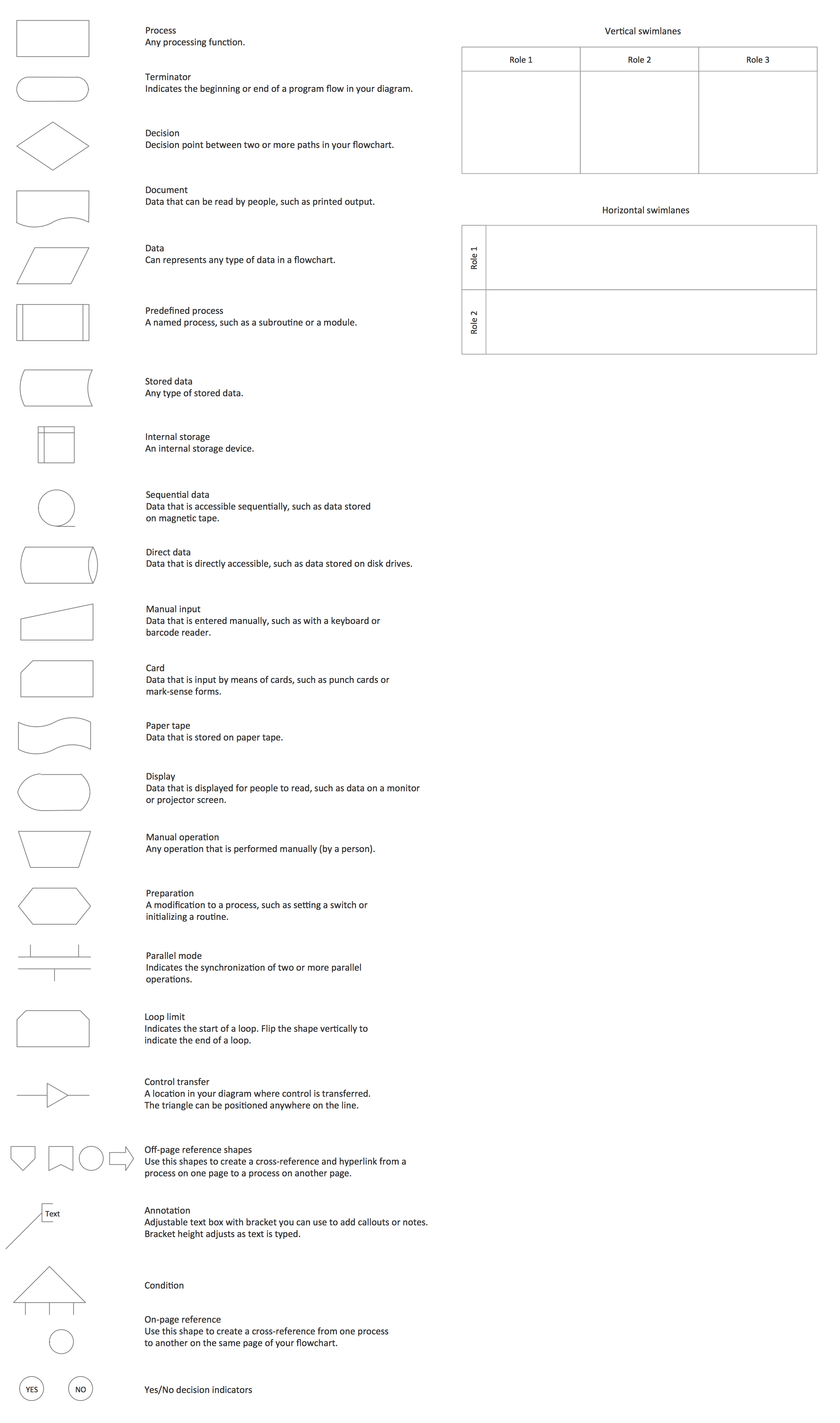
Picture: Cross Functional Flowchart Symbols
Related Solution:
UML Object Diagram shows the structure of a modeled system at a specific time.
ConceptDraw Rapid UML solution delivers libraries contain pre-designed objects fit UML notation, and ready to draw professional UML Object Diagram.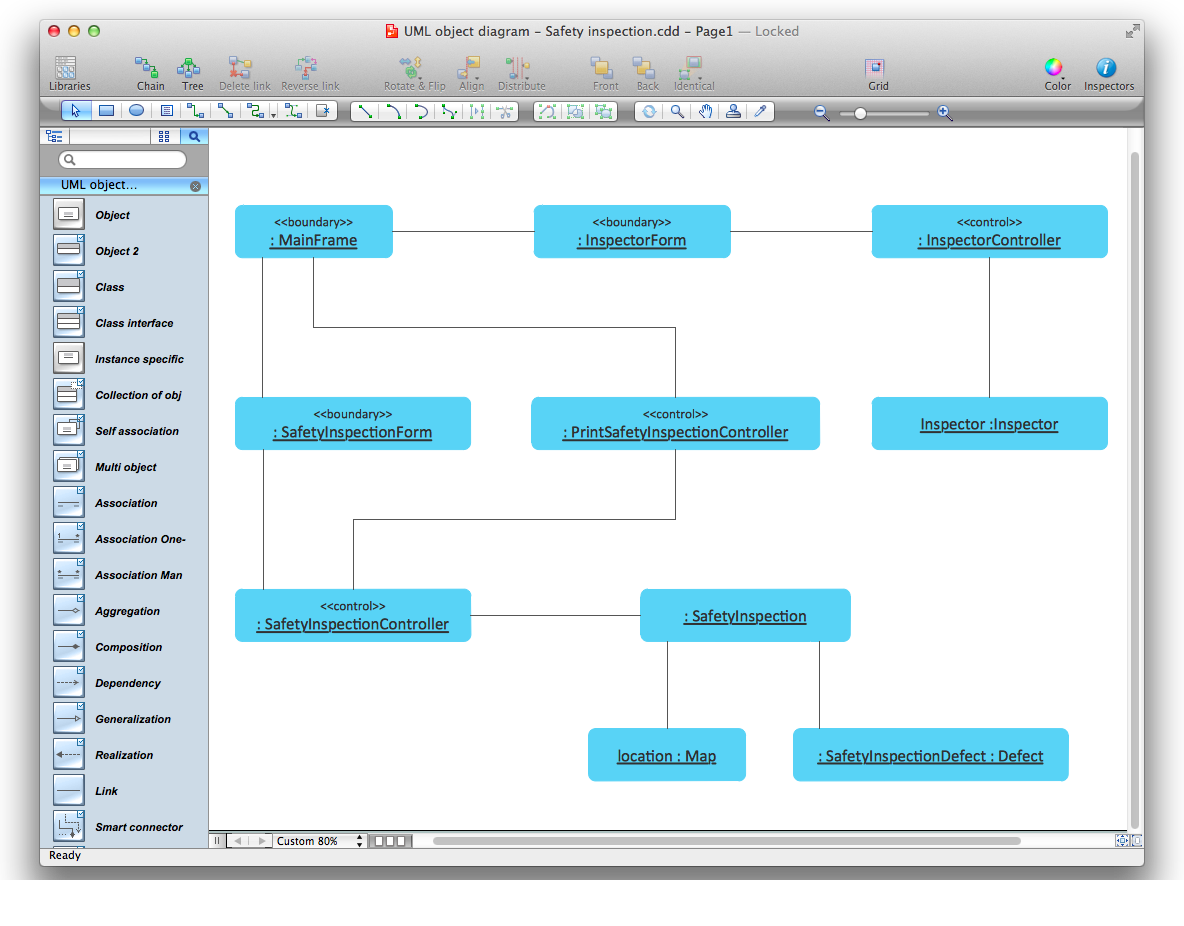
Picture: Diagramming Software for Design UML Object Diagrams
Related Solution:



















