SWOT Analysis Software: Comprehensive Guide
SWOT Analysis is a strategic planning tool applied across different business environments. It assists organizations in identifying and assessing key factors that affect their businesses. Moreover, these factors include those that are under their control and those that are not. Based on the specifics, context, or current issue, the focus of SWOT analysis can vary. However, in any case, evaluation from different angles is the most accurate method for any business.
A regular SWOT analysis helps companies stay proactive and flexible, monitor four aspects of their businesses — both internal and external factors, identify and understand risks, and develop efficient strategies to mitigate them. As a result, SWOT methods help companies devise a successful approach to protect their business against competitors and identify how to leverage competitive advantages and ensure long-term stability and resilience. It helps businesses overcome challenges and determine which new opportunities to pursue on the way to success.
The Four Components of SWOT Analysis
SWOT analysis of a business is structured around internal and external factors that are assessed and analyzed to help organizations make informed decisions and set strategic priorities.
Internal factors refer to the elements within an organization that influence its ability to achieve objectives, enhance performance and growth, and are within the organization's control. Common internal factors include human and physical resources, financial resources, experience, access to natural resources, trademarks, copyrights, patents, and current processes. These include:
Strengths — internal resources or capabilities that give the organization a competitive advantage, such as a strong brand reputation, skilled workforce, unique technology, or efficient processes.
Weaknesses — internal factors and limitations that hinder the organization’s ability to achieve goals, areas that need improvement, such as weak brand recognition, outdated technology, poor customer service, or insufficient financial resources. The addressing or minimization of these factors helps organizations improve performance.
External factors are external forces that impact the success of the organization or individual but are beyond their control. However, they can be strategically managed to minimize risks or even turn them into benefits and achieve growth. These include economic trends, market trends, political, environmental, and economic regulations, relationships with suppliers and partners, demographics, funding, etc. These include:
Opportunities — external factors or trends that the organization can use for its growth, improvement, and taking advantage on the market, such as emerging markets, new technologies, changes in regulations, or changes in consumer behavior.
Threats — external challenges or risks that can impact the organization’s performance negatively, such as increased competition, economic downturns, changing regulations, or market saturation. Understanding these factors enables organizations to mitigate these risks to achieve success.
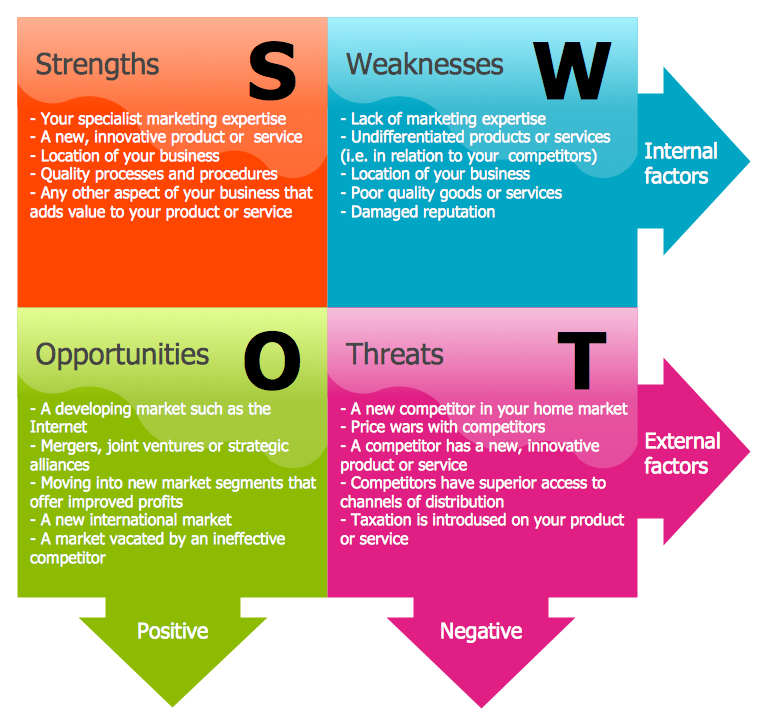
Example 1. SWOT Analysis Matrix
Benefits of Using SWOT Analysis in Management
SWOT analysis offers numerous benefits for the management and strategic planning of businesses, building opportunities and competitive advantage, developing strategies to eliminate weaknesses and threats, improving performance, and increasing business success. The key benefits of SWOT analysis in strategic management include:
- Clarity through providing a clear and concise overview of four main factors concerning the organization's internal and external environment.
- Structured base for business planning.
- Opportunity to assess the organization’s current position and identify its strategic opportunities and areas for improvement.
- Better understanding of business processes, market, and competitors.
- Efficient alignment of strategies due to the holistic view of the business environment.
- Predicting changes you need to deal with to ensure your business success.
- Making more informed data-driven decisions.
- Focusing on the factors that really matter.
- Enables spotting business opportunities and exploit them fully.
- Encourages the development of strategic thinking.
- Increased flexibility and adaptability.
- Identifying competitive advantage in the market through uncovering opportunities for future growth ahead of competitors.
- Simplified aligning strategies across departments and prioritization initiatives.
- Proactive risk management due to anticipation of potential risks.
- Ability to anticipate future business threats and take action to avoid or minimize their impact.
- Opportunity for assessing diverse business units, complex internal structures, and global markets.
SWOT Analysis in Business Decision Making
SWOT analysis provides a clear, structured framework from both internal and external factors that impact an organization and due to this plays a crucial role in business decision-making. It helps leaders make strategic decisions focused on risk mitigation and driving growth and success. The most important functions of a SWOT Diagram that help to enhance decision-making are:
- Facilitates strategy development based on identified factors.
- Clarifies priorities by highlighting key areas that need attention to enhance competitive advantage and address operational inefficiencies.
- Enhances risk management, helps to anticipate risks, reduce uncertainty, and develop contingency plans.
- Encourages objective evaluation of both the positive and negative aspects of the business environment.
- Facilitates alignment of business decisions with long-term goals.
- Supports more informed and resilient decision-making.
- Adapts to different settings, such as small businesses, large corporations, global businesses, startups, or nonprofit organizations.
- Helps to identify market opportunities and potential risks as early as possible.
- Fosters using innovations, sustainability strategies, and agility while addressing challenges.
- Encourages development of go-to-market and brand recognition strategies.
- Helps to prioritize goals and adapt strategies to local conditions.
The Role of SWOT Analysis in Strategic Planning
Strategic planning is a process that plays a critical role in achieving business growth. Strategic planning method is directed at creating a plan with objectives and goals to reach in the future. Make a SWOT analysis helps to perform strategic planning the most efficiently, providing a clear overview of the current business state and information about the opportunities for its improvement including key factors that influence its future success. SWOT analysis assists in:
- Assessment of internal and external factors.
- Prioritizing initiatives following the organization’s capabilities and market conditions.
- Risk identification and mitigation, and minimizing uncertainties.
- Identification of opportunities, trends, and technological advancements to drive growth.
- Adapting strategies for untapped markets.
- Aligning decisions with long-term objectives.
- Development of effective strategies for sustainable success.
- Informed decision-making.
SWOT Analysis for Risk Management and Mitigation
Strength and weakness analysis is an effective tool for detecting and managing risks by assessing both internal and external factors. Identification of market fluctuations, new competitors, regulatory changes, and other external threats as early as possible helps organizations develop efficient strategies to protect themselves from potential harm. Internal vulnerabilities and weaknesses such as outdated technology, operational inefficiencies, skill gaps, or others, also pose significant risks to businesses.
Once risks are identified as a result of SWOT analysis, the development of mitigation strategies takes special significance. These include investing in staff development, strengthening supply chains, and many other activities that allow businesses to reduce the risk of different disruptions. Anticipating market and environmental changes also helps to achieve success.
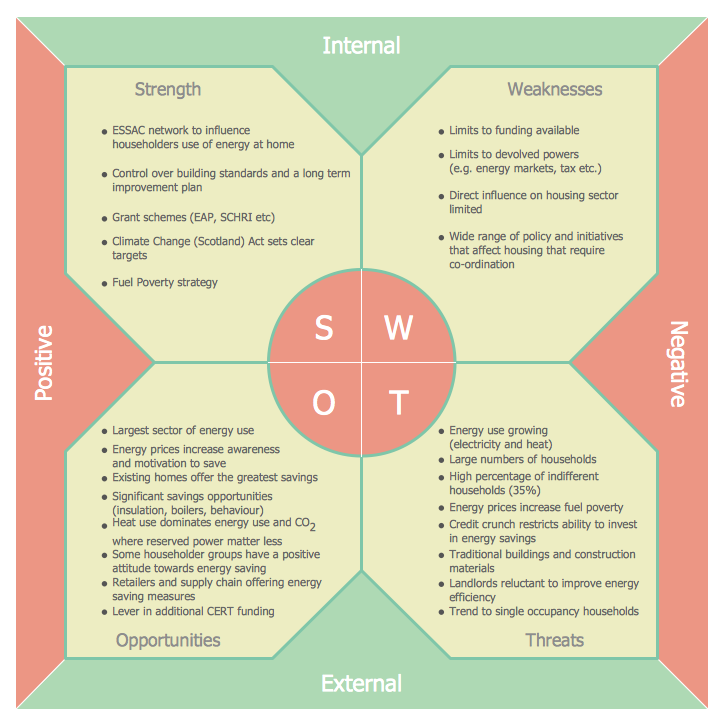
Example 2. SWOT Diagram — Scottish Government Strategy to Reduce the Energy and CO2 Emissions
SWOT Analysis for Competitive Advantage
SWOT analysis tool is powerful for building a competitive advantage by identifying organizational strengths, weaknesses, opportunities, and threats in relation to competitors. The development of strategies that leverage strengths, capitalize on opportunities, and address weaknesses and threats helps to ensure the sustainable competitive advantage of the business in the marketplace, more effective decision-making, strengthening, and enhancing overall performance. The information about strengths helps businesses focus on areas that set them apart from competitors, use them to differentiate themselves in the market. The identification of external opportunities helps businesses to create new products or services, expand their market share, and stay ahead of competitors.
At the same time, the weaknesses and threats also deserve special attention, because they help to develop actionable improvement strategies directed at addressing an organization's weaknesses to make it more competitive and strengthen its position in the market. Mitigating external threats is an important issue in adapting business strategies, developing countermeasures, and protecting the competitive edge. Addressing weaknesses reduces vulnerabilities and directly strengthens a company's competitive position. This could involve investing in staff training, reallocating resources to more critical areas, streamlining operations, introducing and upgrading technologies, etc. In some cases, weaknesses can be turned into opportunities to open up new ways for growth, enhance operational efficiencies, increase productivity, and save costs.
Integrating SWOT with Other Strategic Tools
Integration of SWOT analysis with other modern techniques and methods assists in improvement and development. The integration with strategic and analytical tools helps to maximize the effectiveness of decision-making and business planning. The most popular tools that can be combined with SWOT analysis include Agile methodology, PESTLE (Political, Economic, Social, Technological, Legal, and Environmental) analysis, Value chain analysis, Gap analysis, Force field analysis, Porter’s Five Forces model, Balanced Scorecard (BSC), Boston Consulting Group (BCG) matrix, Analytic Hierarchy Process (AHP), VRIO (value, rarity, imitability, and organization) framework.
The combination of different methods and techniques helps to carry out more thorough analysis, provide a more comprehensive strategic overview and a holistic understanding of both internal and external factors influencing business. It enables measuring and optimizing performance, prioritizing business units, making more effective and informed strategic decisions, developing more progressive strategies, and building competitive advantage. Some methods help to make SWOT analysis and business more agile and adapted to a fast-paced market to stay competitive.
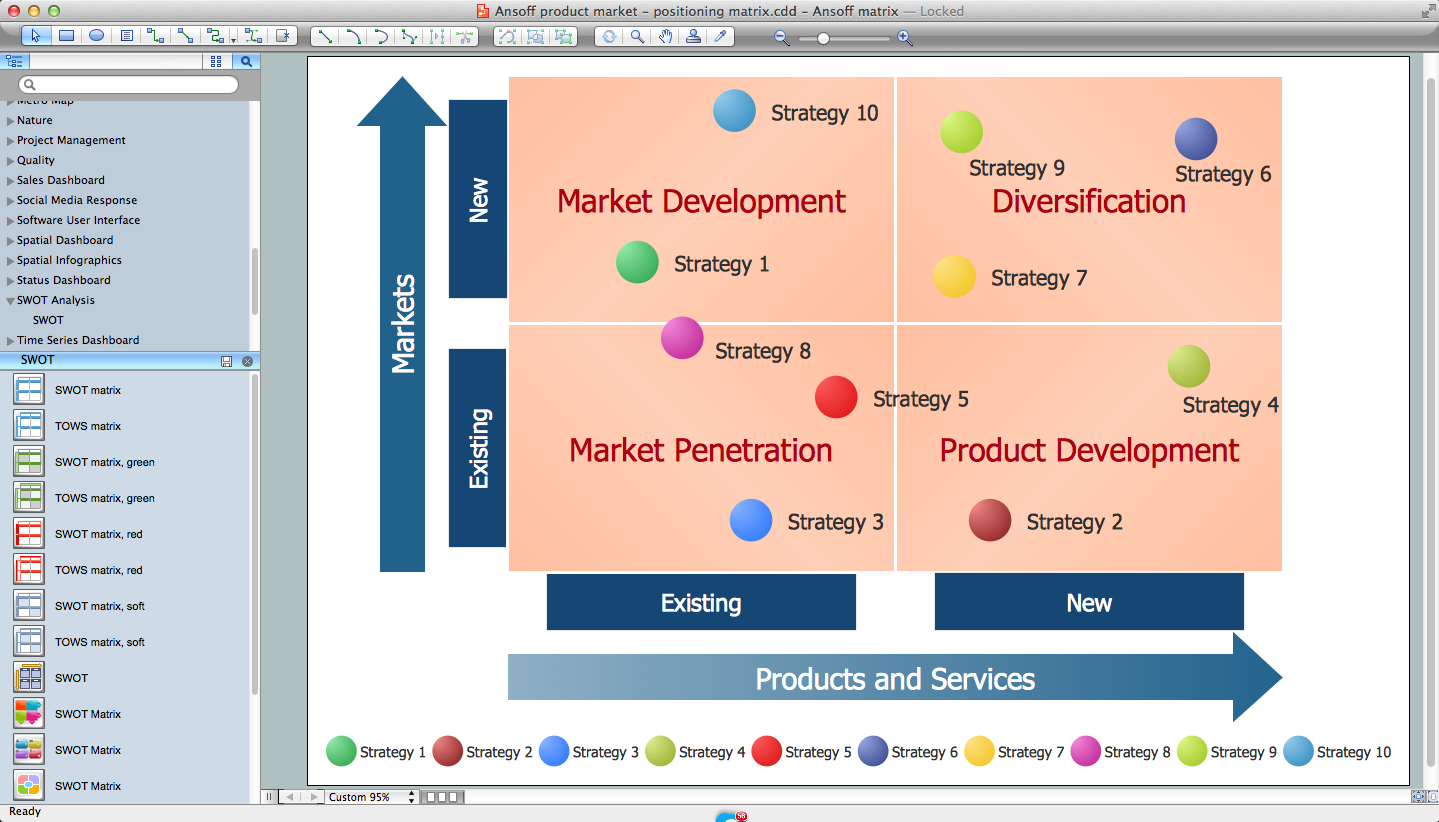
Example 3. SWOT Analysis Software for Mac OS X and Windows
ConceptDraw DIAGRAM Software Tools for SWOT Analysis: Key Benefits
Using professional drawing software ConceptDraw DIAGRAM enhanced with SWOT and TOWS Matrix Diagrams solution helps to create a SWOT analysis matrices and make them precise and attractive. The solution provides SWOT matrix samples and templates that allow users to create well-designed SWOT diagrams for minutes.
A SWOT analysis allows professionals to identify the positives and negatives in the organization and external environment. Developing a full awareness of your situation can help with both strategic planning and decision-making. The solution also supports a variation of SWOT analysis called TOWS, which is more focused on external factors and action planning.
Introduction of brainstorming software ConceptDraw MINDMAP from the ConceptDraw Suite helps to conduct brainstorming sessions during the SWOT analysis. Collaborative tools offered by ConceptDraw Products help to collaborate efficiently with team members or other stakeholders to make an exhaustive and up-to-date SWOT Matrix, enhancing the quality of SWOT analysis. Integration of SWOT analysis with other strategic planning tools is possible due to numerous management solutions included in ConceptDraw Solution Park and available from the ConceptDraw STORE.

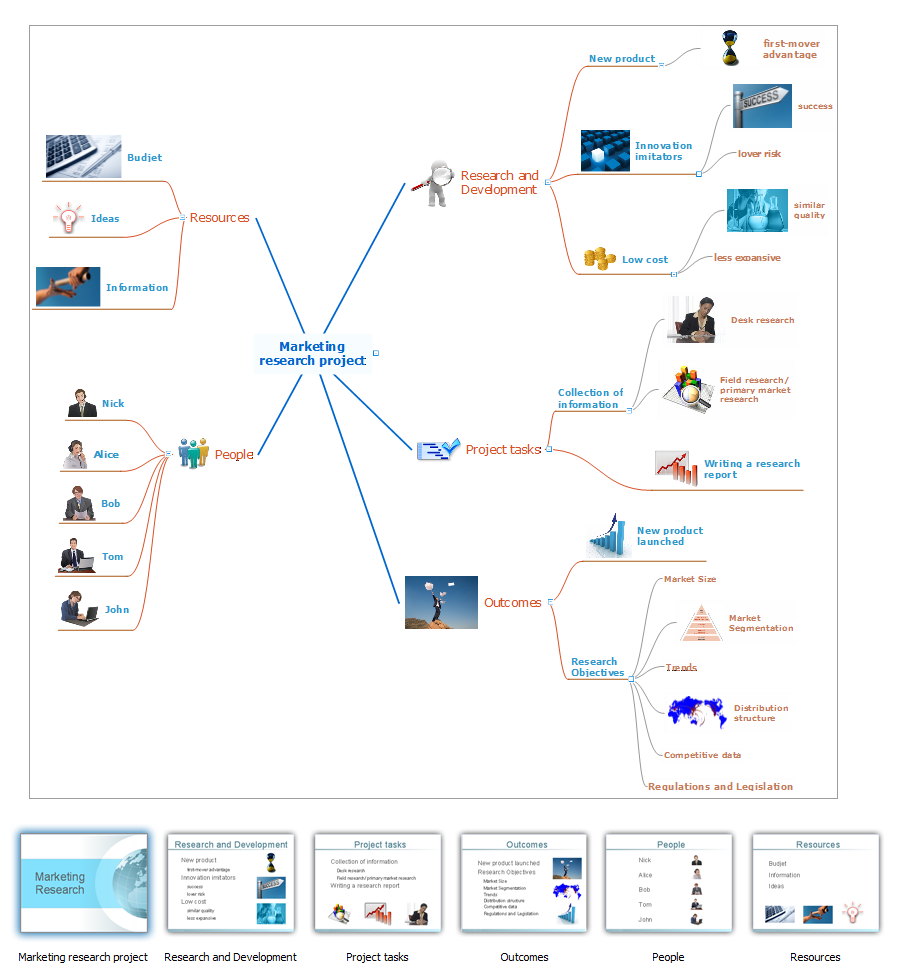
Example 4. SWOT Analysis — TOWS Mindmap Template
Conclusion
ConceptDraw DIAGRAM Matrix SWOT analysis software helps to define the areas of improvement and opportunities for your operations, enables effective decision-making and a strong competitive position for your business, improves operational planning, and the development of efficient action plans to mitigate inefficiencies. It helps to compare the current state of your business with a desired one, evaluate how well your operations meet industry standards, customer needs, and market demands, and develop efficient strategies to enhance performance and success. SWOT and TOWS Matrix Diagrams solution from ConceptDraw Solution Park contains easy-to-use mind map templates that help identify strengths, weaknesses, opportunities, and threats using ConceptDraw MINDMAP software, as well as output them to ConceptDraw DIAGRAM for presenting analysis results as SWOT and TOWS matrices.

.png)